Travel guide of Cook Islands
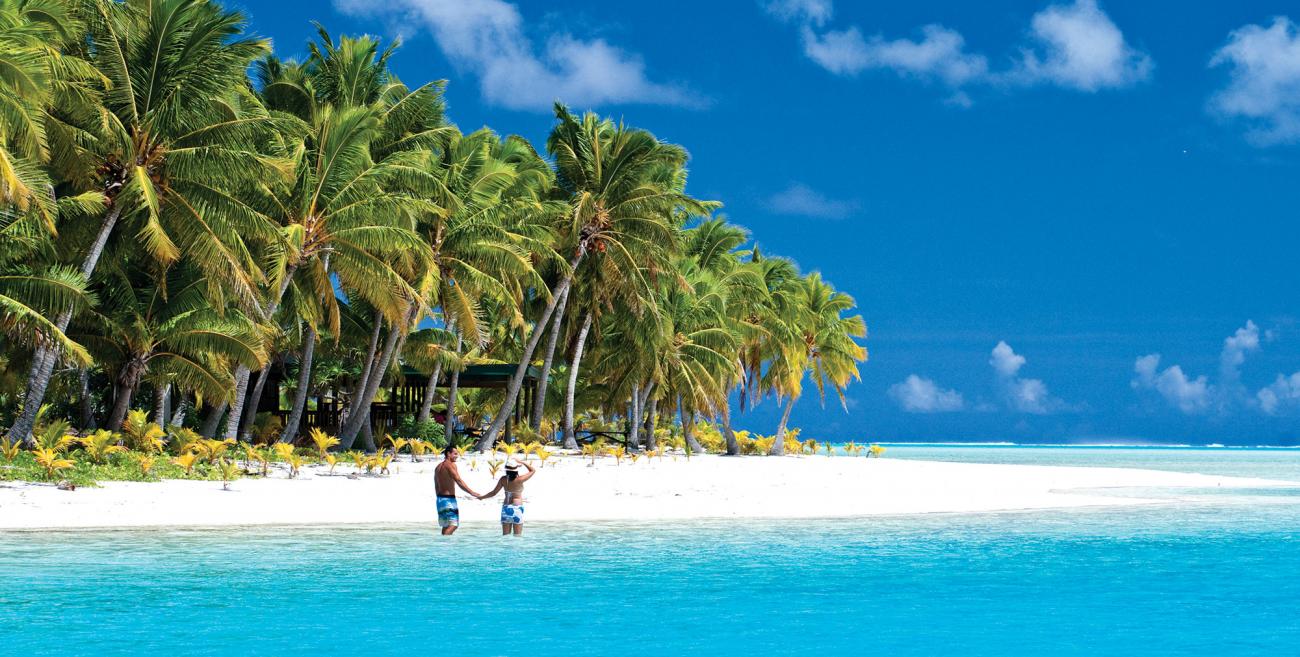
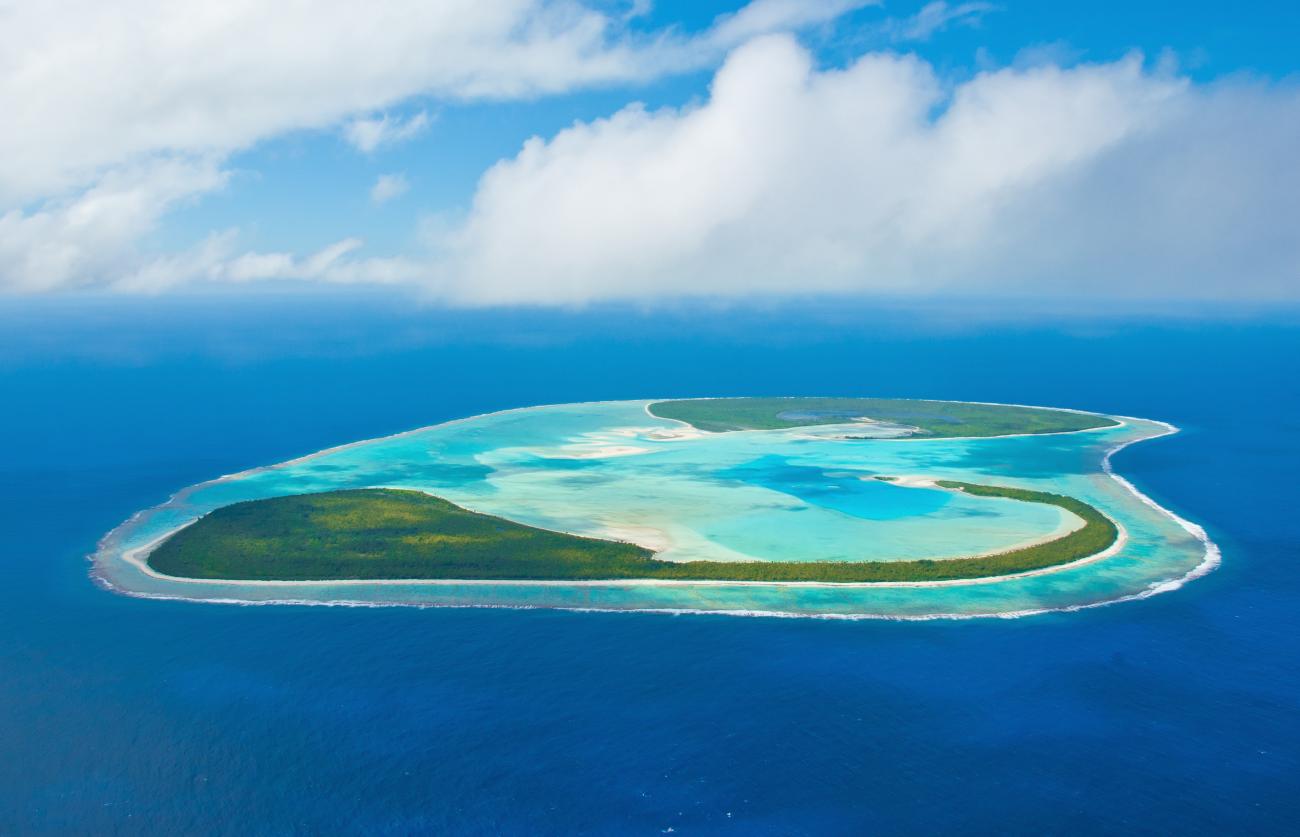
An exceptional destination, paradise in the South Pacific. Cook Islands comprise of 15 small islands, little inhabited, with
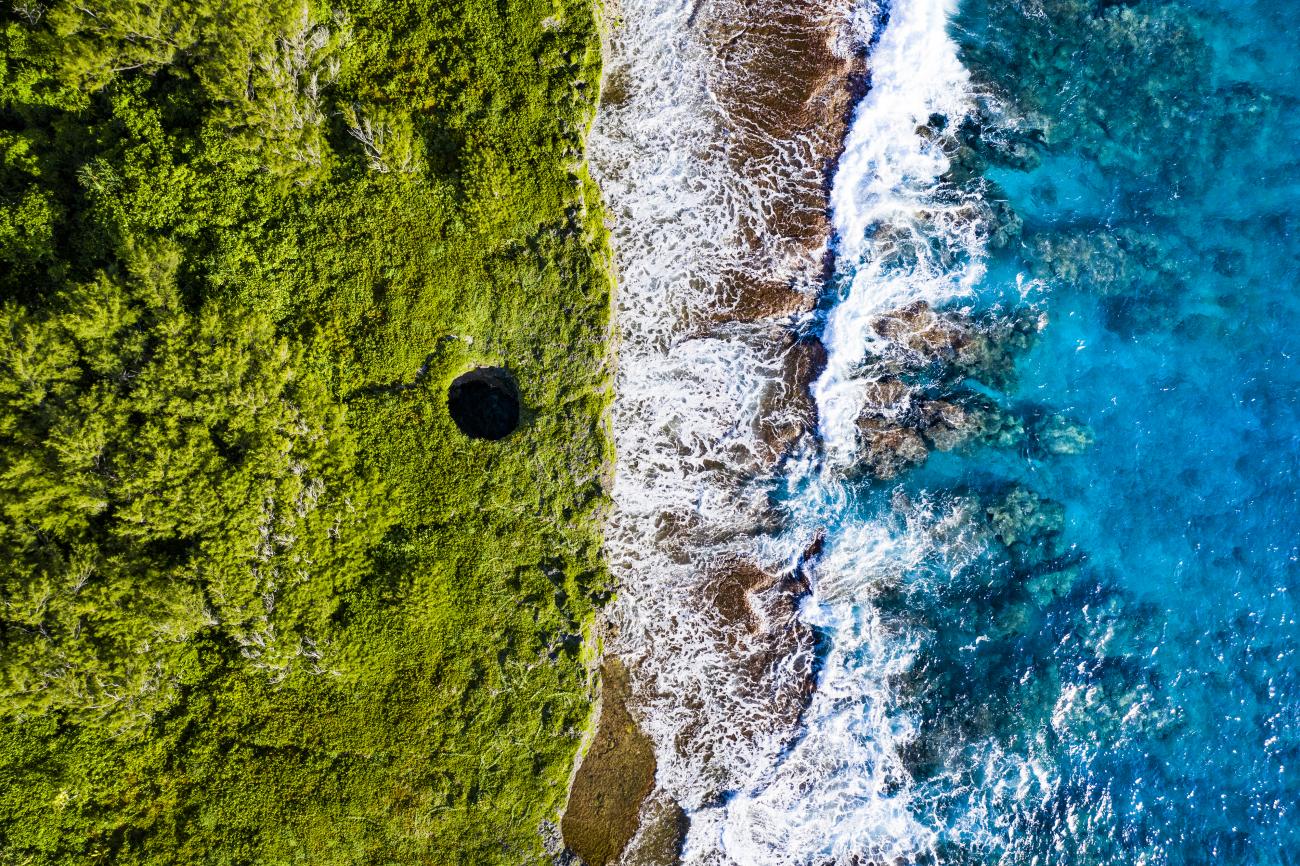
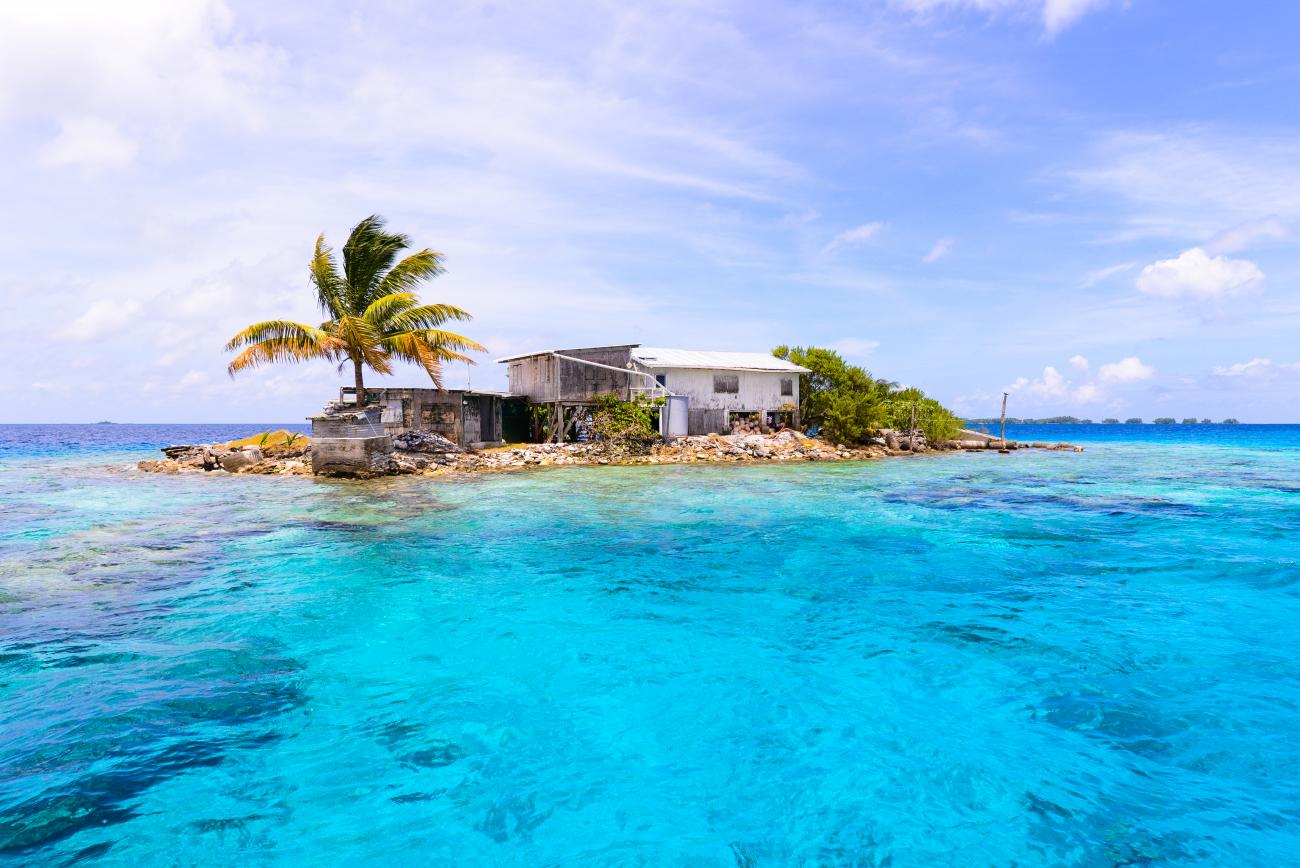
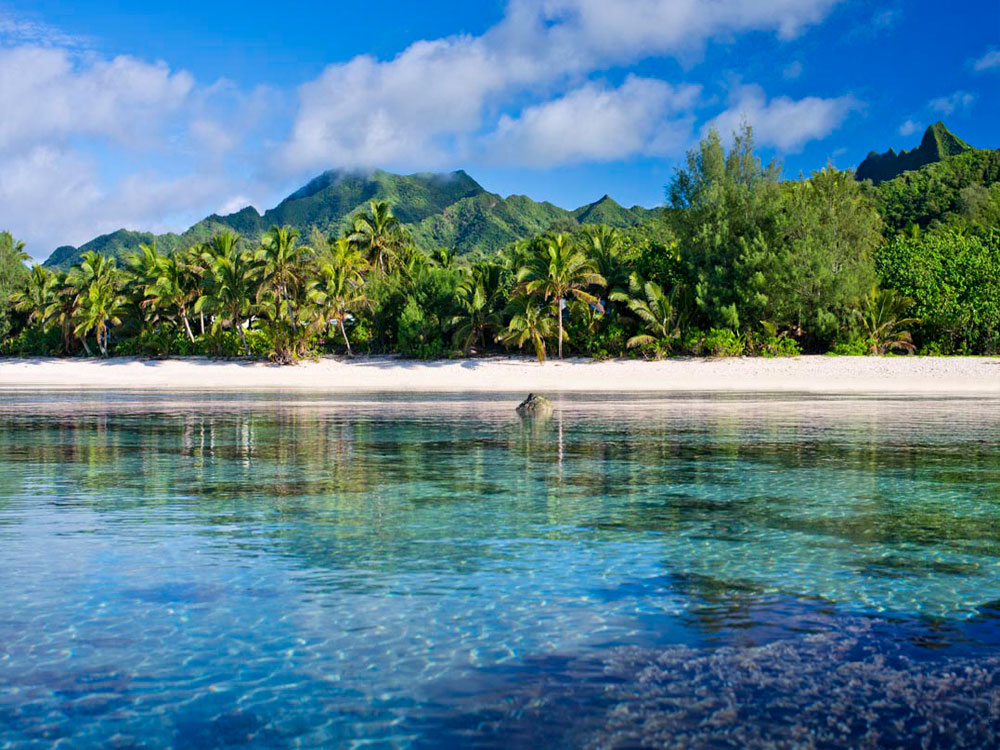
crystal clear turquoise lagoons. The main island is Rarotonga, a lively hub with plentiful of activities available. Beautiful white
sandy beaches invite for a relaxing or romantic holiday, mountains covered with lush rainforests welcome hiking and biking enthusiasts.
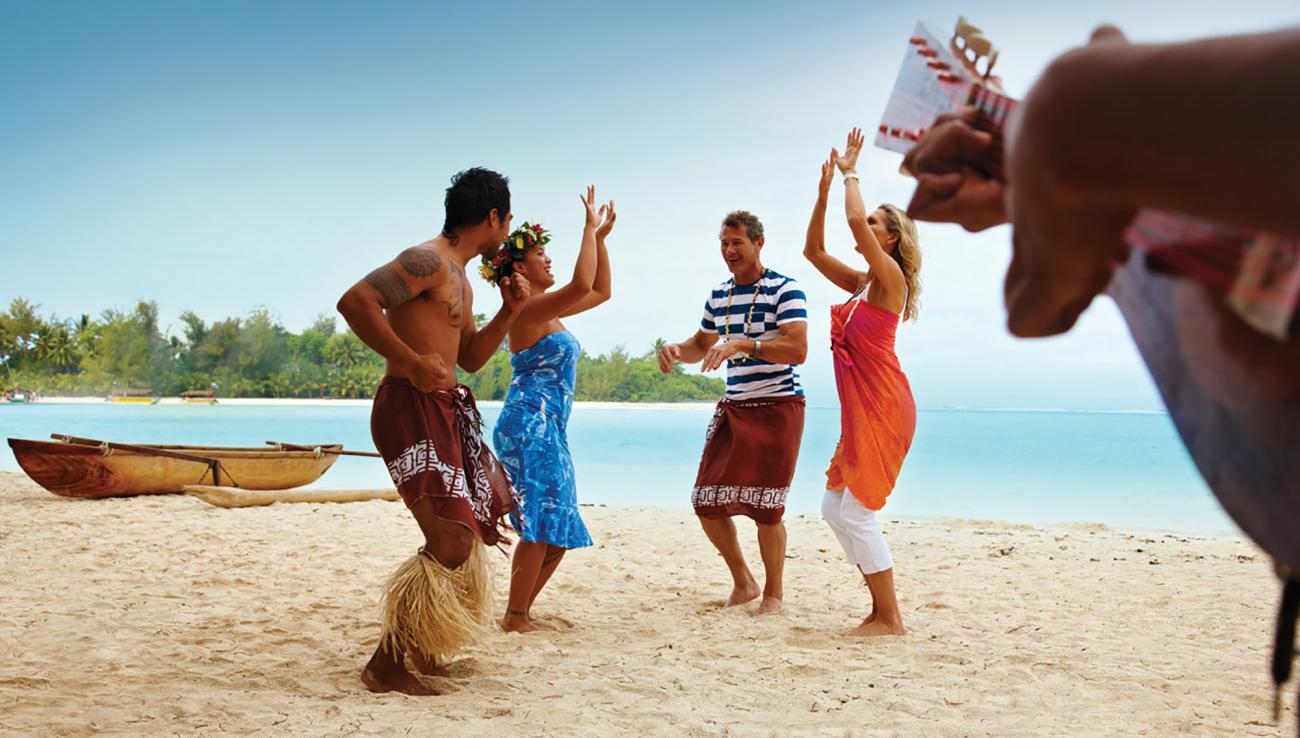
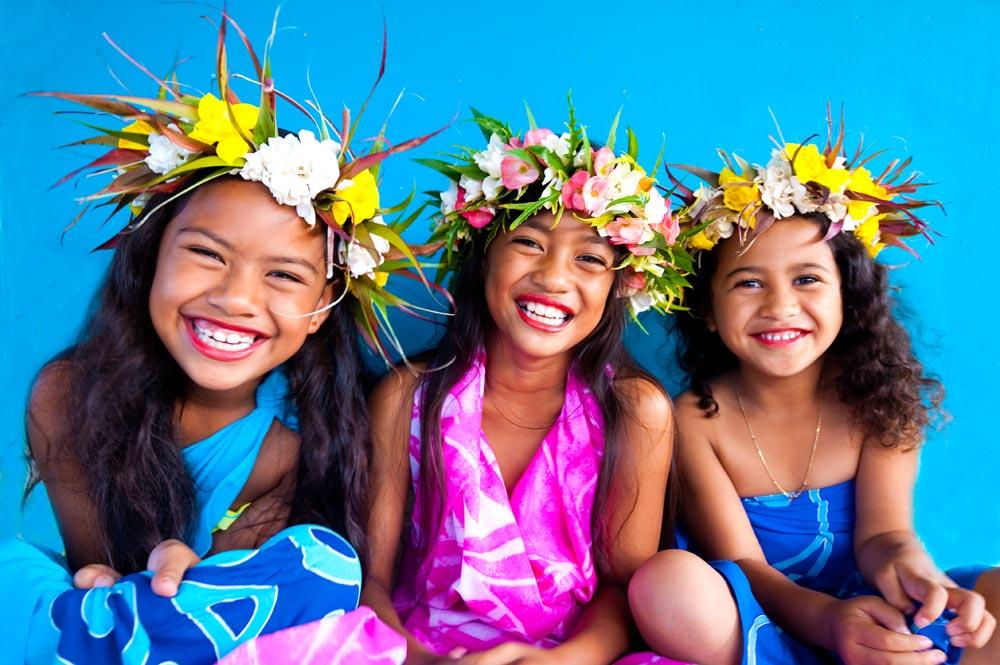
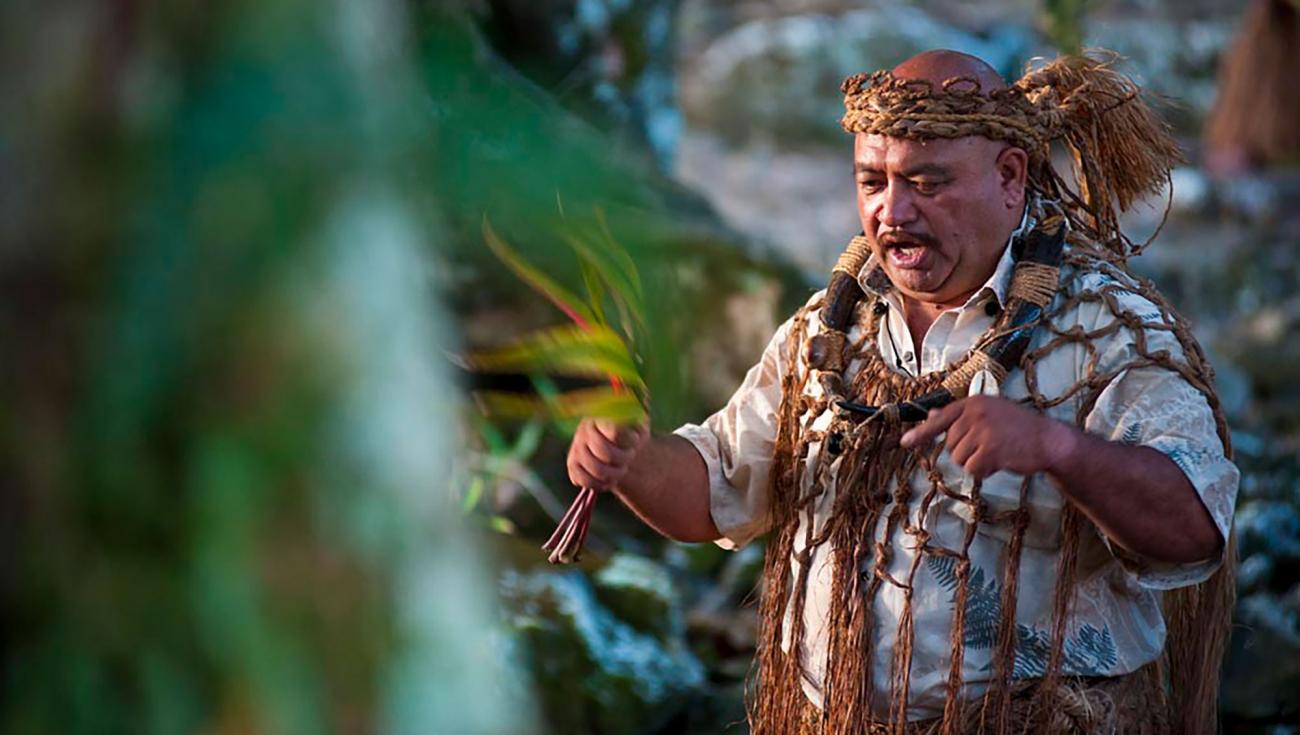
Local Polynesian people are friendly and welcoming, love dancing and singing and keep their traditions alive. Visitors are welcome
to experience their culture personally by joining traditional events, eating with locals at their homes or even staying with them
for a couple of days in one of the authentic villages on little populated islands. The perfect exotic destination for English-speaking
travellers, divers, nature explorers and honeymooners - even getting married on Cook Islands is easy.
Useful information
Land, Geography
- group of 15 islands in the South Pacific spread across 2.2 milion m2 / 850.000 square miles
- half way between New Zealand and Hawaii in the tropic of Capricorn latitude from 9 to 22 degrees
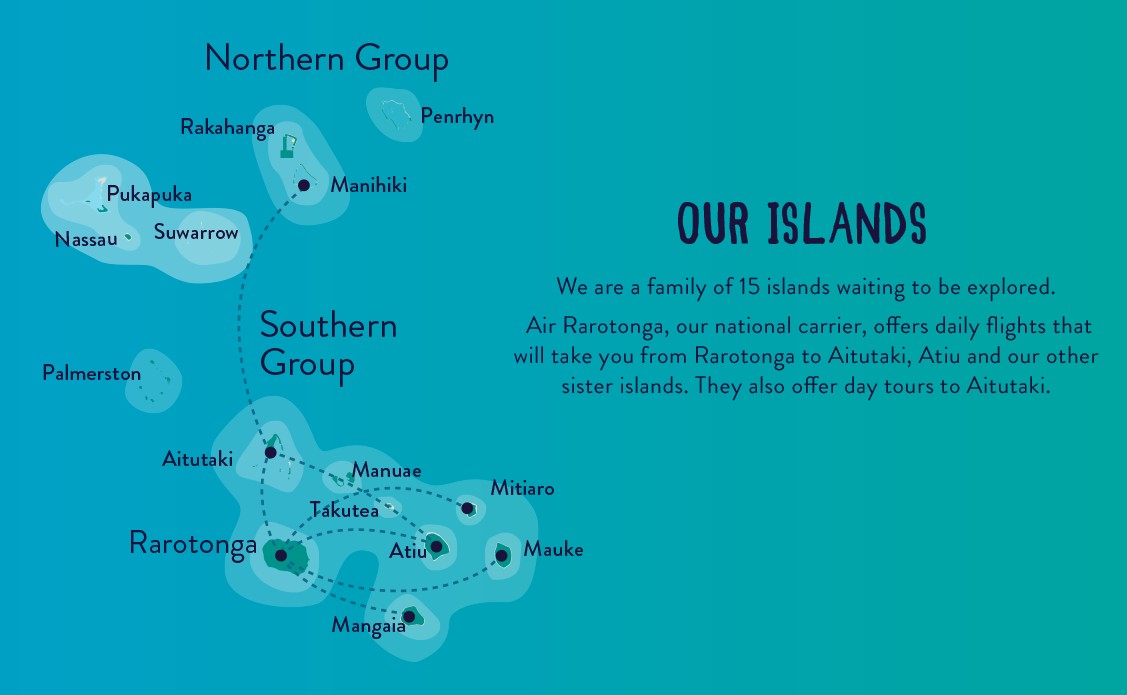
- the Cook Islands consist of 2 main groups - the Southern and the Northern Group
- Southern Group: 9 islands, mix of atolls and volcanic islands including the capital island Rarotonga, Aitutaki (260km / 162mi north
of Rarotonga) and the raised coral atolls of Mangaia (southernmost, approx 200km from Rarotonga), Atiu, Mauke, Takutea, Manuae,
Palmerston (almost 500km northwest from Rarotonga) and Mitiaro
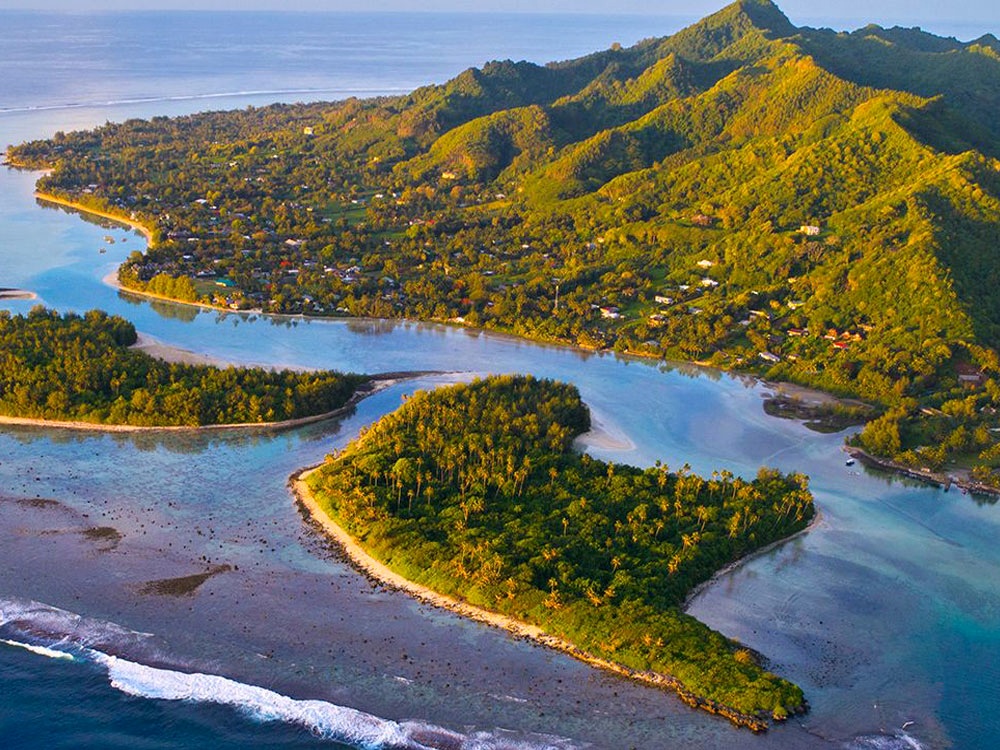
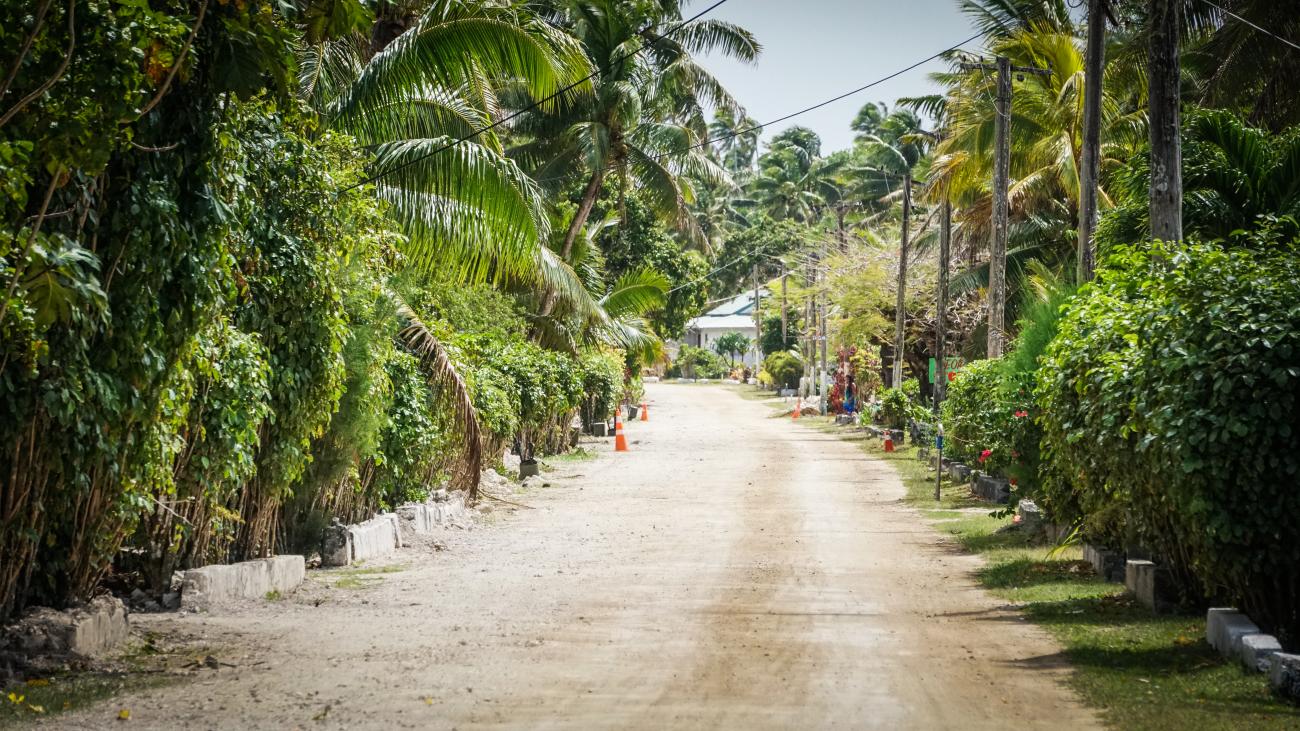
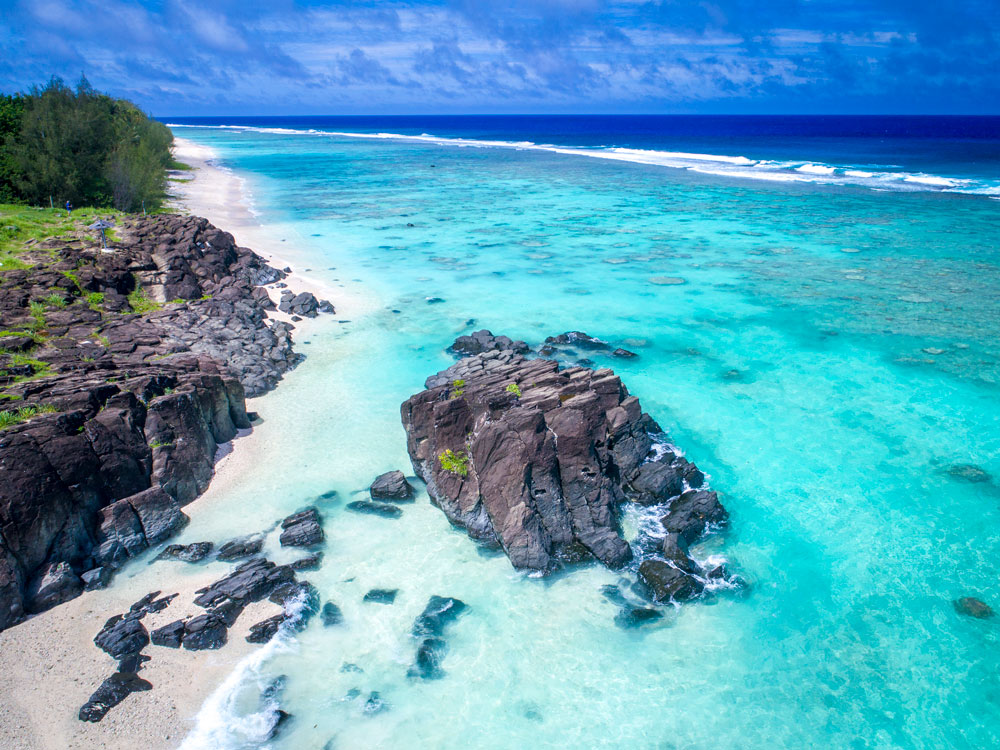
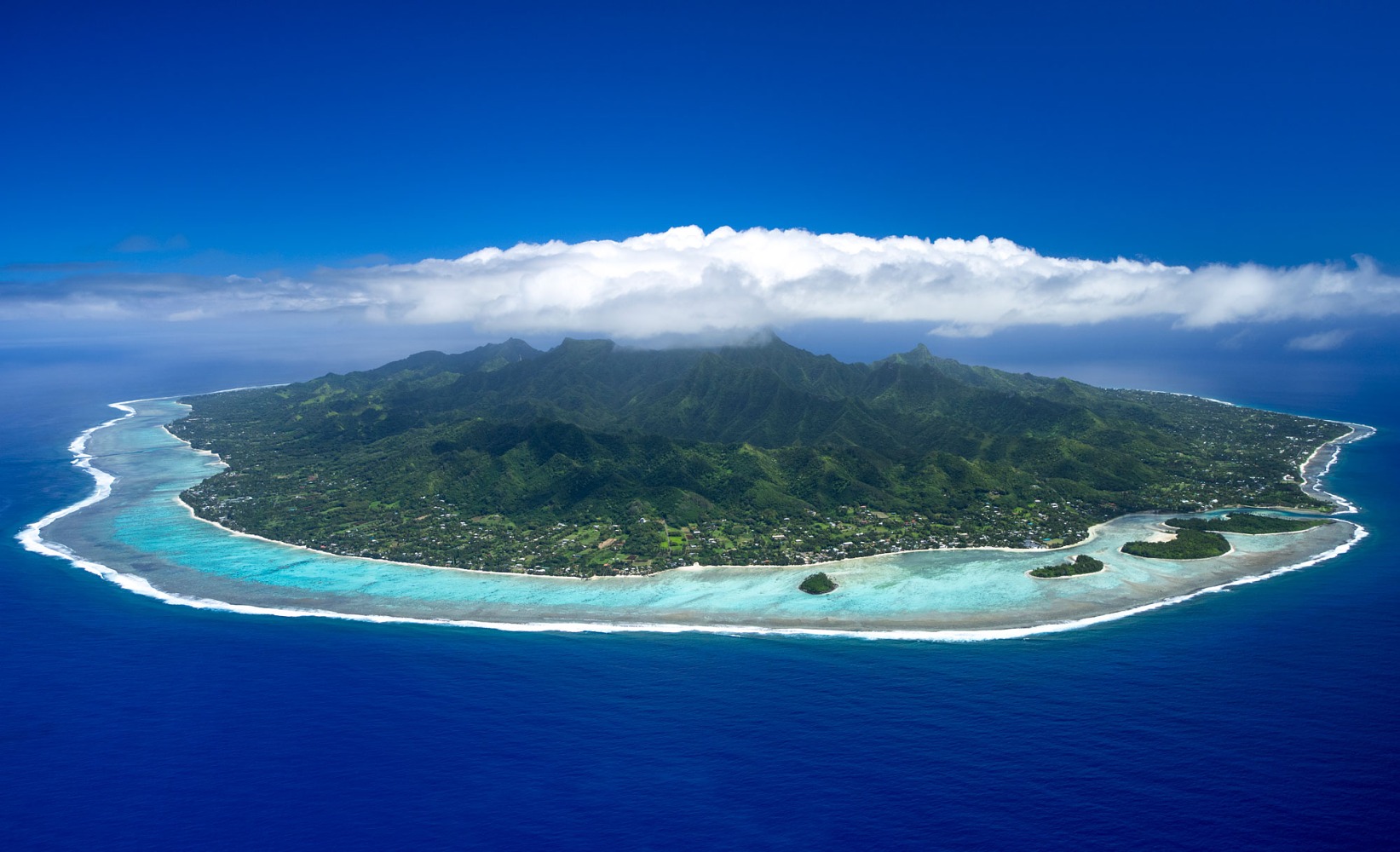
- Rarotonga - main island and the hub of Cook Islands, encircled by a road only 20mi / 32km long, mountain peaks, lush rainforests,
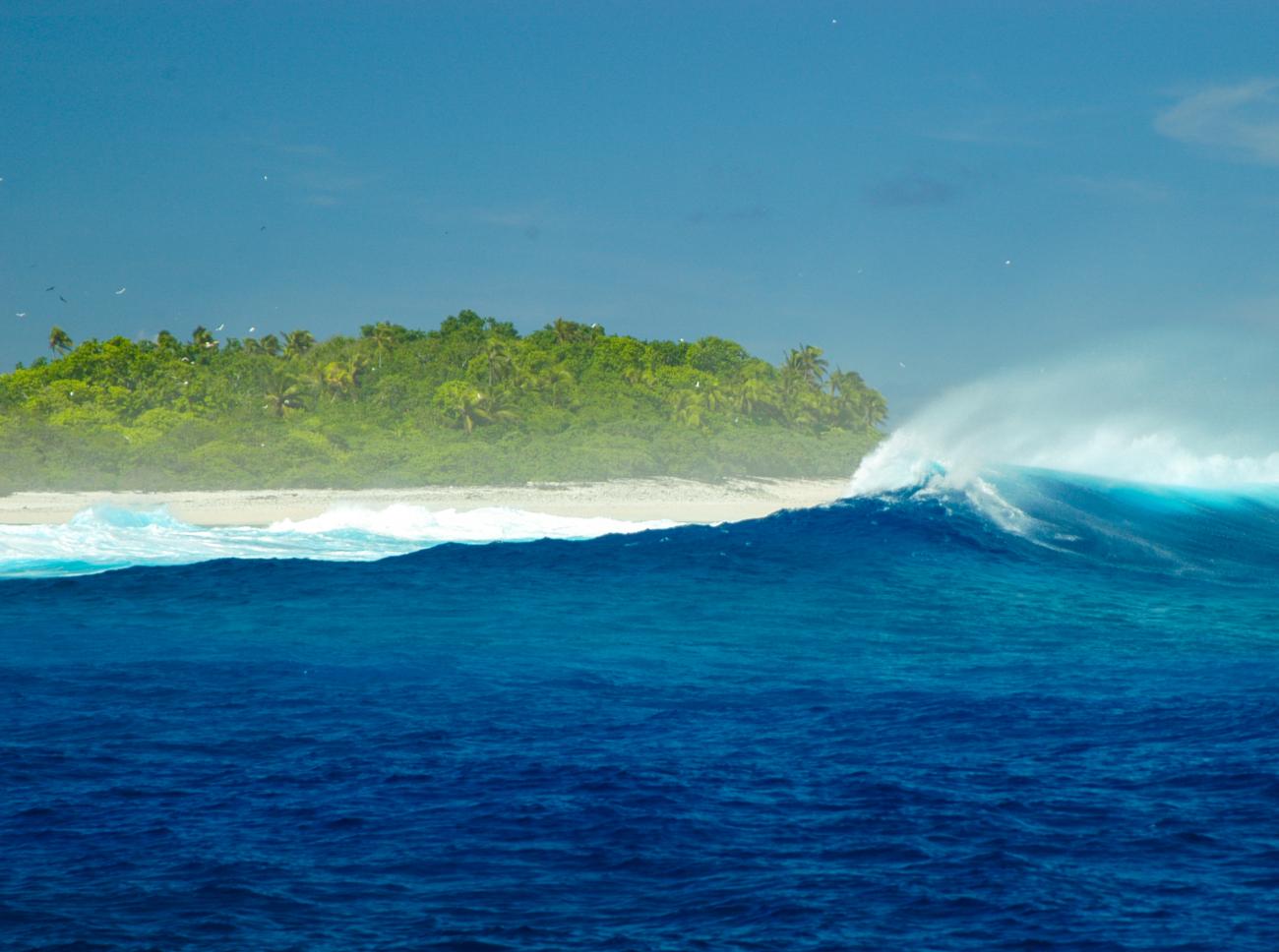
white sandy beaches with palm trees, surrounded by a lagoon of turquoise waters guarded by coral reef where the waves break
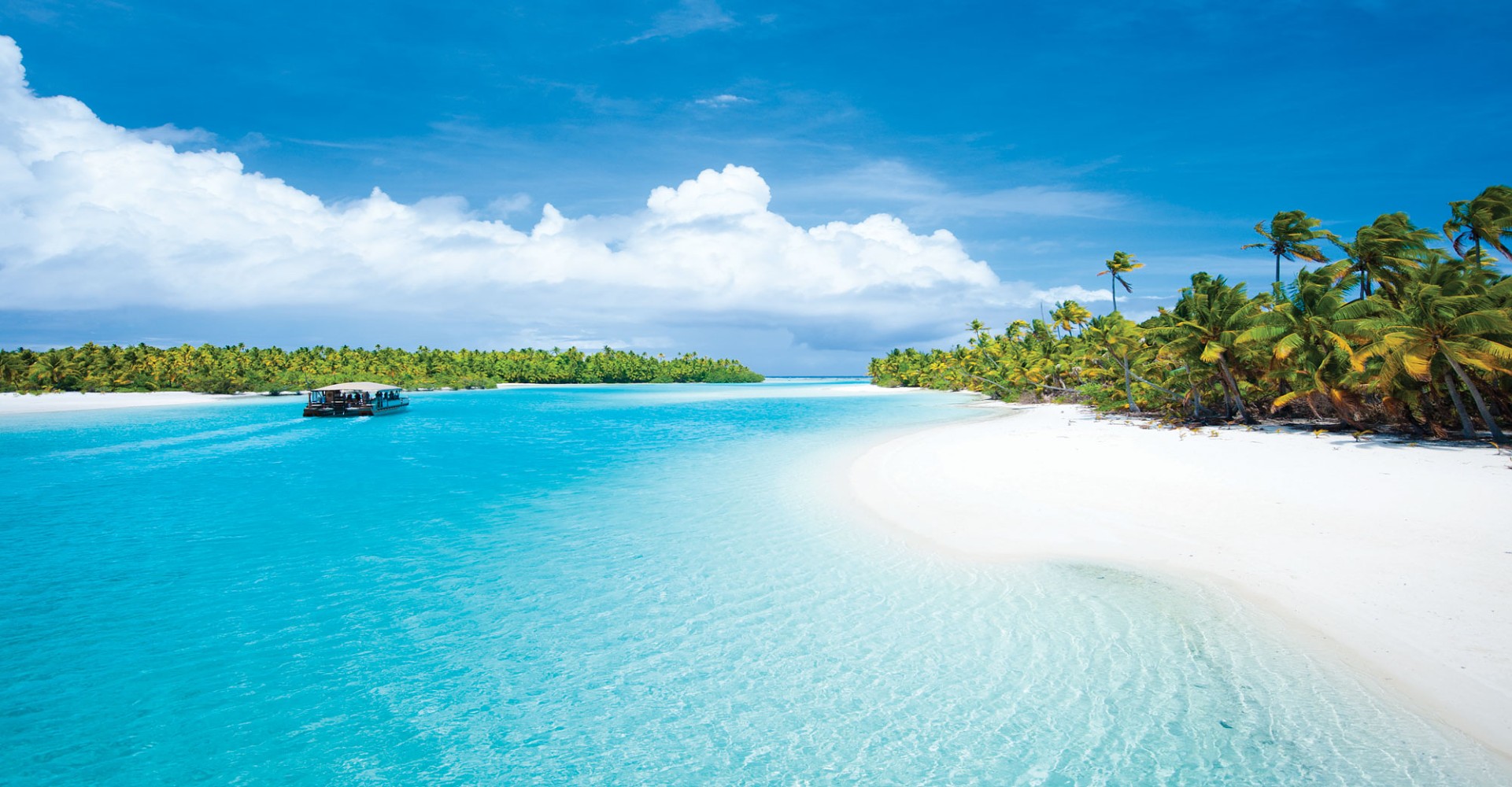
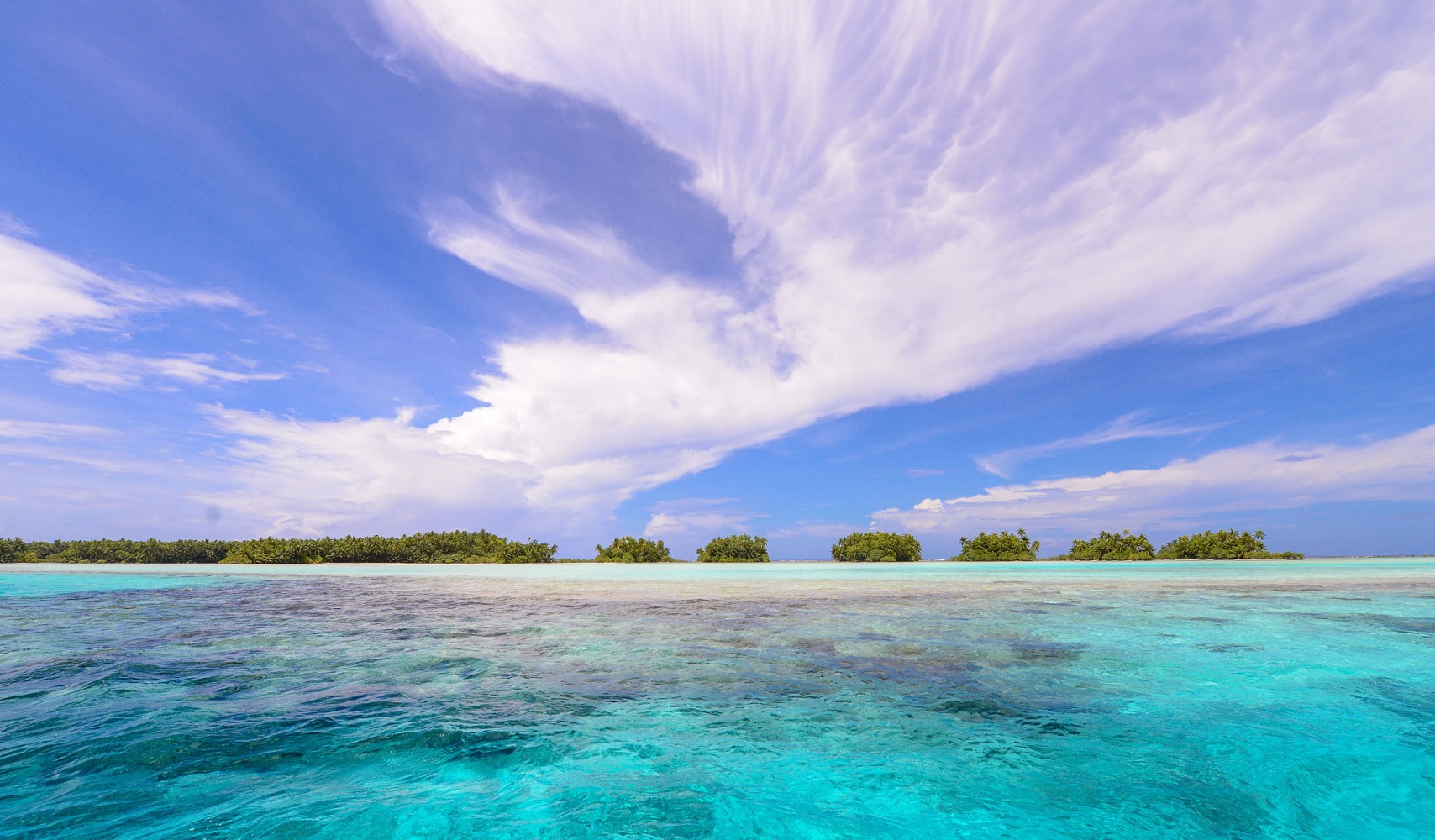
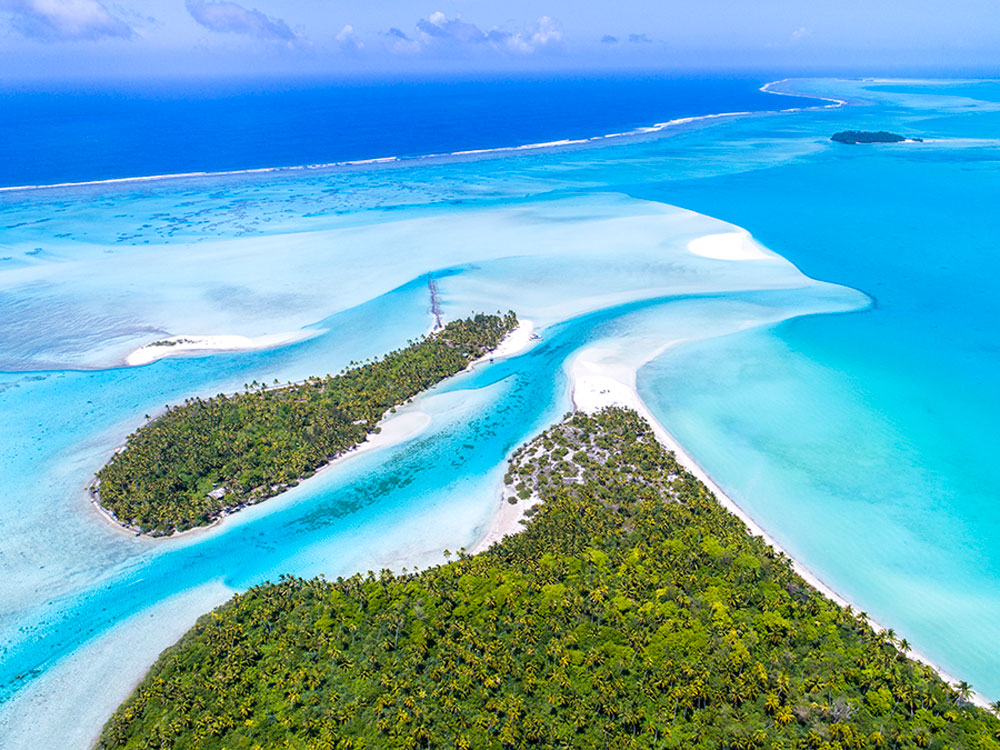
- Aitutaki - beautiful island 260km north of Rarotonga, pure white sandy beaches, clear turquoise lagoon bordered by little islets, sanctuary
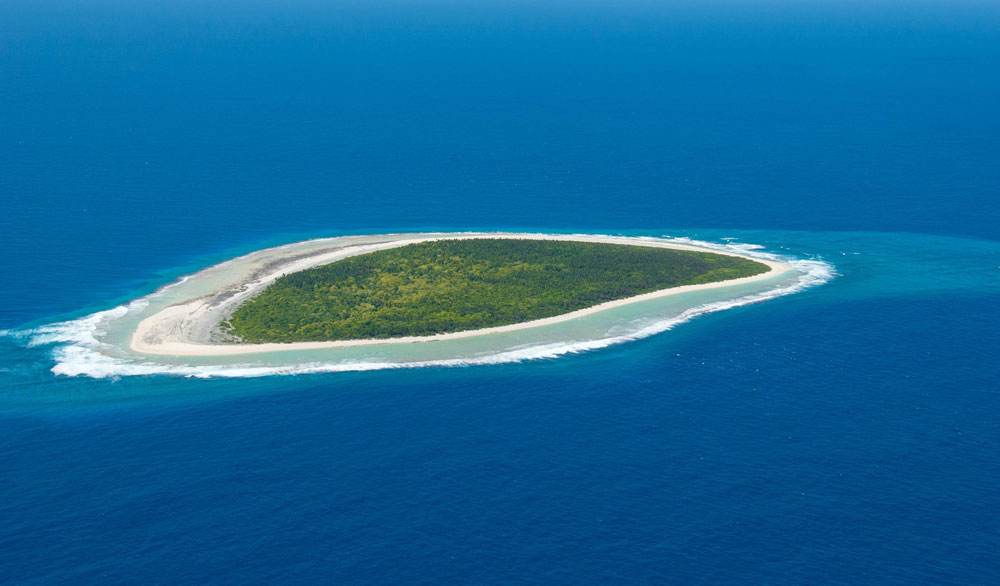
- Manuae - little uninhabited island next to Aitutaki with rich marine life
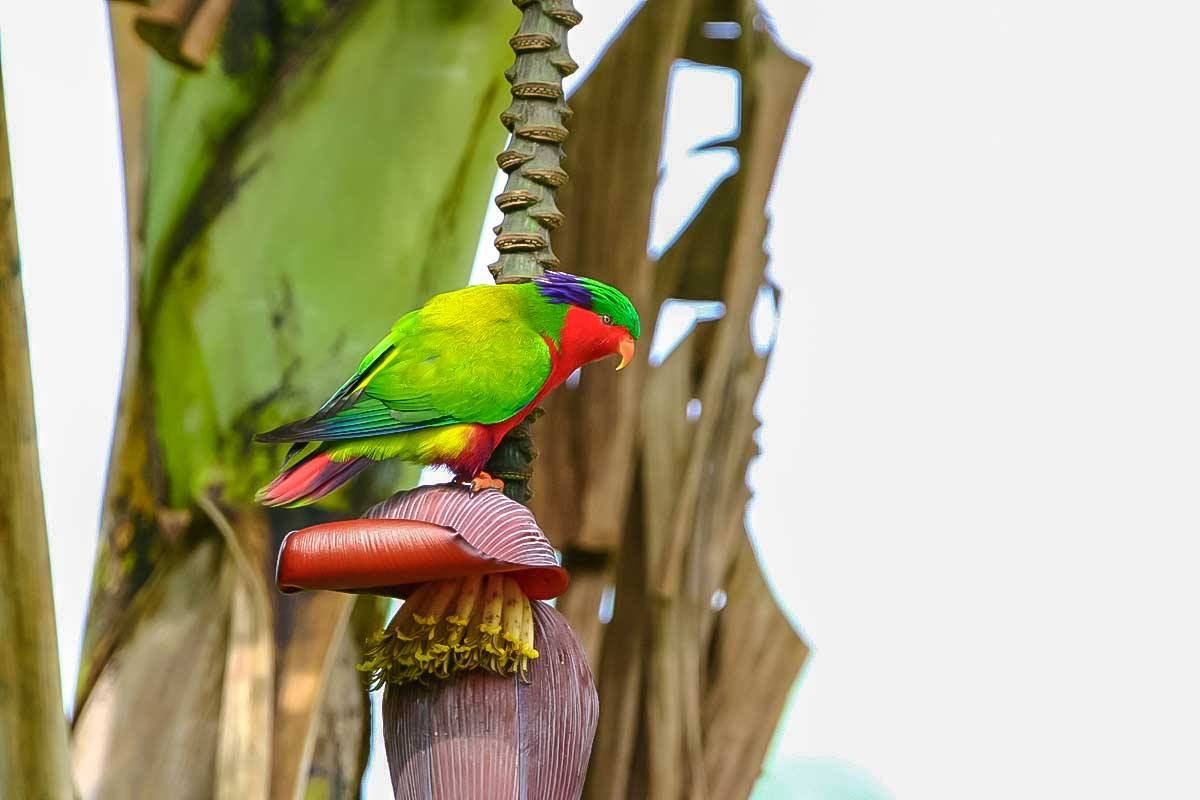
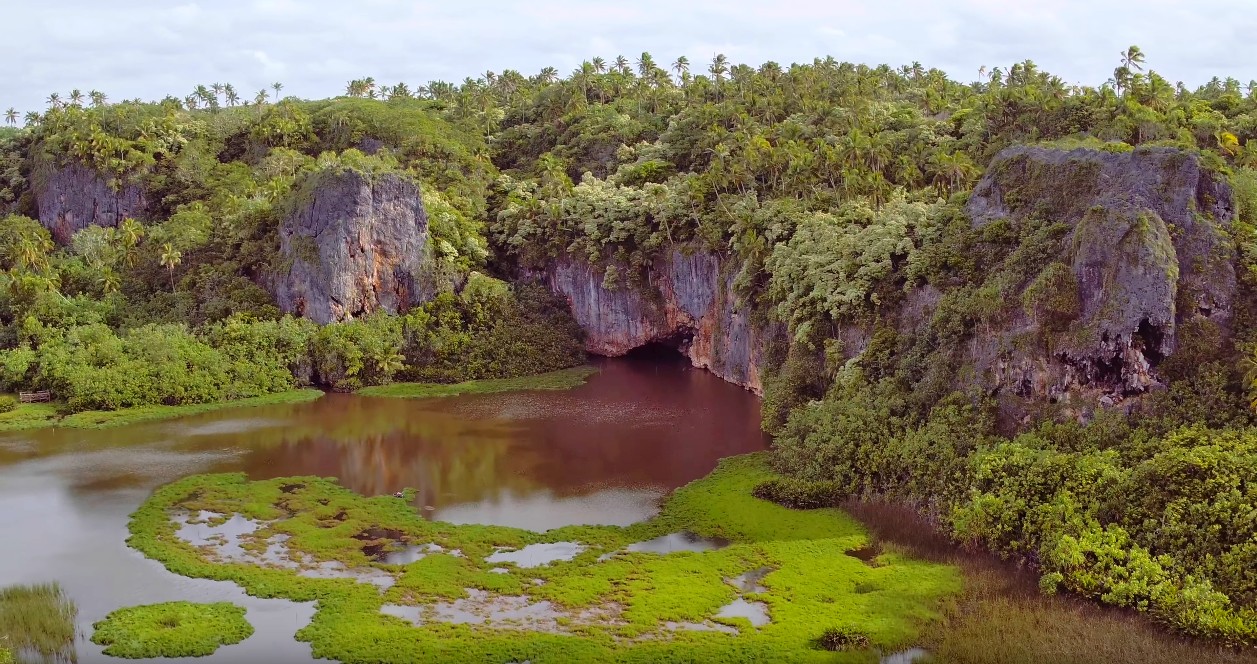
- Atiu - the island of birds, volcanic origin, coral limestone cliffs known as Makatea, wild jungle of dense rainforest, bird caves,
a heaven for ornithologists - home of Kopeka, Kakerori, fiery colored Kura; scattered secluded beaches
- Takutea - isolated and uninhabited island near Atiu island, unbroken reef with wide waves - ideal for surfers
- Mauke - garden island of the Cook Islands, pure exotic, golden beaches, secret caves and underground chambers
leading to the sea, home of miracle oil with healing powers
- Mitiaro - where people live the life of 50 years ago; underground caves, freshwater pools with healing powers, the only one
of Cooks with 2 lakes, home of the itiki, local fresh water eel
- Palmerston - atoll approx 500km northwest from Rarotonga, Englishman Captain William Marsters settled here with his 3 Polynesian wives
in the last century; tropical atoll with a reef and tiny islets and sandy cays, vast blue lagoon
- Mangaia - the southernmost and the second largest of the Cook Islands, approx 200km southeast from Rarotonga,
the oldest island in the Pacific - 8 million years old, paradise for archaeologists and anthropologists, peaceful island with coral caves and submerged streams
- Northern Group: 6 raised atoll islands of Manihiki, Rakahanga, Pukapuka, Nassau, Suwarrow, Tongareva / Penrhyn,
all approx 1.200-1.350km / 750-850mi north of Rarotonga
- Manihiki - epicentre of the black pearl industry together with sister island Rakahanga
- Pukapuka - fan-shaped coral atoll, historically tied to Samoa
(which is some 700km / 430mi southwest of Pukapuka), different culture and practices compared to the other Cook Islands
- Nassau - neighbouring island of Pukapuka with no lagoon but lush vegetation and many fish
- Suwarrow - isolated treasure island and bird sanctuary, natural atoll harbor ideal for yachts
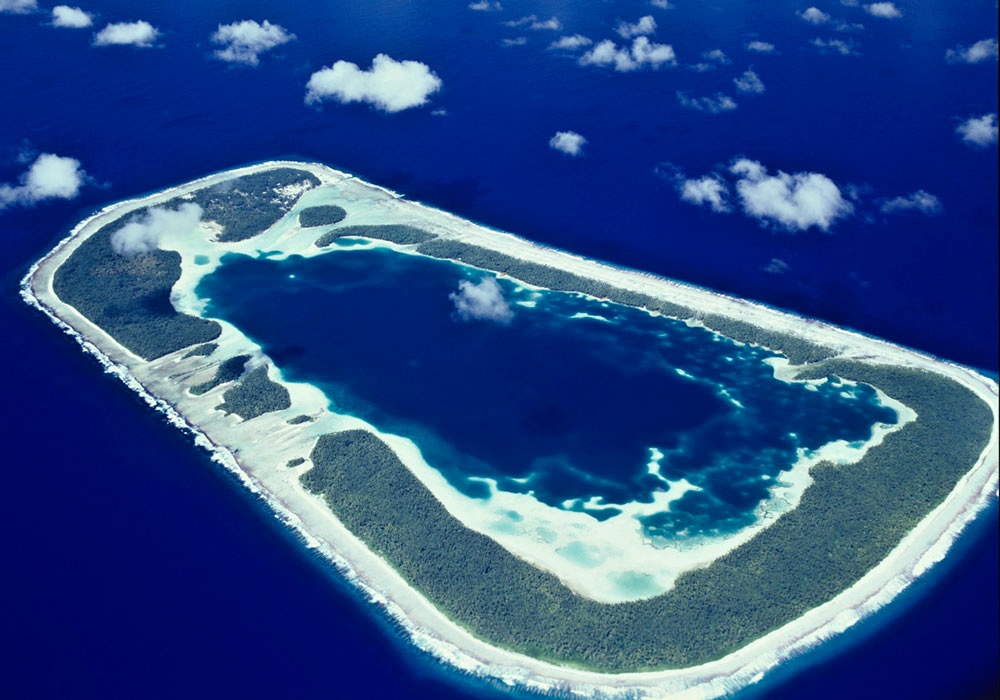
- Tongaerva / Penrhyn - the largest lagoon area of the Cook Islands' atolls (22x12km / 14x8mi in perimeter approx;
up to 107m / 350 feet deep), pearl shells, fishing paradise
Climate & Weather
- warm and sunny weather all year round
- dry, cooler season from April to October with temperature average 68-78°F / 20-26°C and cool nights
- the coolest months are June - August
- warmer season from November to March, temperatures up to some 84°F / 29°C, occasional tropical showers expected
- cyclone season November - March, but the islands are out of the usual cyclone path and severe weather is very rare
Travel season
- year-round destination
- dry, cooler season from April to October
- warmer season from November to March
Time zone
- UTC/GMT - 10 (10 hours behind Greenwich Mean Time)
Currency, payments
- NZ dollar
- approx 0,65 USD for 1 NZD (2020)
- Westpac and ANZ banks and also ATM machines are available on Rarotonga and Aitutaki and at the airport
- main currencies exchangable at hotels, banks and foreign exchange outlets like Western Union
- major credit cards accepted at most shops and restaurants
Fly to Cook Islands, airlines
- international airlines: Air New Zealand, Pacific Blue
- domestic airlines: Air Rarotonga - regular schedules to all outer islands with airports
- Rarotonga International Airport
- Air New Zealand operates a weekly non-stop direct flight from Los Angeles, from Sydney to Rarotonga
and daily direct flights from New Zealand; Virgin Australia operates 4 flights via New Zealand to Rarotonga;
Air Tahiti twice a week from Tahiti to Rarotonga (2019 data)
Transport
- local buses, taxis, car /motorbike /scooter / bike rentals
- low cost local transport - Island Bus on Rarotonga operating regular schedules around the island in both directions. It will pick you up and drop you off anywhere on request.
- if you plan to rent a car it is necessary to have local driving licence - this can be obtained at the Police station for approx 20 NZD
- motor scooters have an additional charge of 5 NZD for a compulsory practical test
- while driving in the Cooks, standard left hand rule applies, max speed limit in the villages and towns is 40km/h,
in less populated areas max 50km/h
- no alcohol drinking while driving, strict rules
Entry requirements
- valid passport for 6 more months, a return ticket, adequate financial means and suitable accommodation
allow for a stay up to 31 days (being reviewed currently)
- New Zealand citizens with NZ passport need no proof of onward passage
- departure tax NZD 55 /adult, children under 12 years free
- prolonging visa is possible with a fee paying for persons above 15 years, application necessary 2 weeks before expiration,
children under 15 years need not to pay but have to apply and get the papers done
- visa extension fee 70 NZD /stay up to 3 months, 120 NZD /stay up to 5 months
- we will inform you about updated entry requirements for tourist from your country together with our offer
- for berthing a yacht in Avatiu Harbour sailors need to obtain moorings from the Harbourmaster at the Ports Authority in Rarotonga (same island)
Travelling since 2020
- Travel world has changed in 2020 with the worldwide lockdown. Travel conditions are still being updated, airlines
releasing new schedules, hotels and destinations applying new arrangements where necessary. As it is hardly possible to
keep all relevant information on our websites up to date, we will inform you about current situation at the time of
your request and of your journey.
- If the destination you choose is not yet accessible for travellers from your country, we will recommend a similar
available option.
Duty Free
- personal effects including sports equipment and clothing are exempt from duty
- duty free items include: 299 cigarettes or 250g of tobacco or 50 cigars; 2 litres of wine or spirits or 4.5l of beer
- goods in excess of 250 NZD can be subject to duty
- frozen and canned food and vacuum packed produce are permitted but not fruits and plants – these must be
declared at Customs otherwise they could be confiscated
Electricity
- 240 volts, 50Hz cycles, the same as New Zealand and Australia so converters are necessary in order to operate US appliances
- the plugs have two angled prongs (like those in New Zealand and Australia), so an adapter for European tourists may be needed
Internet, signal coverage, communication
- Telecom Cook Islands Ltd with a wide range of services
- international telephone and directory, fax, email, wifi, internet connections available 7AM-11PM seven days a week
at the Telecom Cook Islands Office in the main township Avarua
- internet cafes in the main townships
- DHL courier service available
- Cook Islands Television (CITV) with local and imported shows in English and Cook Islands Maiori
- local Radio stations also with news from New Zealand and Australia
Population
- approx 17.000
- strong family bounds, extended family being part of everyday life, often grandparents and grandchildren live together,
aunts and uncles with nieces and nephews etc...
- clans connected to a tribal system of Ariki - chiefs
Language
- Cook Islands Maori (or Rarotongan) and English
- most people speak English
- most signs, menus and even newspapers are in English
- ideal destination for English-speaking visitors
- Kia Orana = used as "Hello" or even "THank you" and literally meaning "May you live long and fulfilling life"
Religion
- Christianity adopted, the first missionaries arrived in 1821
- church service for visitors on Sunday at 10AM - good way to meet local people and experience their singing
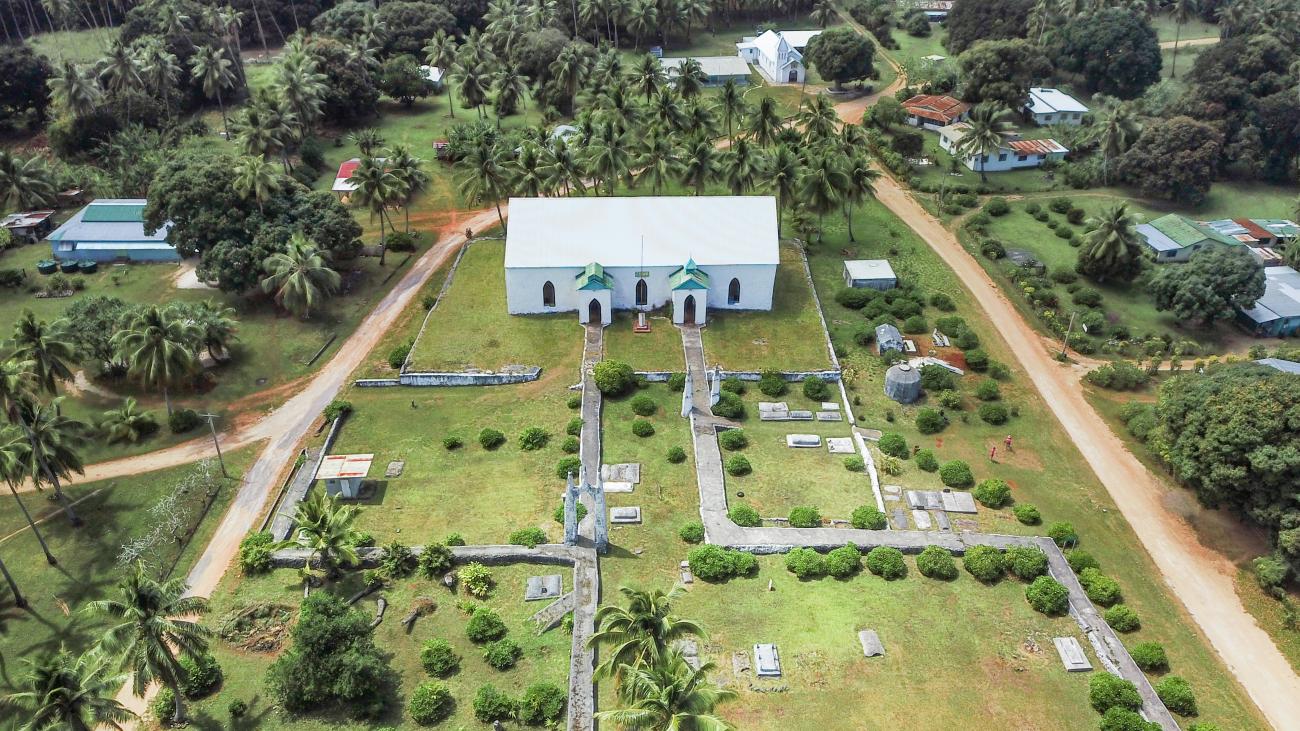
- plentiful of limestone and white coral churches
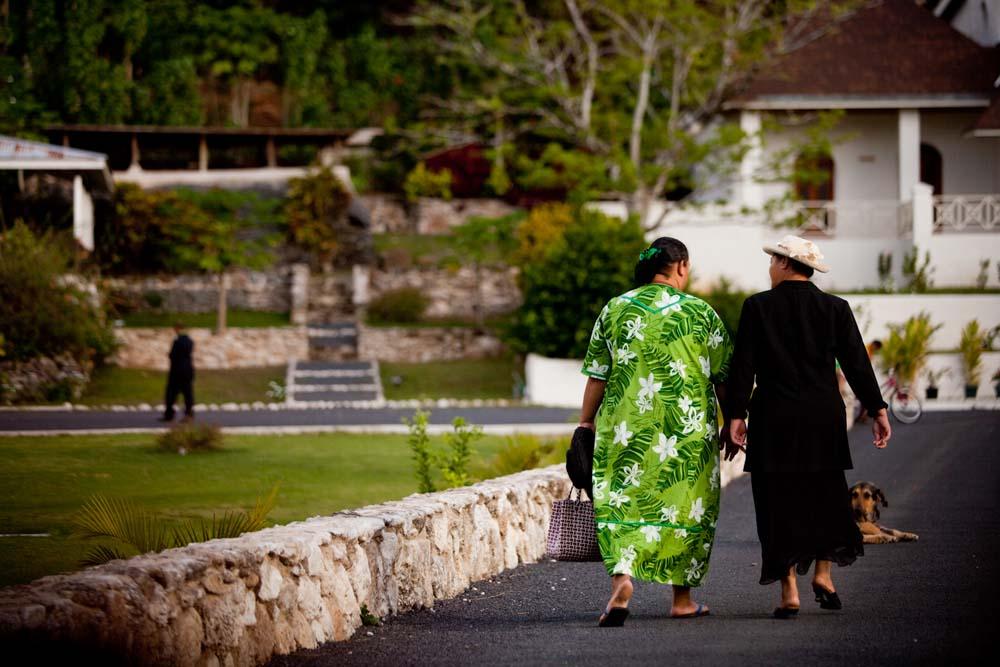
- Sunday is a day of rest and the islanders go to church regularly
- luckily despite the attempts of the missionaries to instruct the islanders to give up drums, dances and all the carnal
desires, the only thing that implied into the society is the Sunday church service and English language...
Health
- Cook Islands are free from most tropical diseases including malaria
- medical and dental services, well equipped hospital (New Zealand trained staff), optometrist, pharmacies
and emergency services in Rarotonga
- small hospital at Aitutaki and smaller medical facilities at Atiu island
- no venomous snakes, most of the insects are innocuous – but look out for centipedes which do bite
- the coral reefs should be treated with caution
Tipping
- tipping is not expected and is contrary to Cook Island’s custom
- still if you feel the service was exceptional, locals appreciate your acknowledgement
Dress
- informal dress code, cool, comfortable, avoid beach attire in towns and villages
- nude and topless sunbathing is PROHIBITED
- a light sweater might be handy for cooler evenings
- respectable attire for church service
Safety
- The Cook Islands are safe but never leave your personal belongings unattended and ensure your accommodation
and means of transport is locked at all times
Nature
- several nature conservations, reserves and environmental campaigns protect the unique fauna and flora of the islands
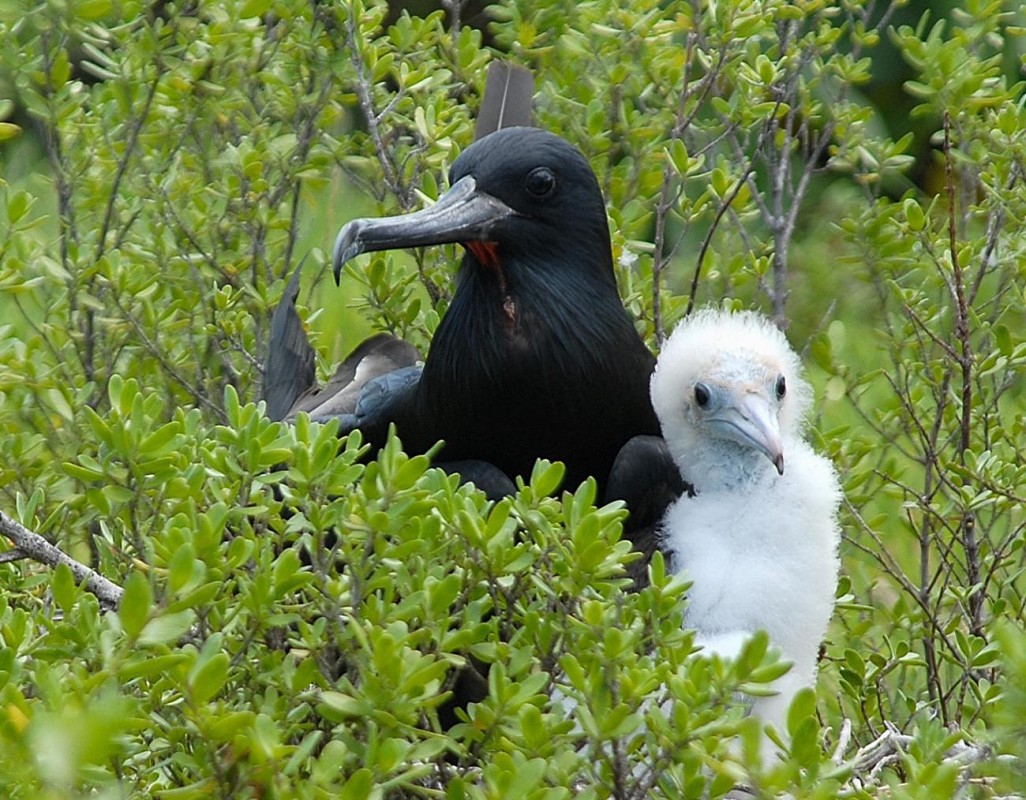
- Takitumu Conservation area on the southeast side of Rarotonga protects one of the rarest seabirds, the Kakeroi (Rarotongan
Flycatcher), further birds include I'oi (Rarotonga Starlin) and Kakupa (Fruit Dove), perfect for birdwatching
- marine reserves known as rau'i protect areas around the islands from fishing to preserve all marine life
- typical flower - Orange Flower
- visit The Whale Research & Education Center on Rarotonga to learn not only about the Humpback whales, famous for their singing,
who migrate through the Cook Islands territory every year from July to October and are protected within an 800.000 square miles
(2 mil. km2) sanctuary established in the Cook Islands in 2001
Ecology
- Eco tourism with bird watching at Atiu island
- protected marine life around the islands
- huge protected area for whales as the humpback whales migrate through the waters of Cook Islands each year
- ecologically grown food, organic coffee farms
- 100% renewable energy in 9 of 15 islands (2018 number)
Culture & Traditions
Ancient history
- the Islands got inhabited in approx. 800BC during the Great Polynesian migration (which started 1500BC) - the ancestors arrived on giant
hulled-Kaka's canoes vaka's, guided by the stars and their knowledge of ancient Polynesian navigation
- Aitutaki island was first inhabited by Ru, famous sailing warrior from Avaiki who landed at Aitutaki at full moon O'otu with his four wives and
a group of warriors in a double hulled canoe
- according to legend, Chief Toi, part of the original migration, was responsible for the building of a grand coral road in Rarotonga leading
through the island swamps, which is still in existence some 1000 years later
- the land was divided among 6 tribes with a chief or king as the head of each
- Cook Islanders still consider themselves as members of one of the six clans
- Atiu is known for having been inhabited by some of the fiercest warriors of the Southern Cooks, laying siege on their
smaller neighbours in Mitiaro and Mauke islands
Europeans and Captain Cook
- the first Europeans arrived in 1595 from Spain
- Captain James Cook, after who the islands are named, first arrived at Manuae atoll in 1773 and called it first "Sandwich
Island"
- Cook later discovered also Palmerston, Takutea, Mangaia and Atiu; the islands experienced some bloodshed with the explorers...
- the official discovery of Rarotonga island is credited to Captain Philip Goodenough of the Cumberland in 1814 who
was seeking sandalwood
Christianity
- adopted by the islanders who now go to church and sing heartfully every Sunday
- Sunday is a day of rest
Dance
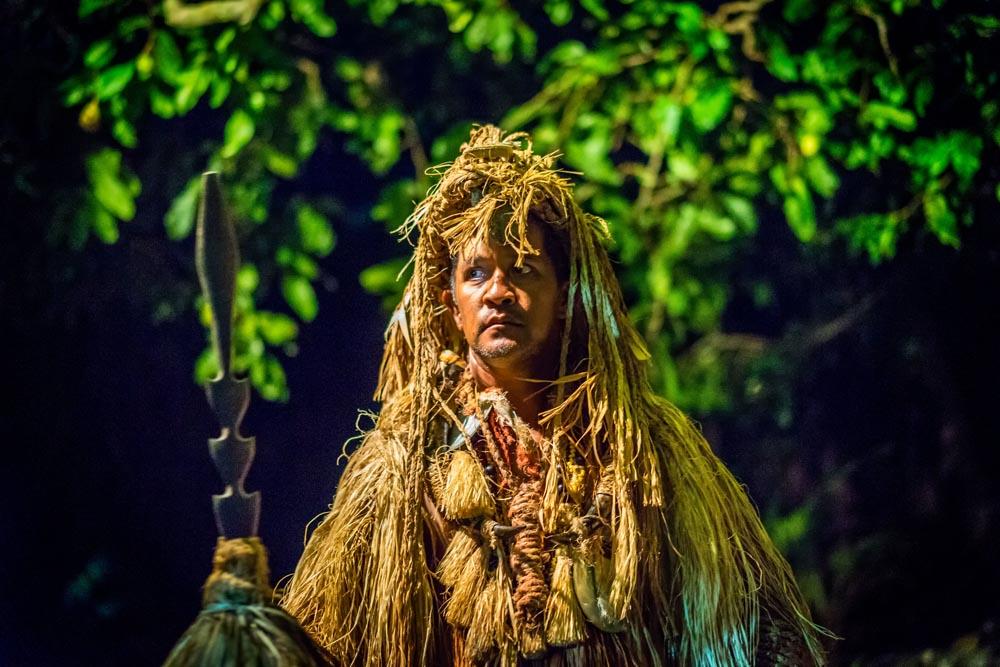
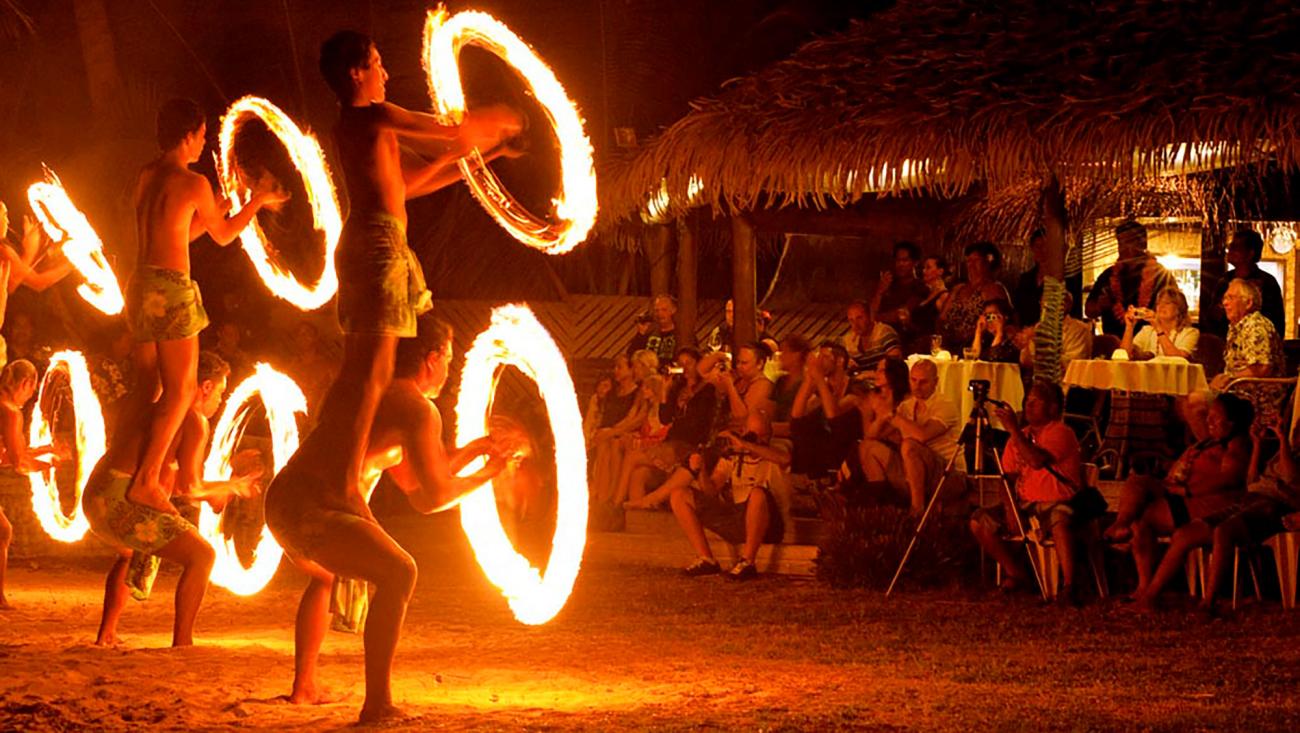
- Cook Islanders are considered among the finest Polynesian dancers
- enjoy their sensual dances on a traditional Island Night event
Arts and Crafts
- still practiced a lot, weaving, embroidering, woodcarving...
- traditional arts are part of Cook Islands culture
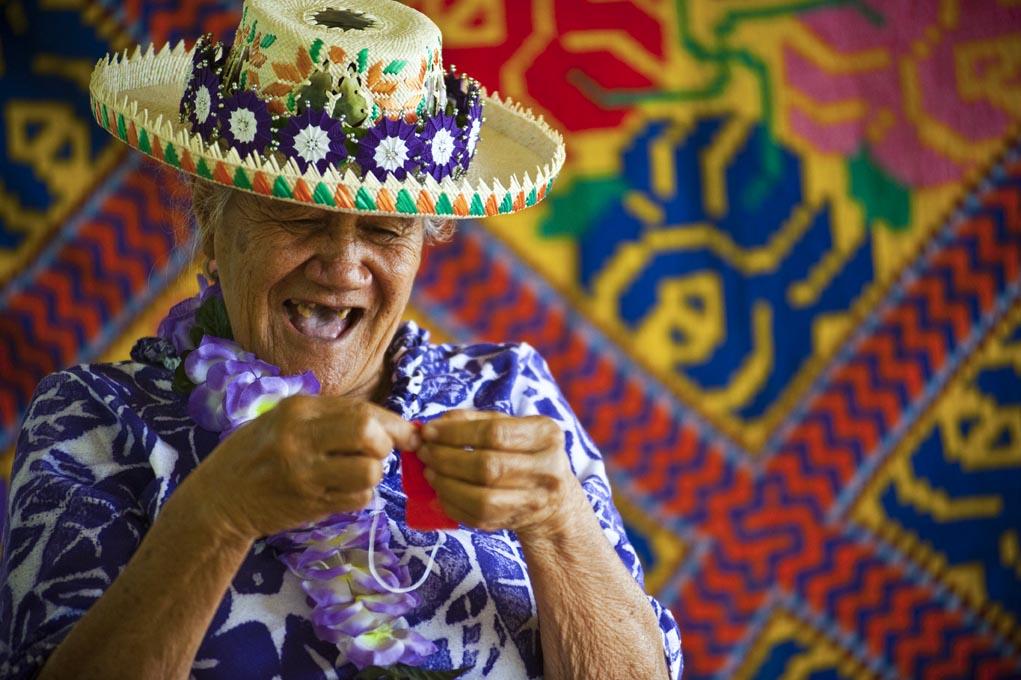
- crafting traditional Tivaevae - women gather socially and trace an outline of the leaves or flower
patterns of interest onto a piece of cloth, then cut out the design and apply it to another piece of cloth.
Unique method of cutting an overall design from a single piece of fabric. Today Cook Island women hold
tivaevae exhibits and competitions.
Tumunu
- some Maoris refused to accept the missionaries' influence in all fields and instead practiced their own ritual of the
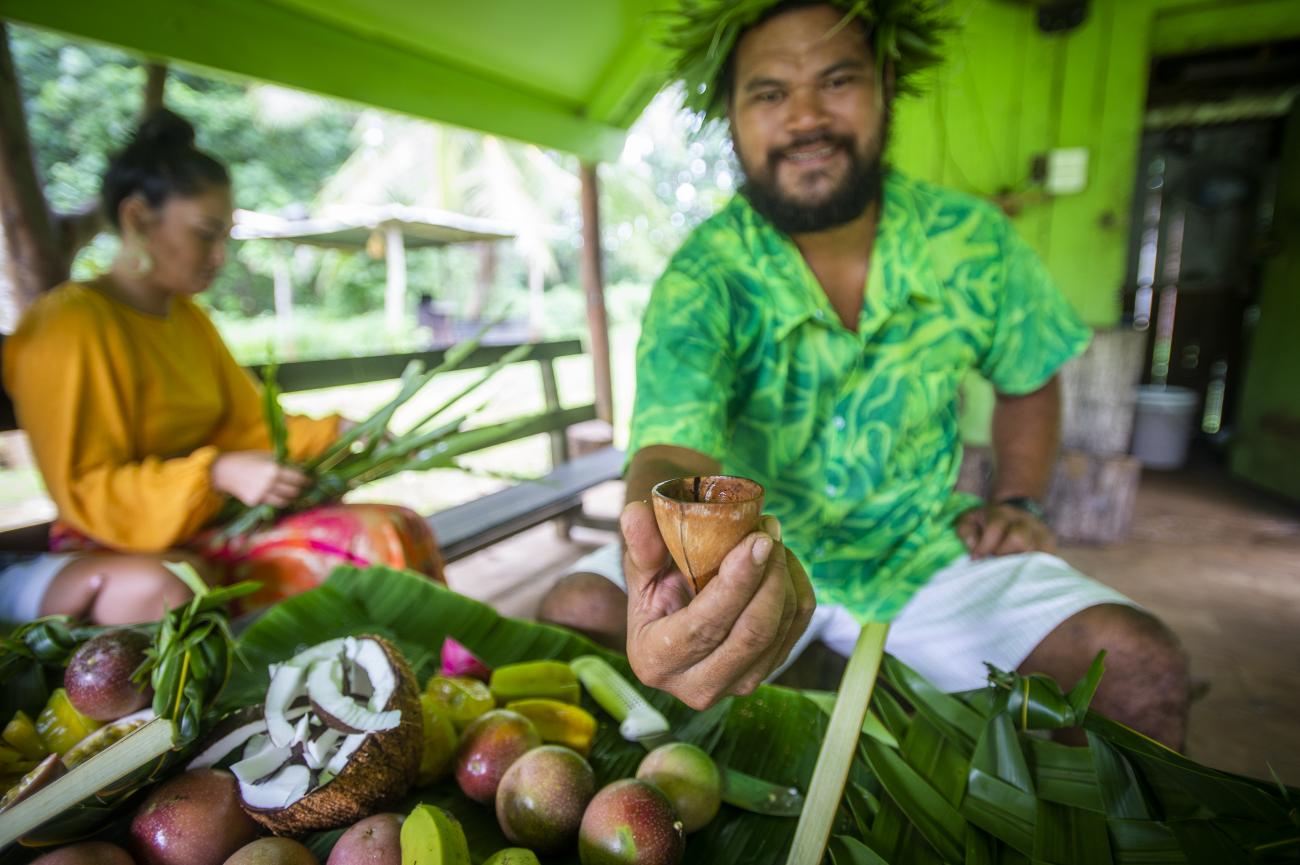
tumunu in the bush - joyful convivial tribal activity named after the brewing barrels which are carved out of the thickest part
of the coconut palms
- tumunu involves passing round a half coconut filled with fermented fruit juice, sitting in a circle chatting, which turns into less understandable
after few rounds...
- the ceremony begins and ends with a prayer
Excursions / must see
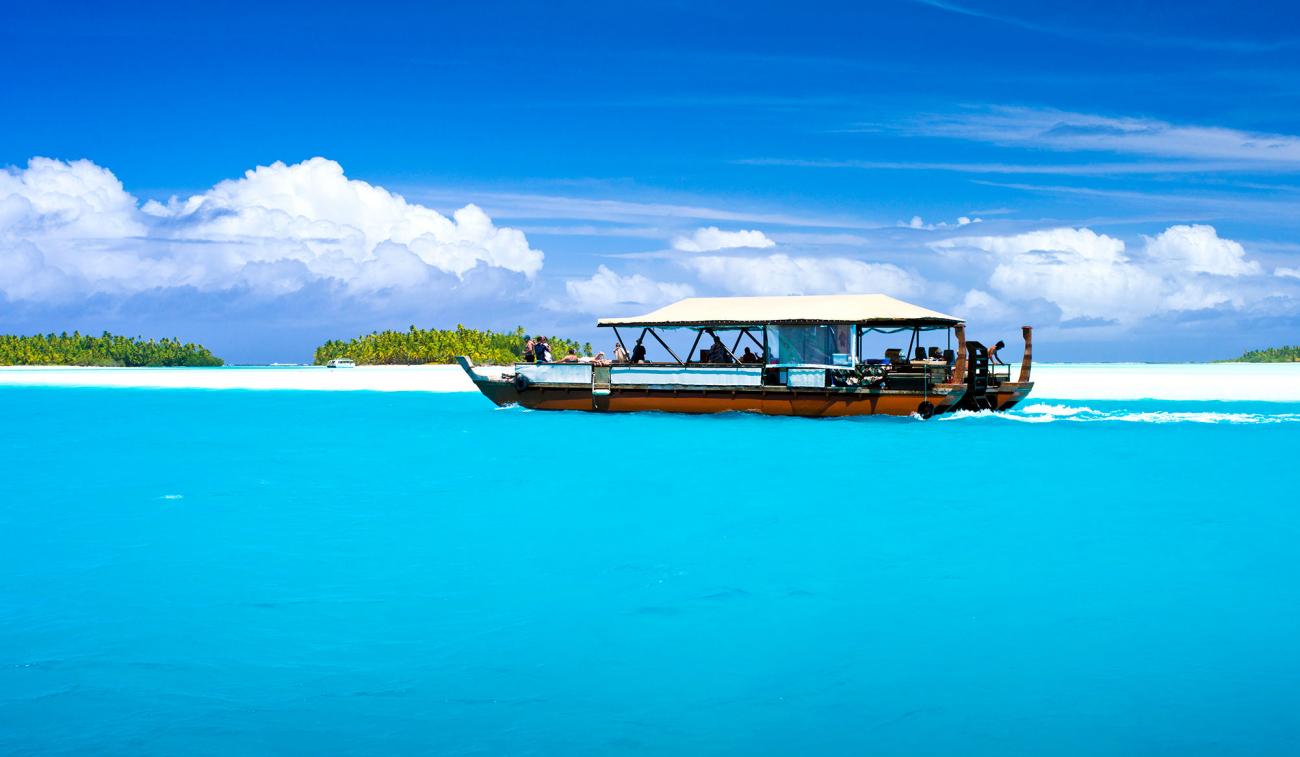
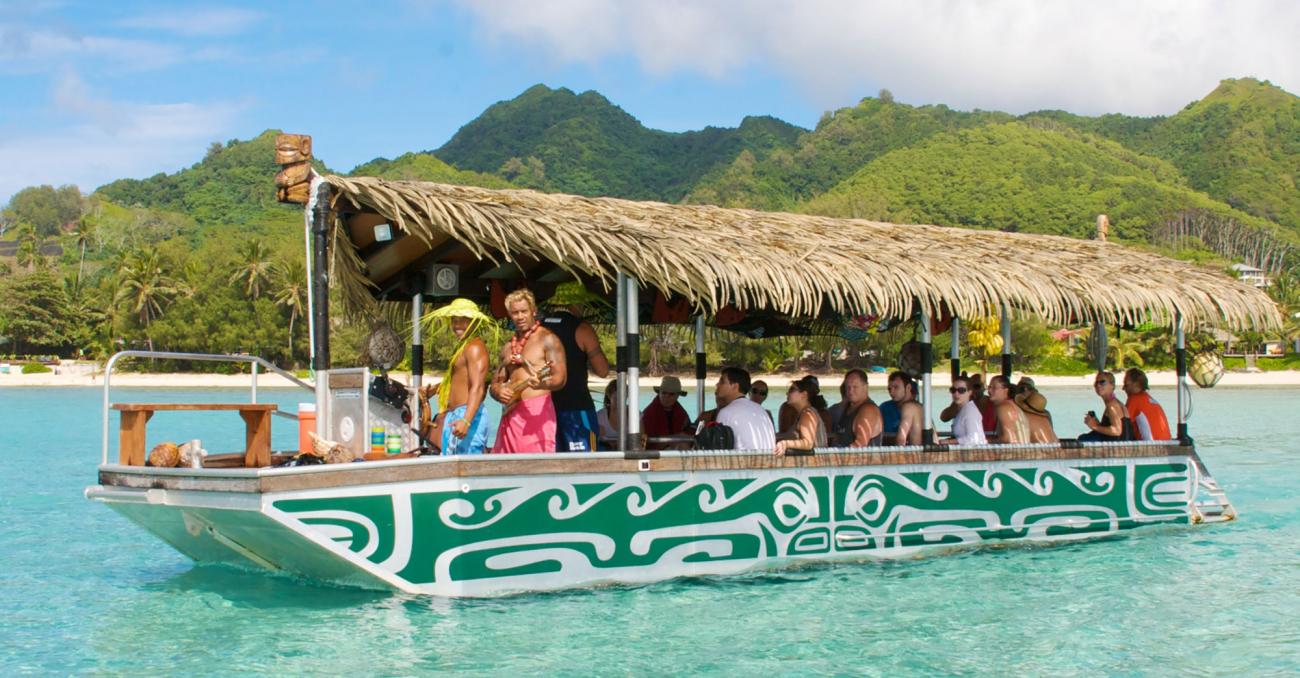
Aitutaki Lagoon Cruise
- ideal for swimming, snorkeling, beachcombing
- day trip from Rarotonga ideal for those who do not dive or snorkel available
- Marine Research office in Aitutaki welcomes visitors to learn about the underwater marine life of Cook Islands
+ they cultivate black pearls and Cook Islands' Paua
Cultural Museums, historical sights
- Cook Islands museum and library at the Ministry of Culture - visitors can learn about traditional culture of the islands
- Highland Paradise Cultural Centre in Arorangi (Rarotonga) - learn about the history and recently discovered historical sites
of the settlement of the Tinomana Ariki Tribe
- ancient marae - ceremonial meeting places for tribal feasts and offerings, f.e. Te Pou Toru Marae, stone structures from the
royal court of a reigning chief on Rarotonga, Te-Poaki-O-Rae on Aitutaki, ancient marae on Motutapu
- visit the University of the South Pacific, the National Museum or the old Library and Museum Society in Takamoa to see
traditional paintings, wooden and stone carvings made by local artists
Island Night
- traditional umukai, Cook Islands feast, combined with traditional dancing
- hypnotic rhytm of drums, exciting and sensual dance
Safari tours
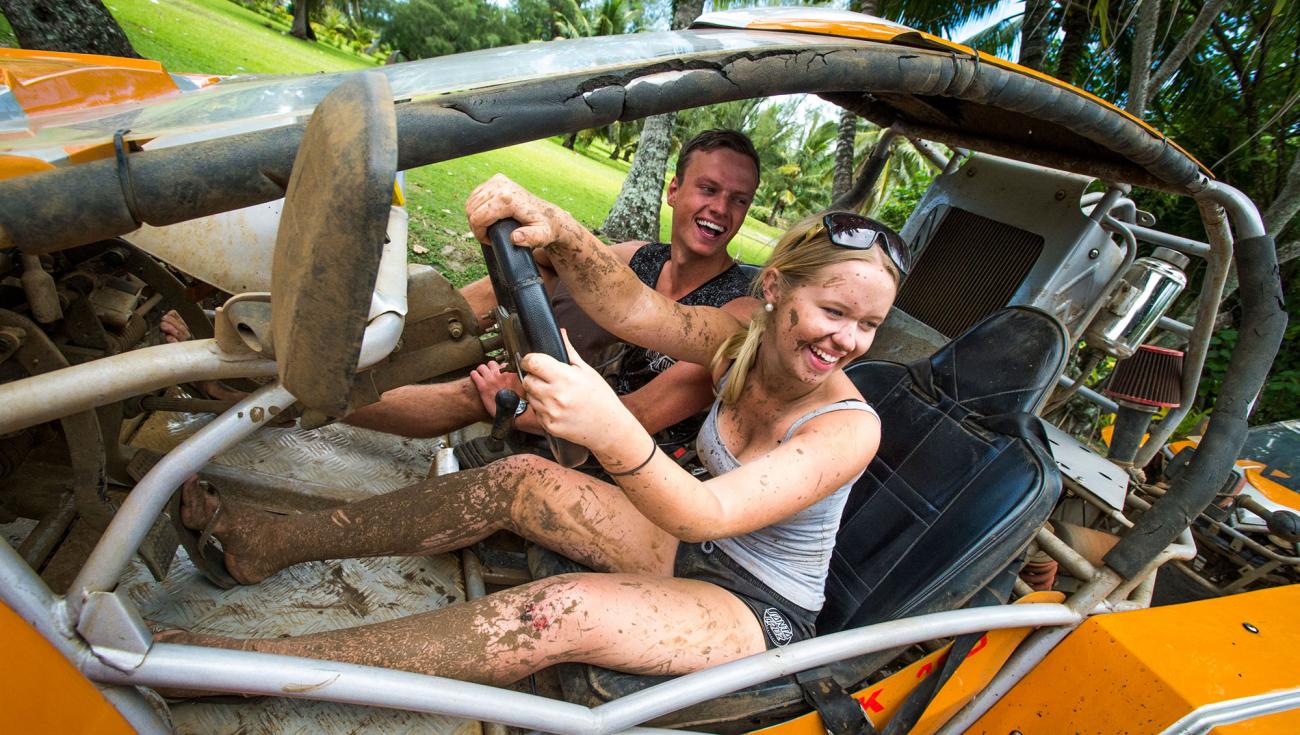
- 4-wheel drive tours through the rainforests are offered on Rarotonga, Aitutaki and Atiu
- learn about the island and their traditional plants and animals
Whale watching
- humpback whales migrate through the Cook Islands from July till the end of October, nearby shores
Shopping, souvenirs
- the main shopping area in Rarotonga is in Avarua, small markets are all over the islands
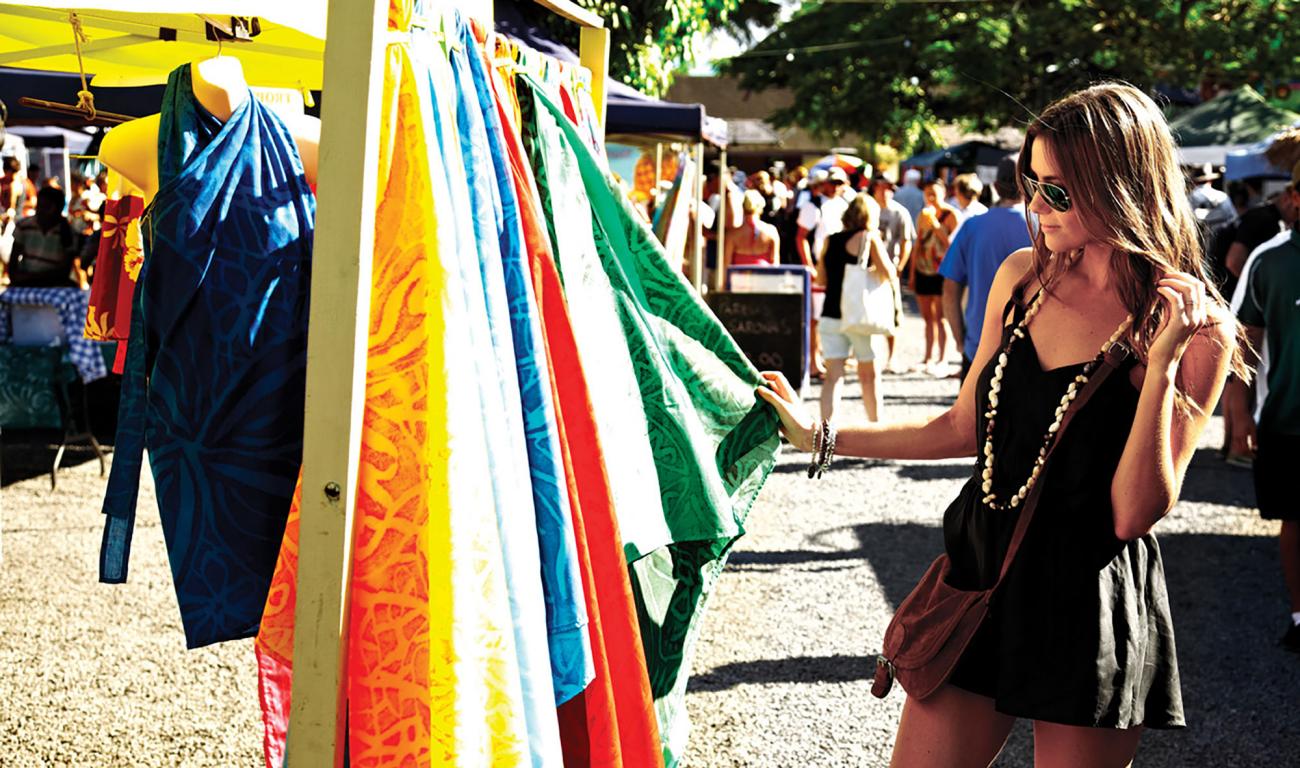
- one of the best places to buy souvenirs is the Punanganui Market in Avarua
Popular souvenirs
- woven rito hats and rito fans with black pearl shell handles
- woven pandalus mats and baskets
- tivaevae - hand stitched embroidered quilt, great as a decoration or cover for cooler nights
- woodcarvings like wooden drums, tribal weapons (spears etc.) or traditional idols like Tangaroa, phallic male god of the
sea and fertility; buy at the Punanga Nui marketplace every Saturday morning
- black pearl shell accessories like belts, bracelets or necklaces
- brightly colored Pareus - sarong
- paintings - check the galleries around Rarotonga
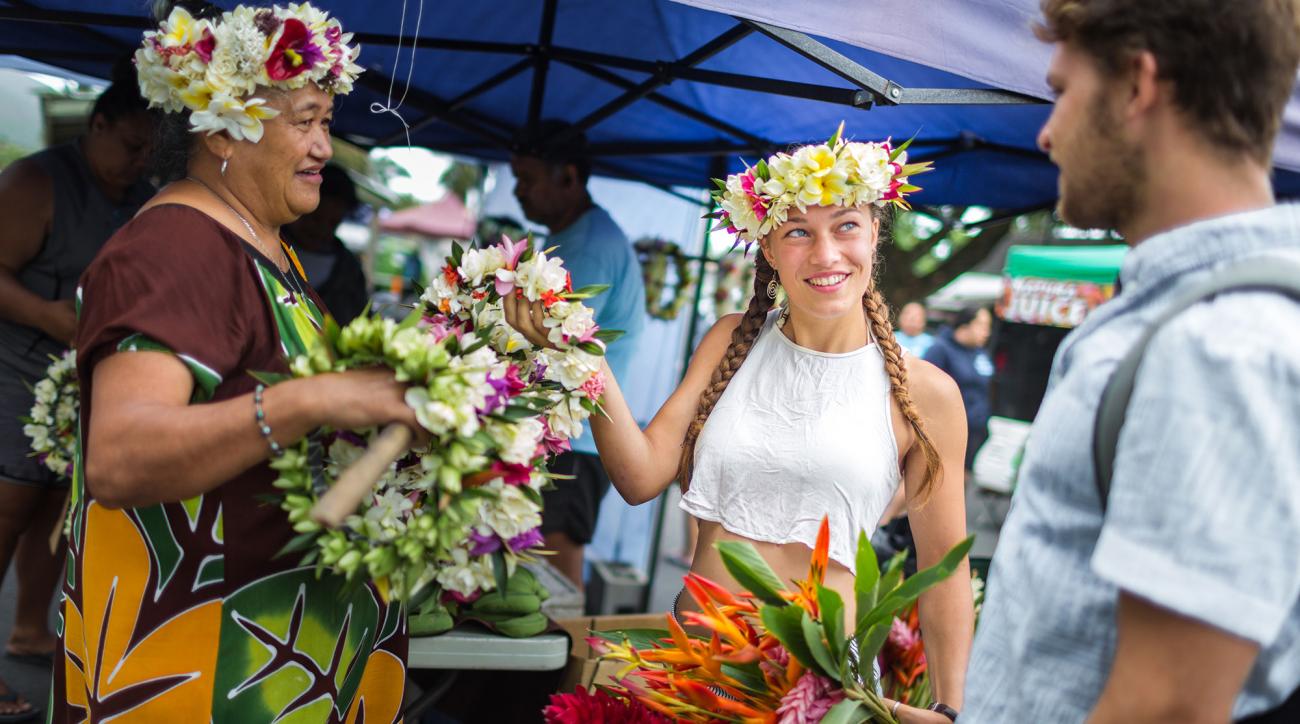
- typically from Mangaia island - ornate shell, seed hatbands, ei (lei, flower garlands)
- typically from Pukapuka - finely woven pandalus mats
- typically from Atiu - tapa decorated with traditional patterns
- Want a tattoo as a souvenir? Tattoo artists specialized in traditional patterns and motifs can be found in Rarotonga.
Pearls
- available to purchase from some local stores or Punanganui marketplace, prices depending on the quality and size of the pearl
- Black pearl (of shell Pinctada margaritifera) from the unpolluted waters of Manihiki and Penrhyn lagoons. Black pearls derive
their color from the grey fish-black nacre of the oyster shell.
- Keshi pearls are formed when the mother pearl shell rejects the nucleus and only the donor mantle remains. The shell then forms
a small, irregular seedless pearl.
- Mabel (mar-bay) pearls, also known as blister pearls, are half-pearls formed by cutting the nucleus in half and attaching it to
the inside lip of the mother shell. They form oval, teardrop and heart shapes and often show the colors of the spectrum.
- the natural Golden Pearl (poe pipi) is one of the few remaining types of natural pearls left in the world today. It grows
in the lagoon of Penrhyn in the shell Pinctada maculata, the smallest pearl producing shell in the world. The pearl is seldom bigger
than 8mm in diameter.
Sports, activities
- all kinds of water sports including lagoon cruising, snorkeling, diving and surfing
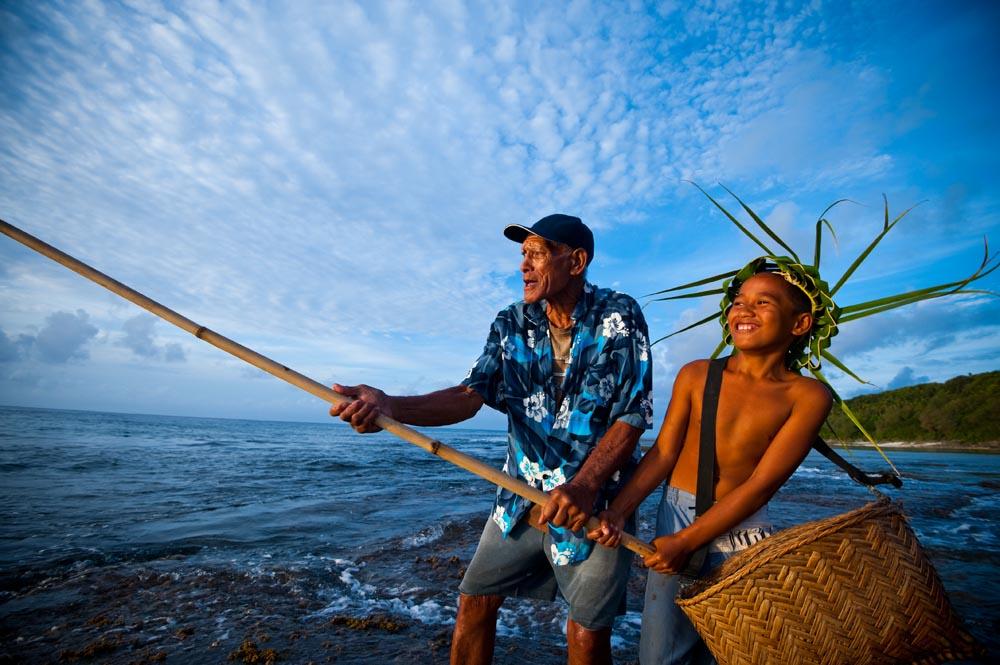
- fishing possible (although areas around the islands are protected)
- golf, tennis, squash, lawn bowls
- horse riding
- glass-bottom boat tours
Diving
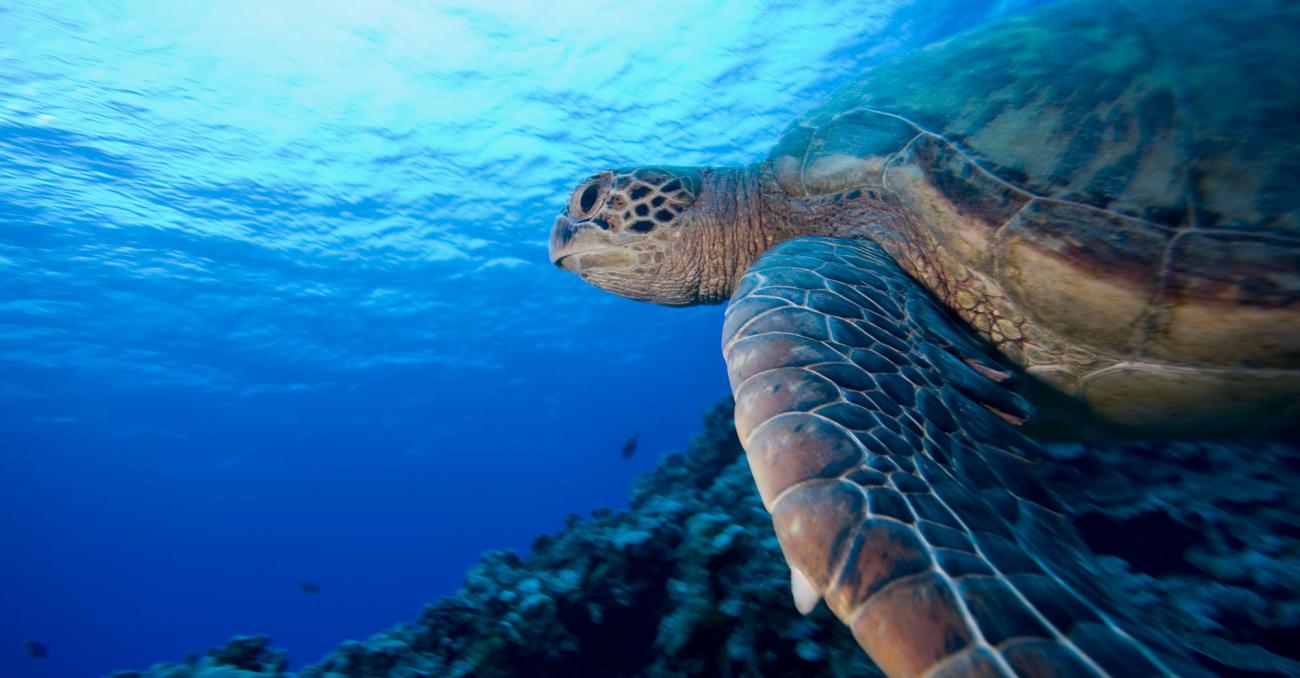
- Rarotonga and Aitutaki are wonderful scuba diving places, yet not that frequent, featuring whales, hawksbill and green
turtles, game fish, colorful tropical reef fish of all kinds
- warm water and wonderful visibility year round ranging from 25m on a bad day to 60-70m on a good day
Exploring, hiking
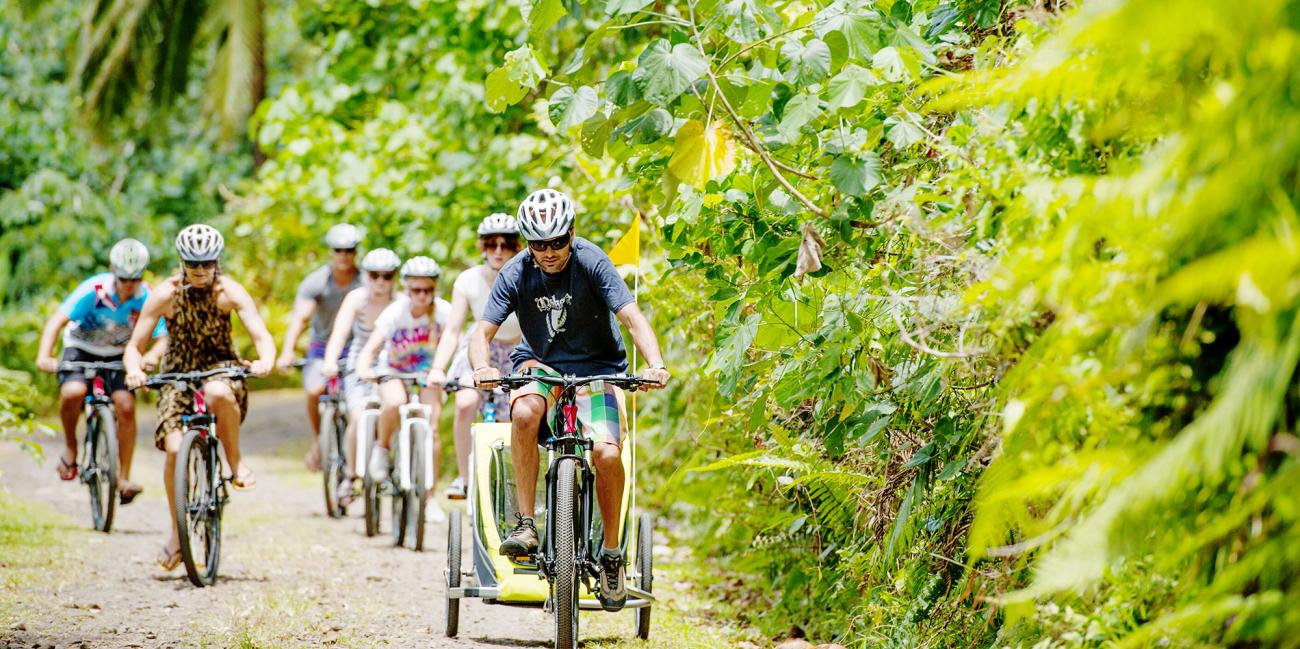
- discover the islands hiking, biking or from a scooter
- many walking trails of all difficulty levels
- hire a local guide for your hike or trek, you will see and learn more
- Cross-Island Mountain Trek - the most popular trail
Fishing
- charter game fishing for both experienced and newbies
- affordable prices
- tailor made programs ranging from saltwater fly and light-tackle sports fishing to deep sea game fishing
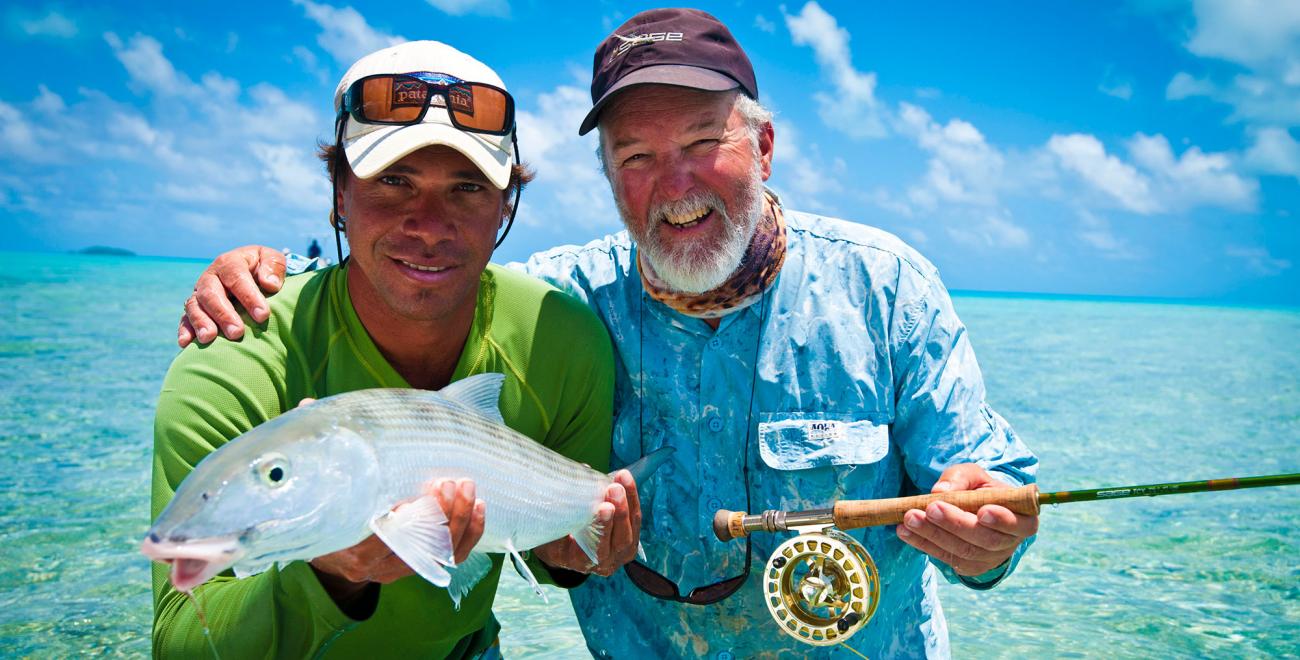
- Bone fishing catch and release programme at Aitutaki
Nightlife
- bars and clubs in Rarotonga with entertainment and local music
- nightspots open until mignight, on Fridays until 2AM
- Friday = big night out on Rarotonga, some resorts offer a guided "pub crawl" across local pubs and dance clubs
Day SPA
- many resorts offer spa services like massages
- The Waterfall Day Spa - the newest Spa centre on Rarotonga, service includes Vichy Showers, Hydrotherapy Treatments,
Body Scrubs, facial and body massages
Sailing, Windsurfing, Kayaking
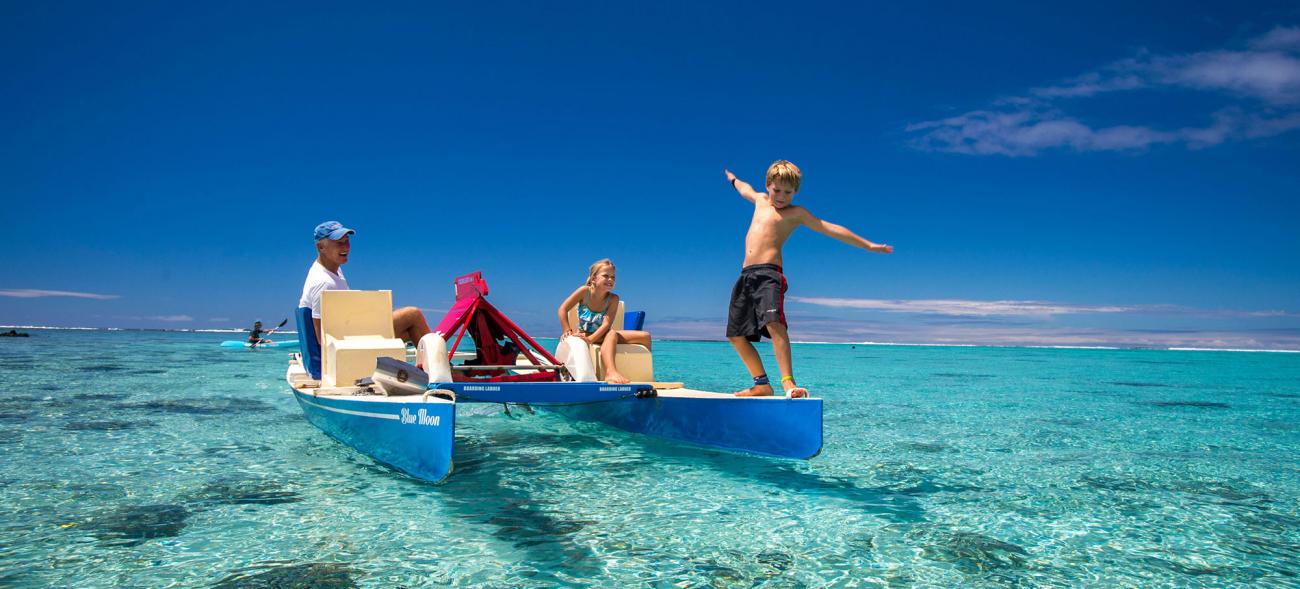
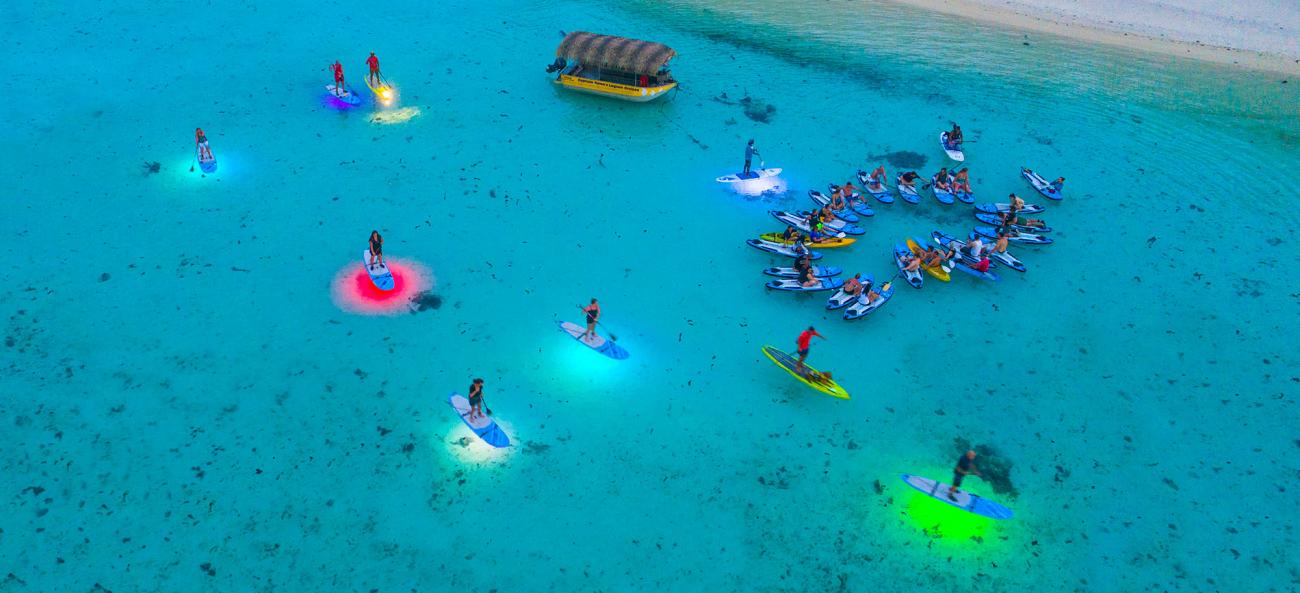
- windsurfs, sailboats, kayaks or catamarans are available for hire
- Muri Lagoon - the most popular place for sailing activities on Rarotonga
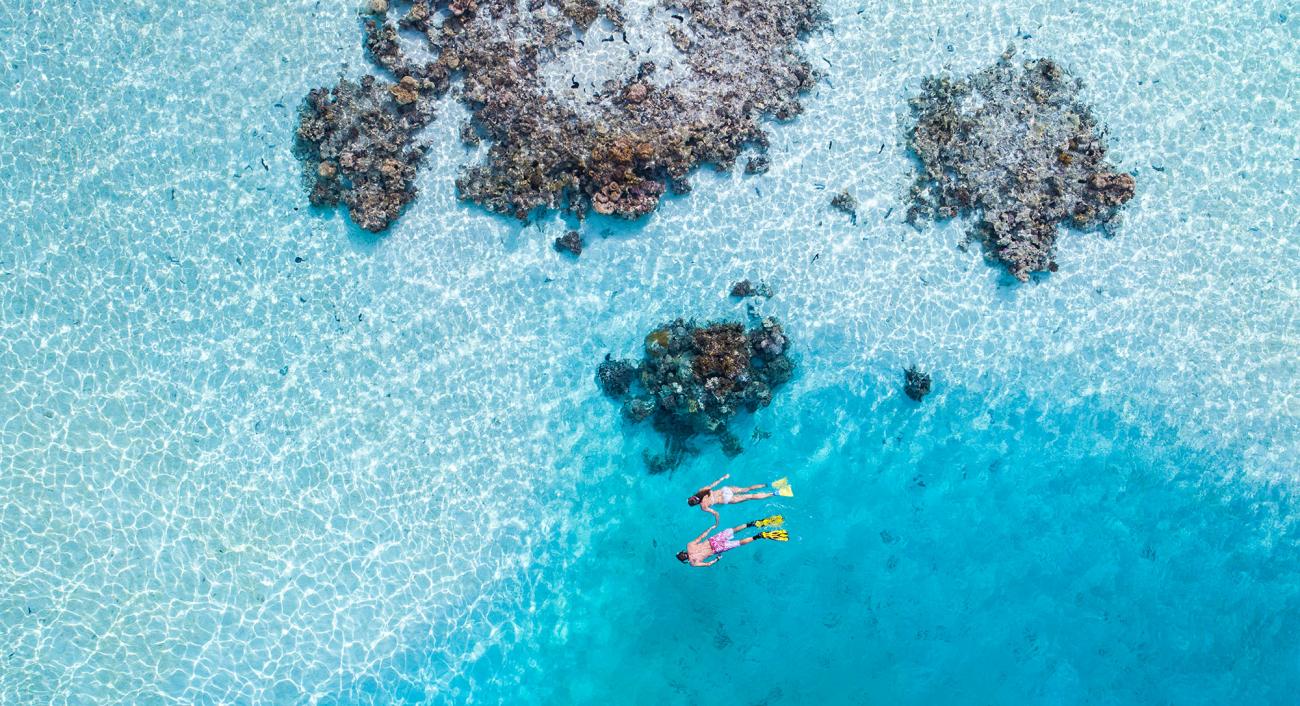
Snorkeling
- possible basically anywhere inside the coral reefs of Cook Islands
- plentiful tropical marine life, fish, corals...
Food, cuisine
- restaurants ranging from gourment to friendly island-style
- most restaurants are open for dinner from 6PM to 9.30PM
- popular local beer, wines are imported from Australia and New Zealand
- international cuisine, New Zealand influence, but also many traditional local meals like:
- umukai - traditional dish of chicken, pork, fish and vegetables baked in an underground oven
- mitiore - grated coconut fermented and flavored with much seafood
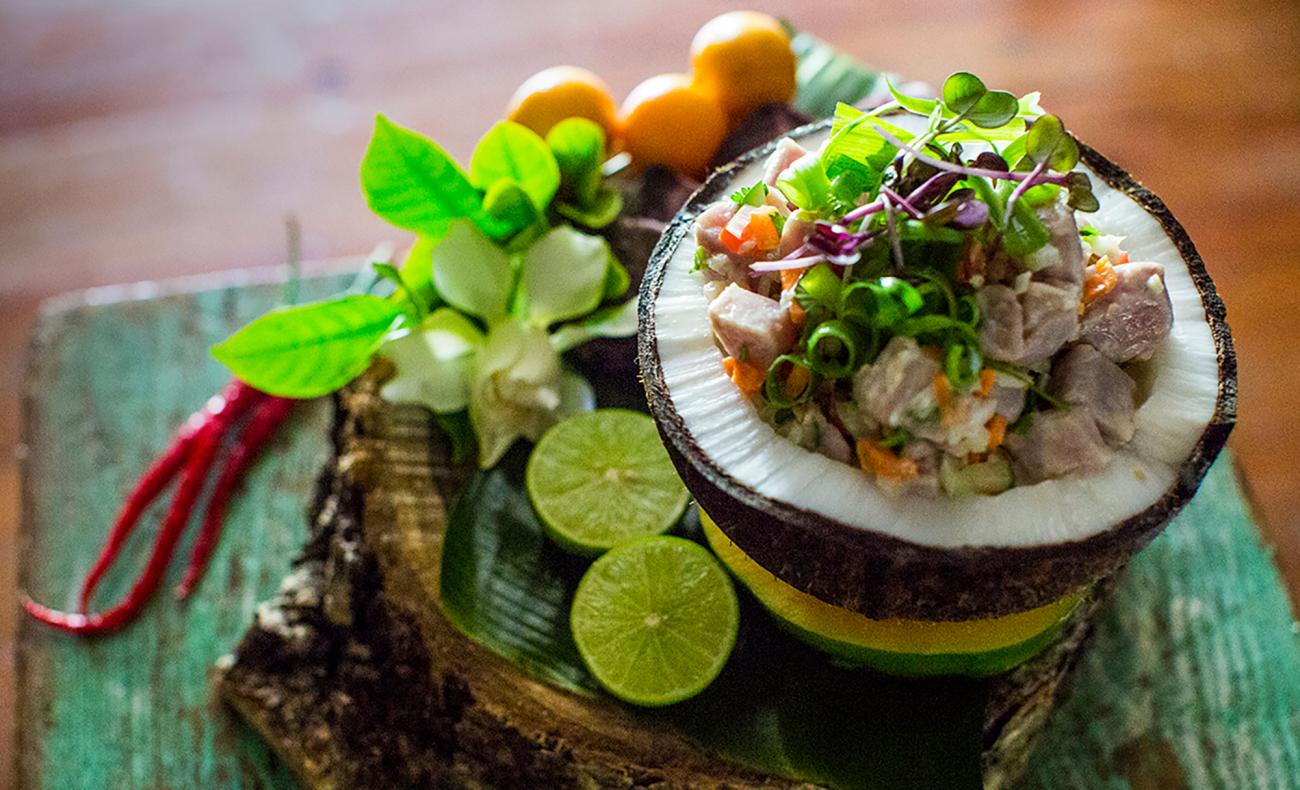
- ika mata - marinated fish with lemon, coconut milk and tomatoes
Authentic dining
- Plantation House Dinner - dinner with a local family who cooks up and feeds you using all the local produce
- Progressive Dinner - similar to Plantation House, but you move from one family serving you entree, another family
will serve the main course and a third family serves dessert
Special tourism
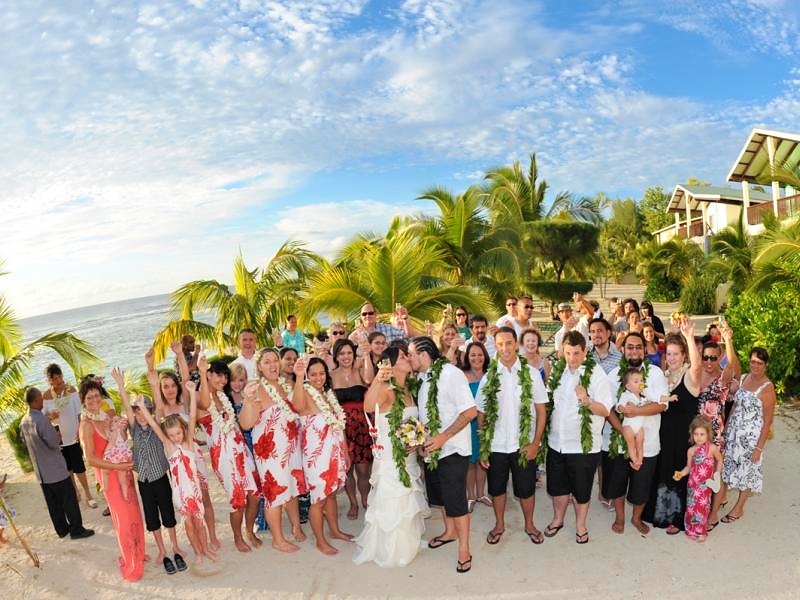
Wedding and Honeymoon
- wonderful setting for a wedding and for the honeymoon following are provided by the pleasant temperatures,
crystal clear lagoons, beautiful sunsets, relaxing atmosphere, welcoming people, location far from everyday life and
top romantic setting...
- couple can be taken to the chapel or chosen place of marital ceremony in traditional outrigger canoes
paddled by typically dressed warriors, announced by blowing conch shell
- increading number of related services like dress rentals, photographers etc.
- most popular place of the Cook Islands for a honeymoon and the ceremony itself is the Aitutaki island
- comfortable especially for New Zealanders thanks to good connectivity and the same currency used; popular also
for travellers from the UK and Europe, US and Australia
- requirements to get married in the Cook Islands:
- lodge a "Notice of Intended Marriage" with the Registry Office in person at least three days before the intended marriage
(shorter notice is charged with an extra fee)
- pay according registration fees (to have an idea, here are some of the fees as of 2020: notice of marriage 100 NZD, short notice supplement
75 NZD, marriage solemnised by the registrar 100 NZD, extra charge for a marriage solemnised by the registrar outside of office hours 75 NZD,
every caveat entered 100 NZD, verification of item in a marriage entry 10 NZD, registering a marriage celebrant 100 NZD)
- singles have to present the following: current passport (not needed for locals), birth certificate - certified if not the original copy,
translated and certified if in other language than English)
- for divorced bride or groom also the divorce decree or certificate is required
- for widows / widowers a death certificate of the previous spouse is required
Honeymoon at Aitutaki
- Aitutaki is the ideal place for a honeymoon, called a paradise, Eden with crystal clear lagoon and white sandy beaches
- experience Bishop's Cruise and enjoy Aitutakian's enthusiasm in song, dance and storytelling
- get your passport stamped on One Foot Island within Aitutaki lagoon
- the centre of the island is Arutanga with a lively market on Saturday in Orongo Centre and a live service in CICC church
on Sundays
- Vaipae - a village also called Holywood, Aitutakians are known as the showmen of the Cook Islands - high spirited performances,
drummers, dancers and fire dancers as well
Island escape at Atiu
- Atiu is the ideal place for an island escape - no nightclubs, practically no township, around 400 inhabitants, little traffic and a couple
of cafes
- 5 little villages of the island (Tengatangi, Areora, Ngatiarua, Mapumai, Teenui) are nestled in the centre and the islanders
live like 25 years ago
- organic coffee produce, some of the best Arabica coffee in the Pacific
- popular for bird watching, among the rarest birds tiny Kopeka using bat-like sonar navigation and living in caves, living only
in this area, some 11 native birds, Kakerori, Kura etc.
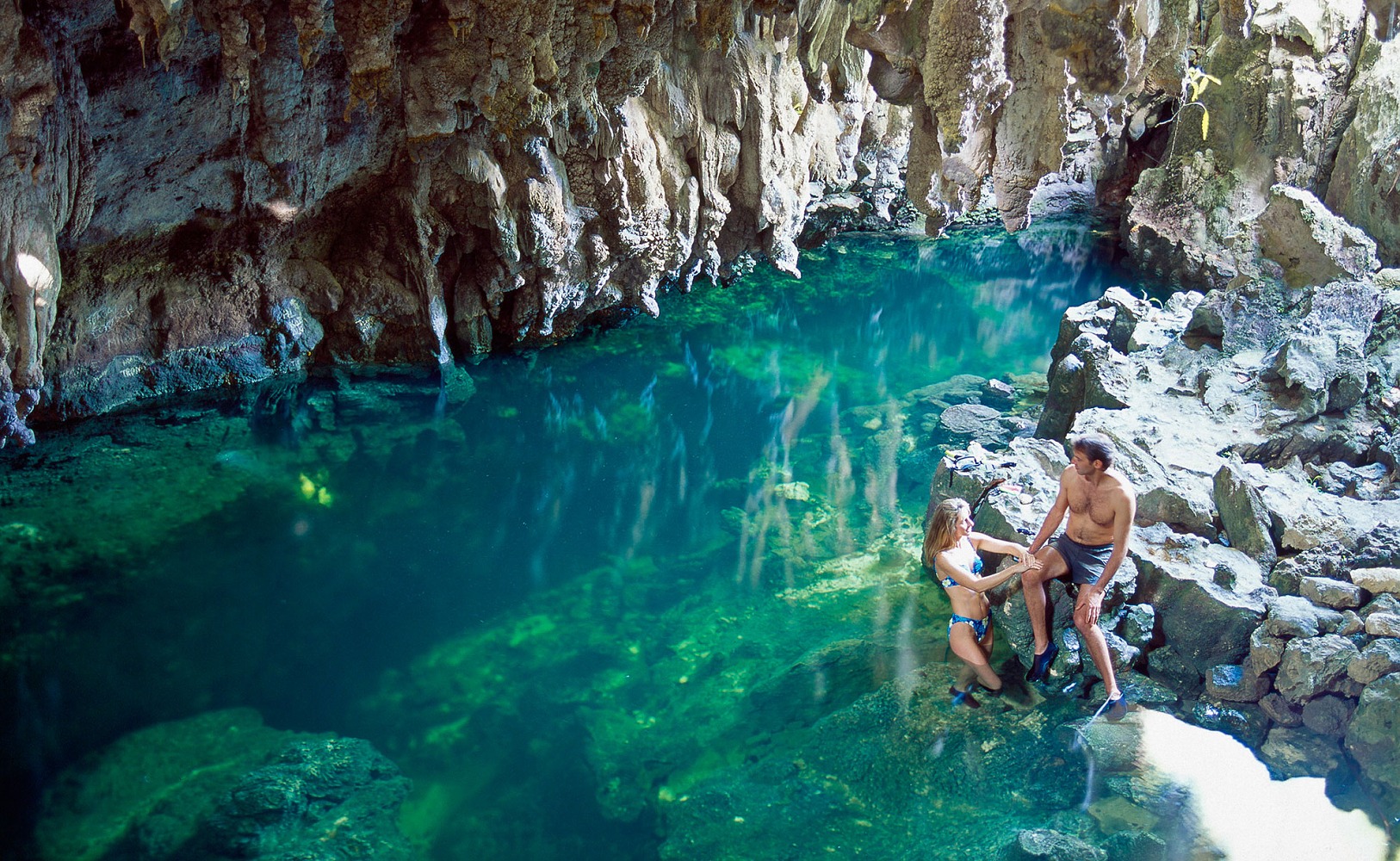
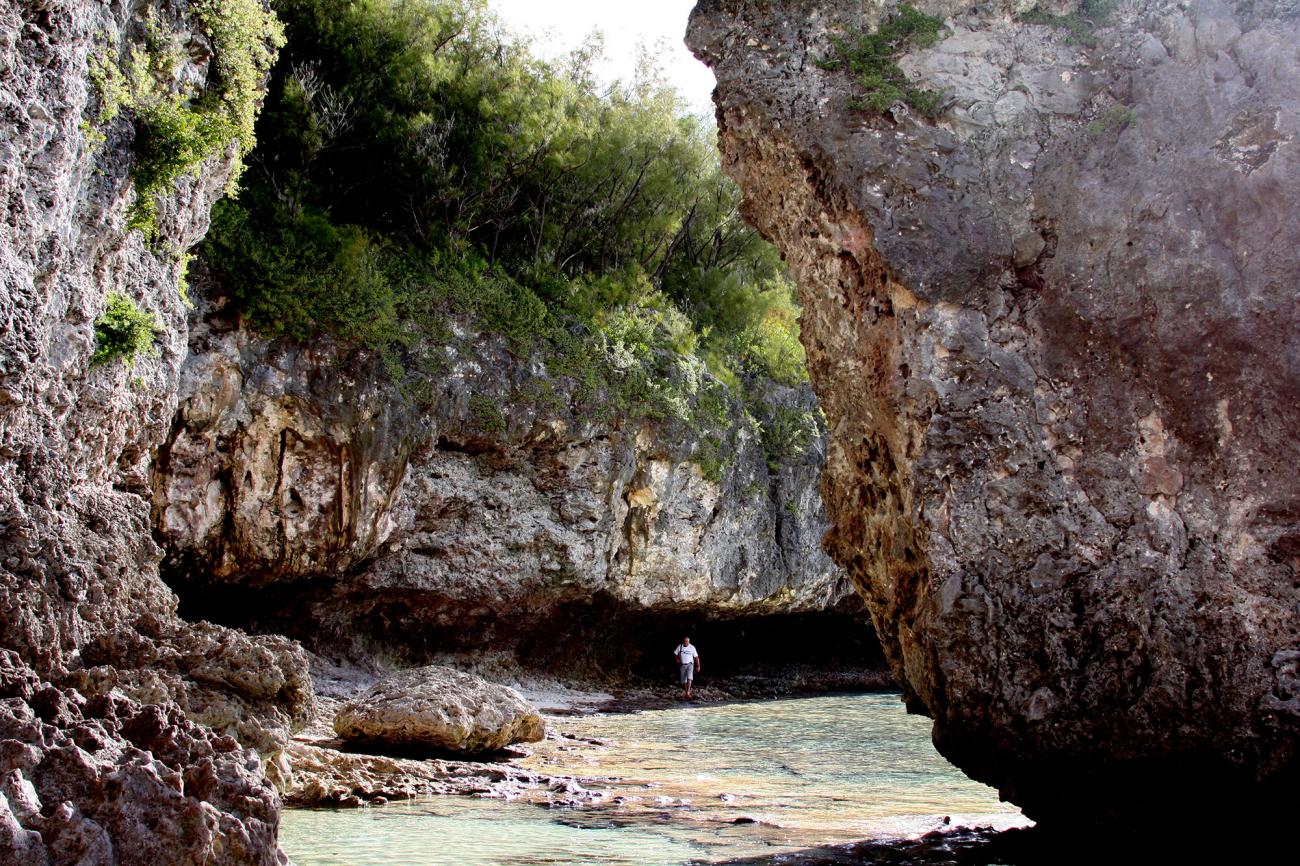
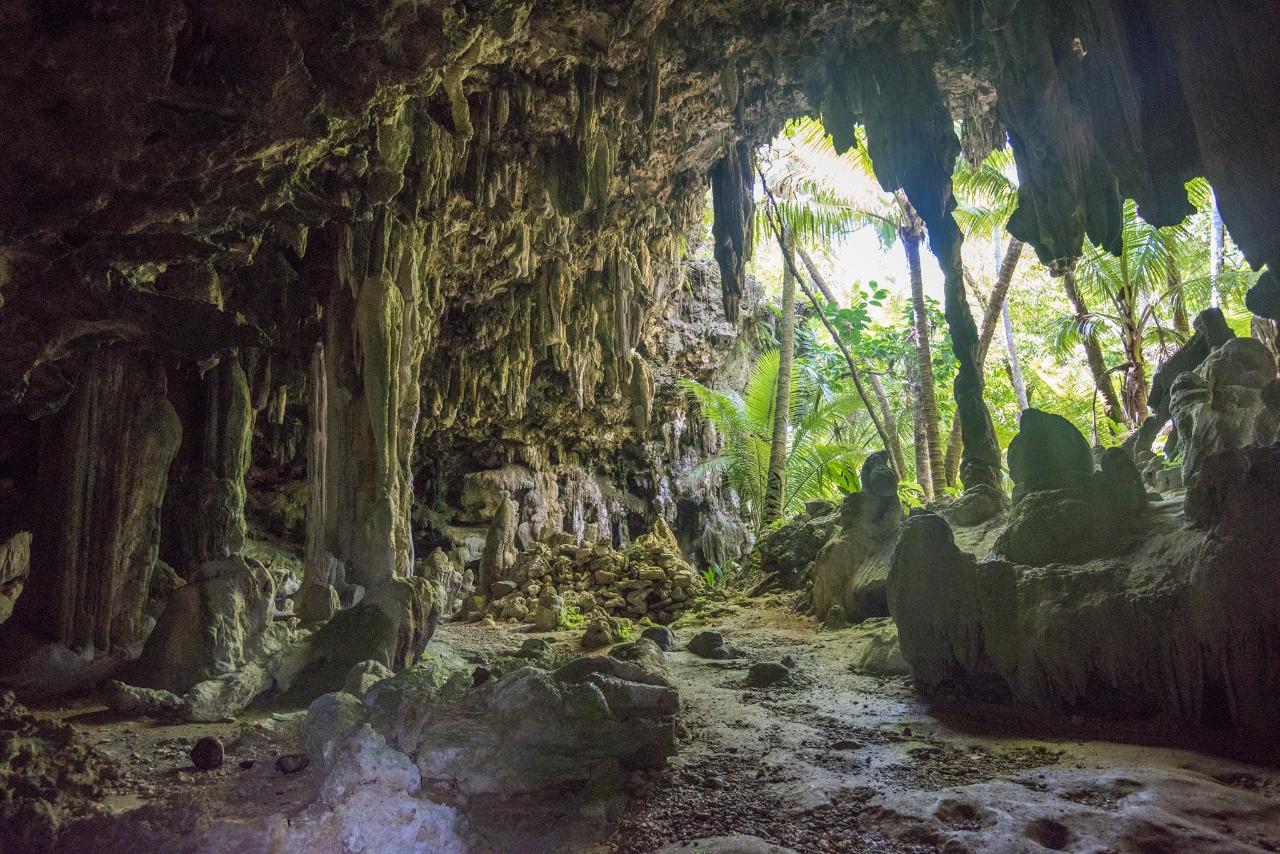
- Anatakitaki Cave with 3 caverns, pools of water, stalagmites and stalagtites, high natural cathedral ceiling;
Te Ana o Raka with 15 chambers, used to be home of the Rakanui family; Nurau and Vai Akaruru with some 50m deep waters
are ideal for deep cave diving
- caves were often used as burial grounds, so many ancient artefacts can still be found here
Home stay at Mitiaro
- authentic experience of home stays - learn and enjoy the culture, history, environment and lifestyle of local people
- so called itiki experience, a symbol of the fresh water eels of Mitiaro, caviar to the islanders, but also a synonym of bringing together,
sharing experiences or love, so important in todays world
- unique experience with minimal costs - combinable also with resort stay
- beautiful island nature, underground caves, freshwater lakes, underground water reserves Vai Nouri with healing powers,
Te Pitakare with fresh water (still used for drinking, no bathing allowed), sandy coast with secluded beaches and tiny coves
- only 6km wide island, the flattest of the Cook Islands with volcanic origin which turned into a coral atoll
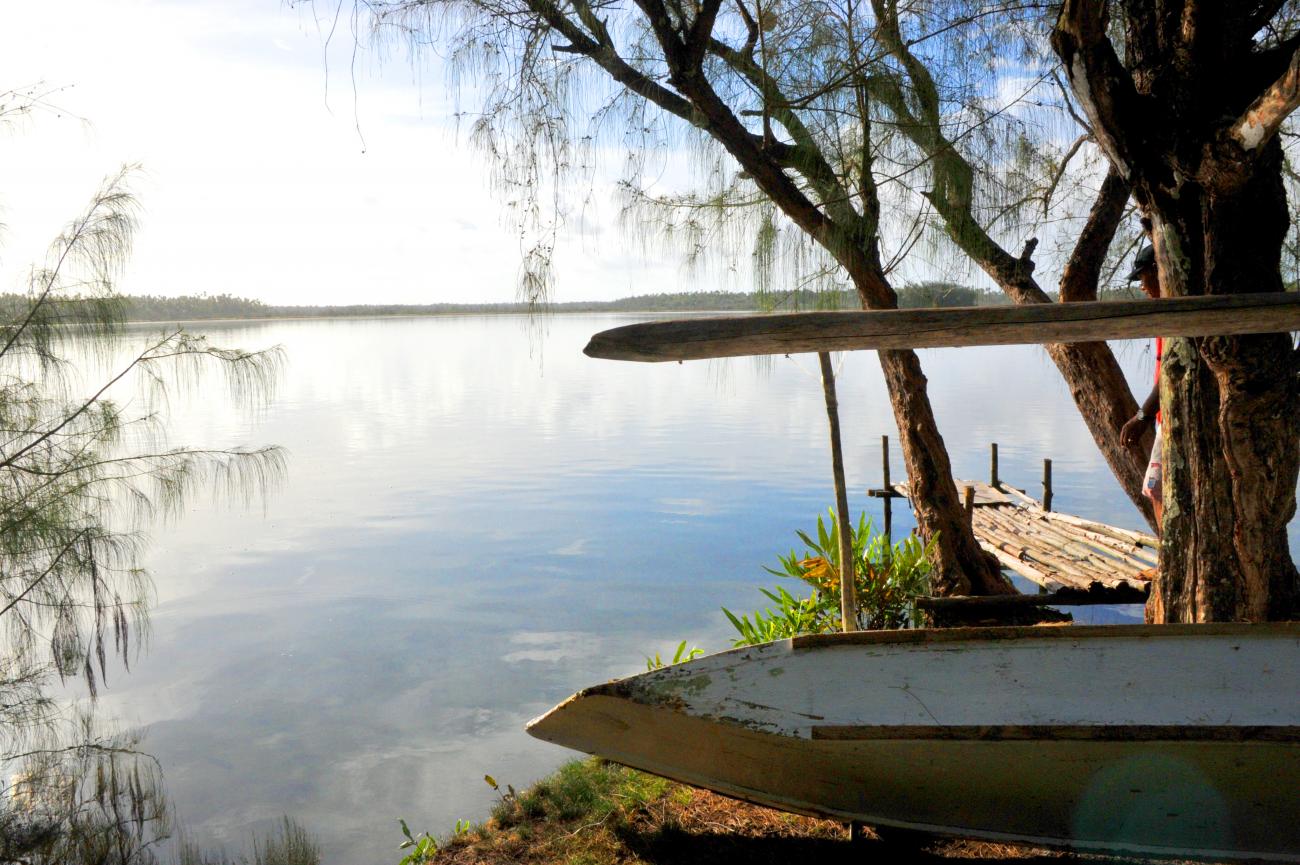
- more than half of the island is covered with lakes, Rotonui - Big Lake, Toto Iti - Small Lake
- population of just 200 people in 4 tiny connected villages called Takaue (with the government), Atai (the principal village),
Auta and Mangarei
- experience less than 10 cars on the island, traditional fishing boats, loud singing Christian church on Sunday...
- Te Pare - an ancient fort, the only known in the Cook Islands, built under a great warrior Maaro in the times of fights with Atiu men
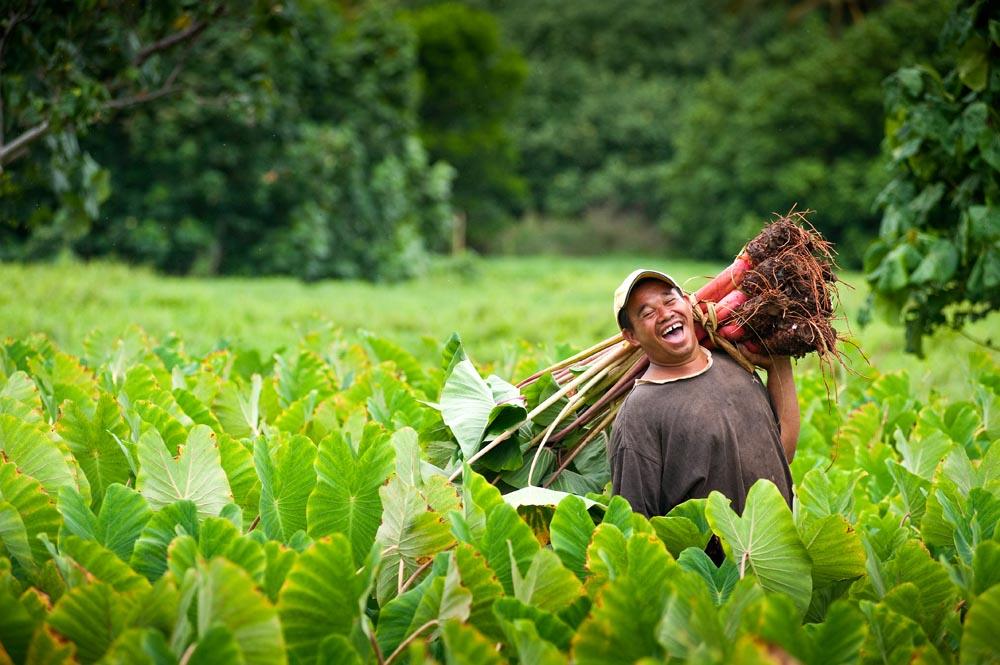
- local produce without pesticides or fertilisers includes kumara, taro, corn, bananas and watermelons, limes, wild growing dark green
maire vines (leaves collected and used in the long garlands for chiefly ceremonies, mark of respect for recipients)
- pack suitable footwear for the coral platform
Accessible Tourism
- for visitors facing any challenges or disabilities we are ready to provide the best available options
of transport, accommodation and services following their individual requirements
- let us know your special needs, we are happy to assist in creating a great holiday package fit for you
Events
- Miss Cook Island Pageant - every 2 years
- Ui Ariki Day
- Tiare Festival
- sports competitions like Rarotonga International Triathlon, the Round Rarotonga Race and the International Rugby
Sevens Tournament
Te Maeva Nui Constitution Celebration
- end of July to the first week of August - celebrating the nation's self-governance
- the first one was held on Friday 2 August 1968 at Taputapuatea, Avarua on Rarotonga, following events held at the Constitution Park
(now Te Puna Korero / Sir Geoffrey Henry National Culture Centre) and have included dance competitions
- from 1989 all the islands started to participate in the event
- the actual program varies but it is always a great happening on Cook Islands and a cultural celebration
Te Mire Ura - National Dancer of the Year Competition
- held in April
- from juniors to seniors and even Golden Oldies (10-60+ years), plus visitors' sections, male and female categories
- winners proceed to the Te Toa Akau Roa, International Dancer of the Year competition, together with Australian and NZ dancers
International Kite Surfing Competition
- usually in Aitutaki at Motu Maina Iti in June
- good visibility for spectators
- clean wind without obstacles
- opening and closing ceremony mandatory, the competition day is determined by the wind conditions
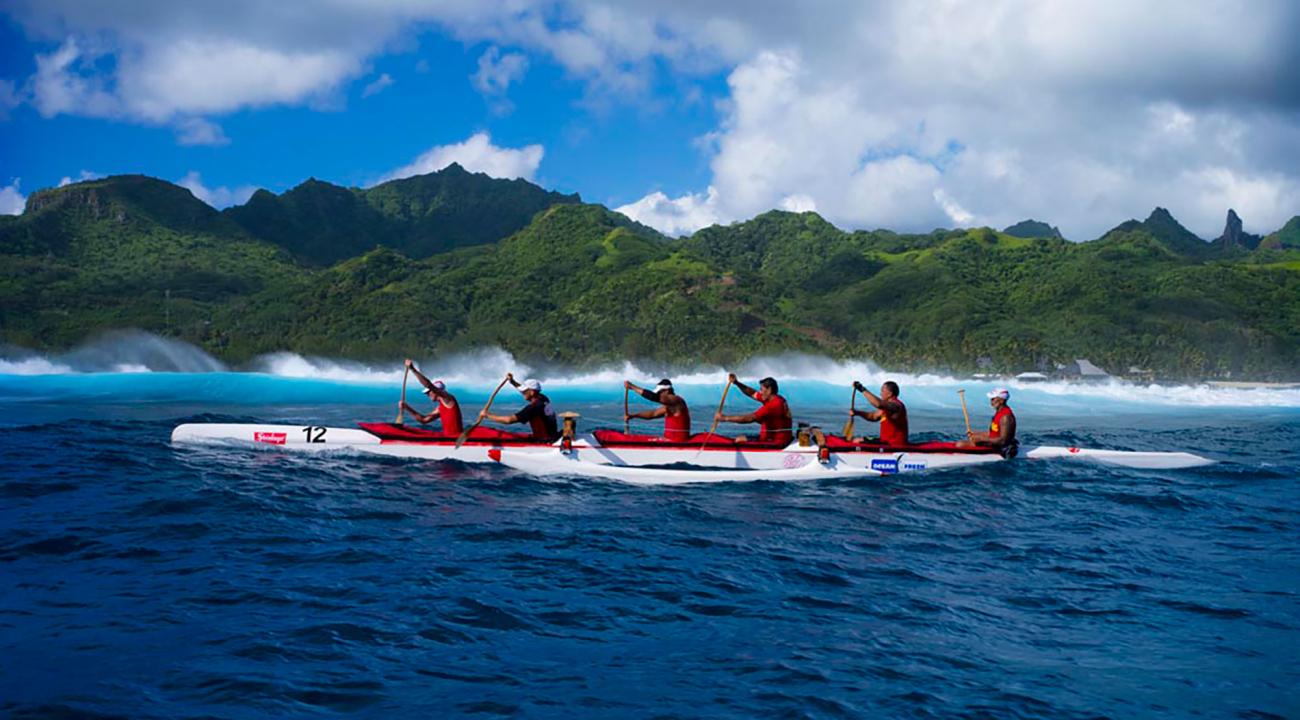
Vaka Eiva Festival
- the largest international annual event in the Cooks
- weeklong paddling festival held in November
- unique pop the ama competition plus various categories of Iron man, single races, six man races, men, women, mixed, 500m to 35km...
International Rugby Sevens Competition
- first week of November, lasting 3 days, on Rarotonga
- both men and women division, some 16+8 teams, top teams from New Zealand etc
- also called Sevens in Heaven
- many side events
Accommodation
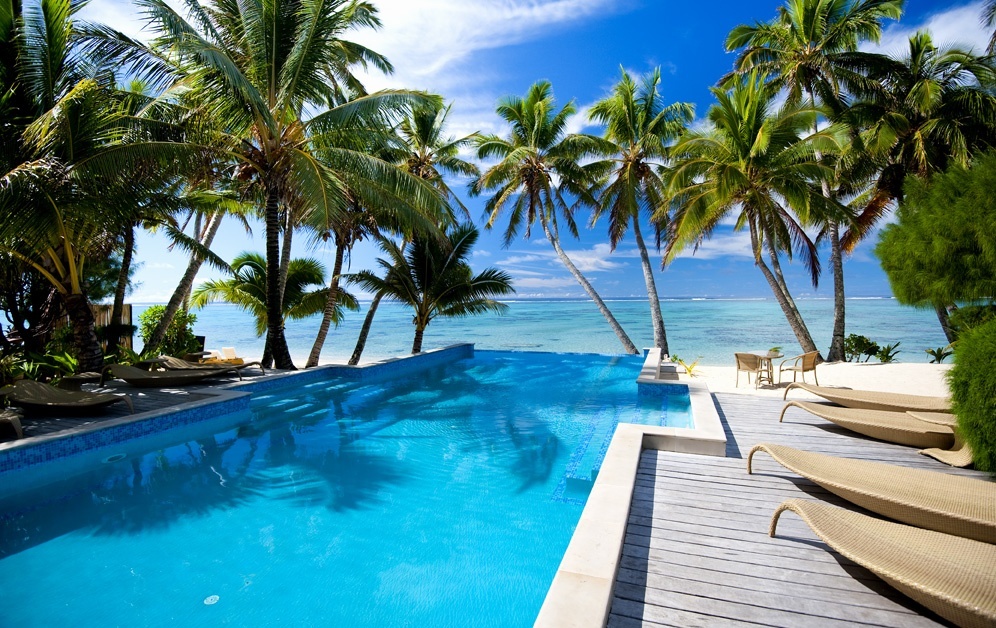
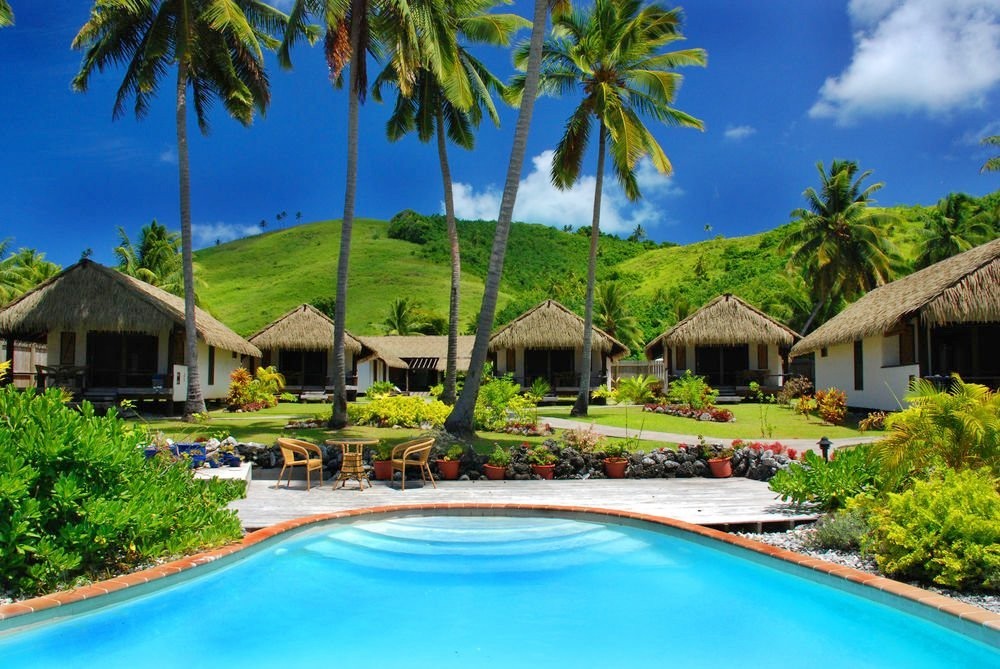
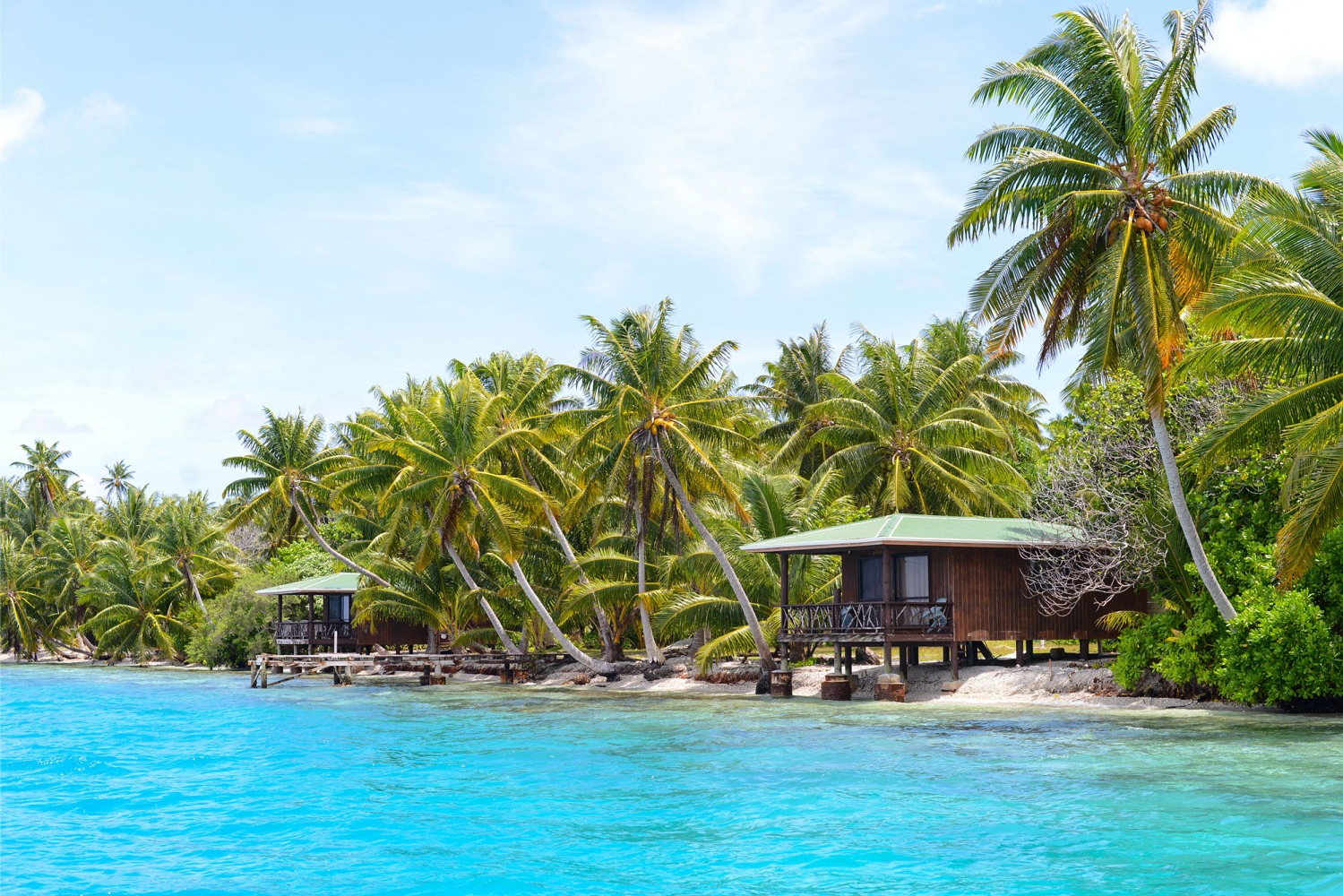
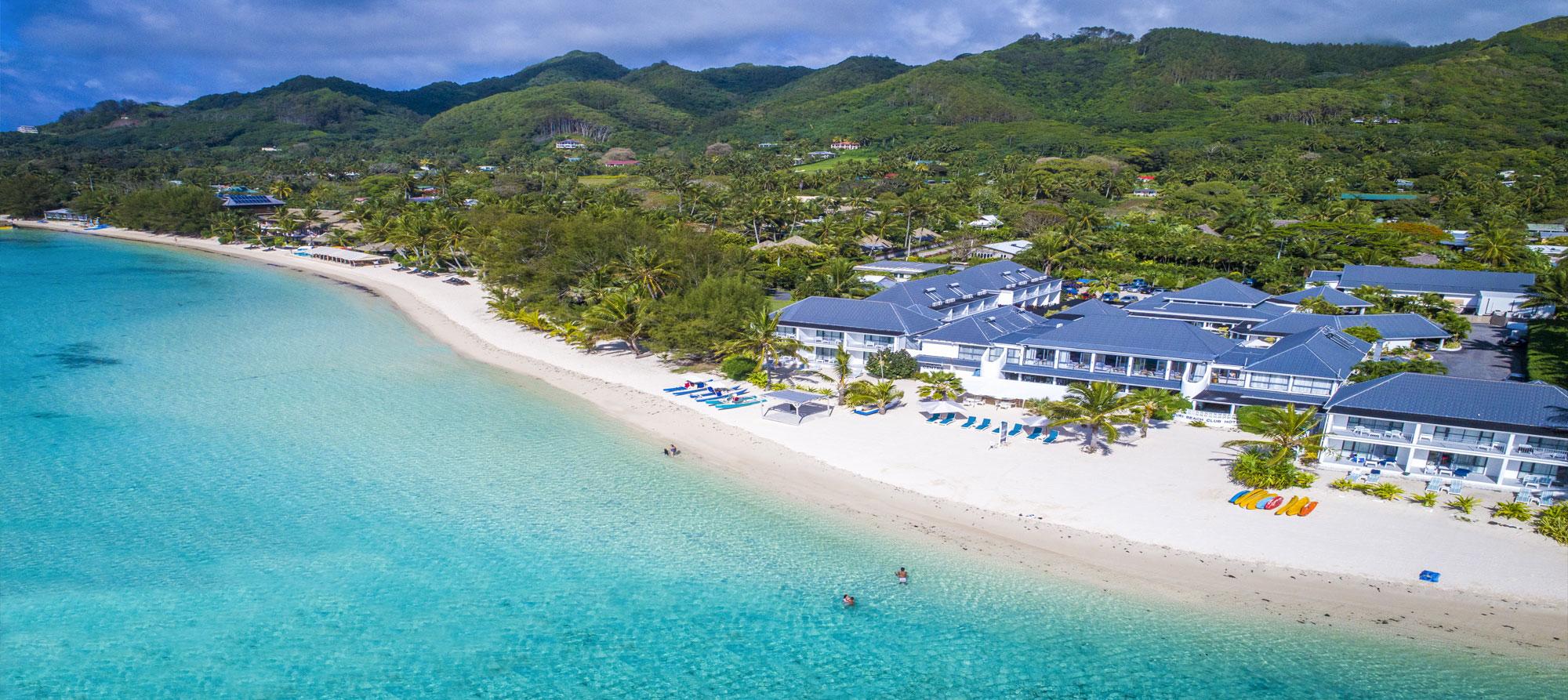
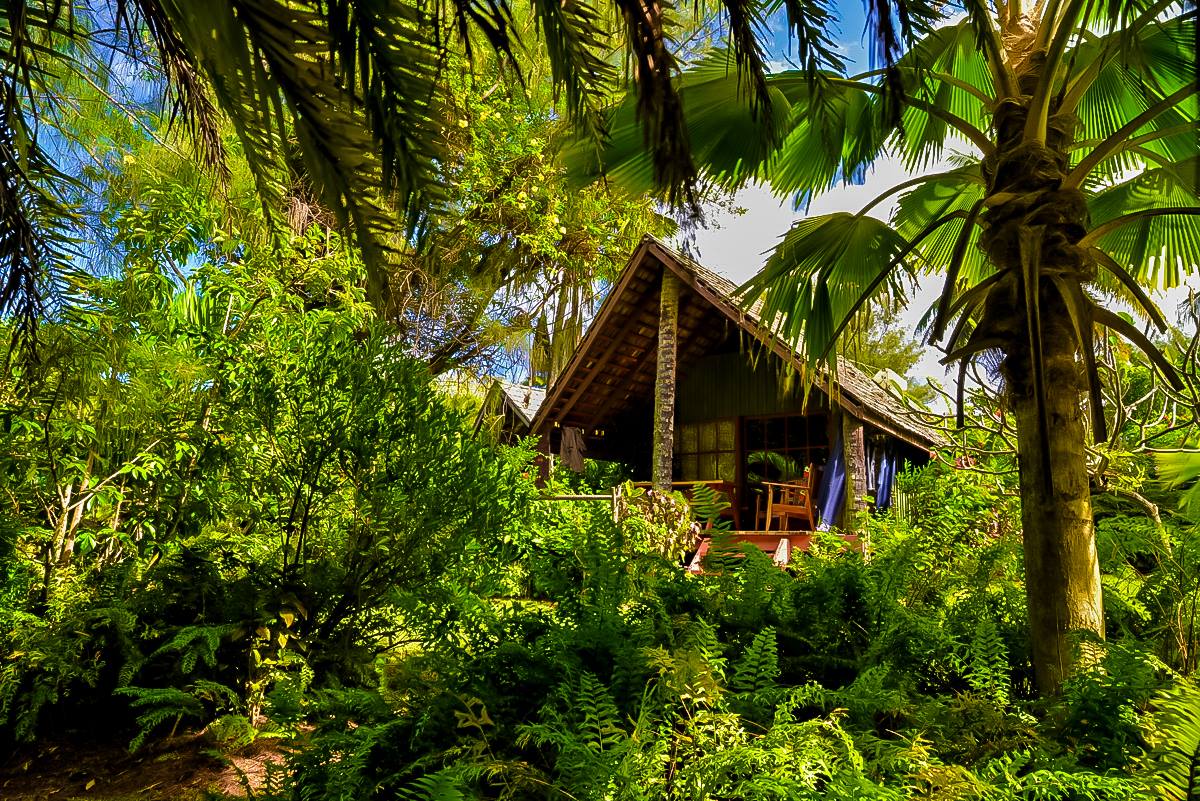
- wide range of accommodations from 5* to island style hotels, resorts, motels and hostels, family run businesses, secluded resorts...
- adults only hotels, family friendly accommodations, holiday homes, apartments and villas
- fit for every budget
- the most properties are found on Rarotonga island
- good variety of accommodations on Aitutaki island
- Southern group of islands - good budget facilities
- Northern group of islands - limited number of accommodations, book well in advance
- camping is prohibited in the Cook Islands
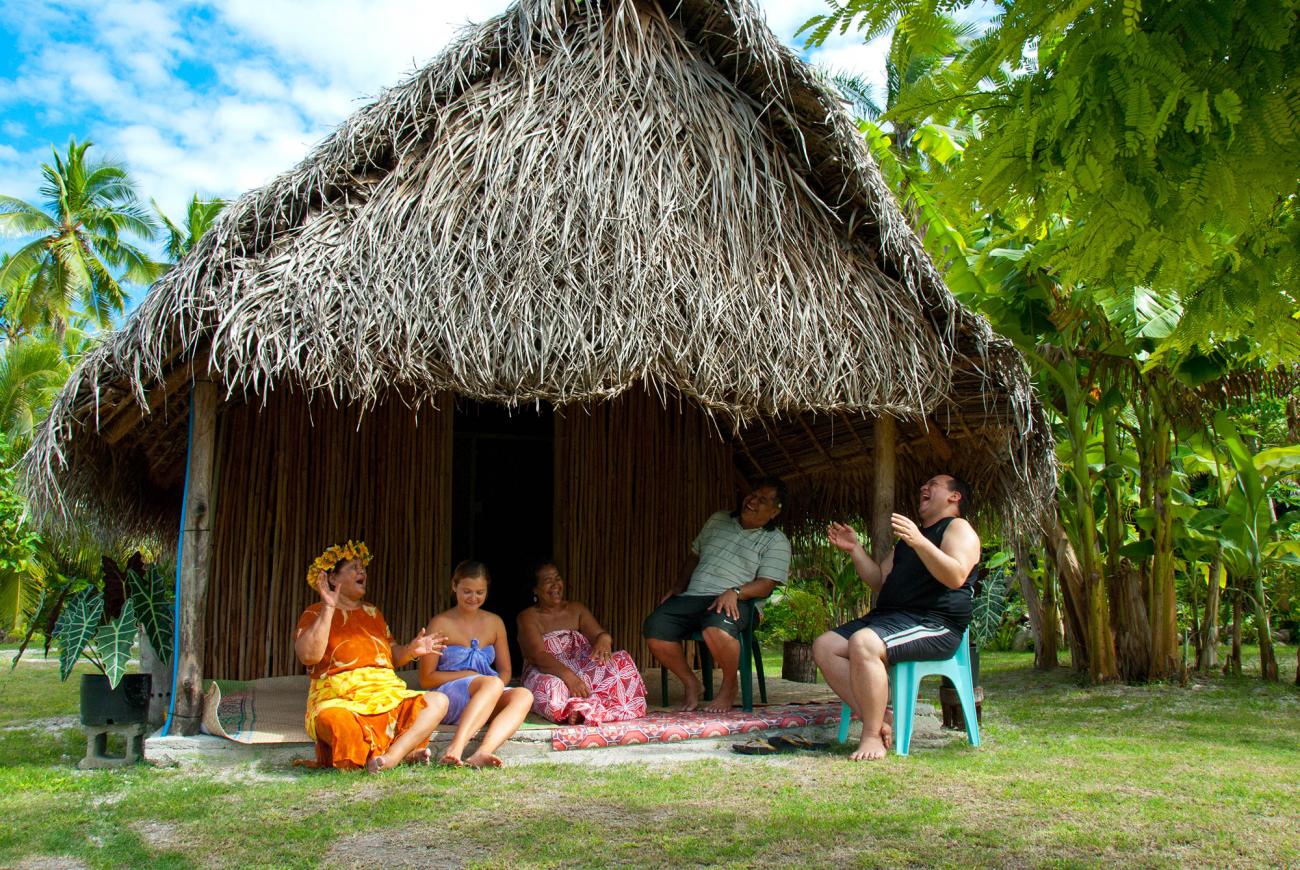
- special feature are the Home Stays, living with locals