Micronesia

Create your trip in Micronesia to remember!
See, taste, feel, connect with local people. Experience and enjoy what the country has to offer.
Travel with passion, respect and heart.
Let us know your plans, ideas & wishes.
We will get back to you with a personal travel proposal including rates.

* Fields marked with a star have to be filled.
Let us know your prefered dates, destination/s, program, category of accommodation or budget, it will help us create your offer faster, thank you! Your time zone could be handy too :)
By submitting your data you agree to receive a personalized offer from us. We will contact you to discuss further details if needed. Your personal data is used only for this purpose unless you wish otherwise.

Movie

Need more inspiration?
movie

Travel guide of Micronesia

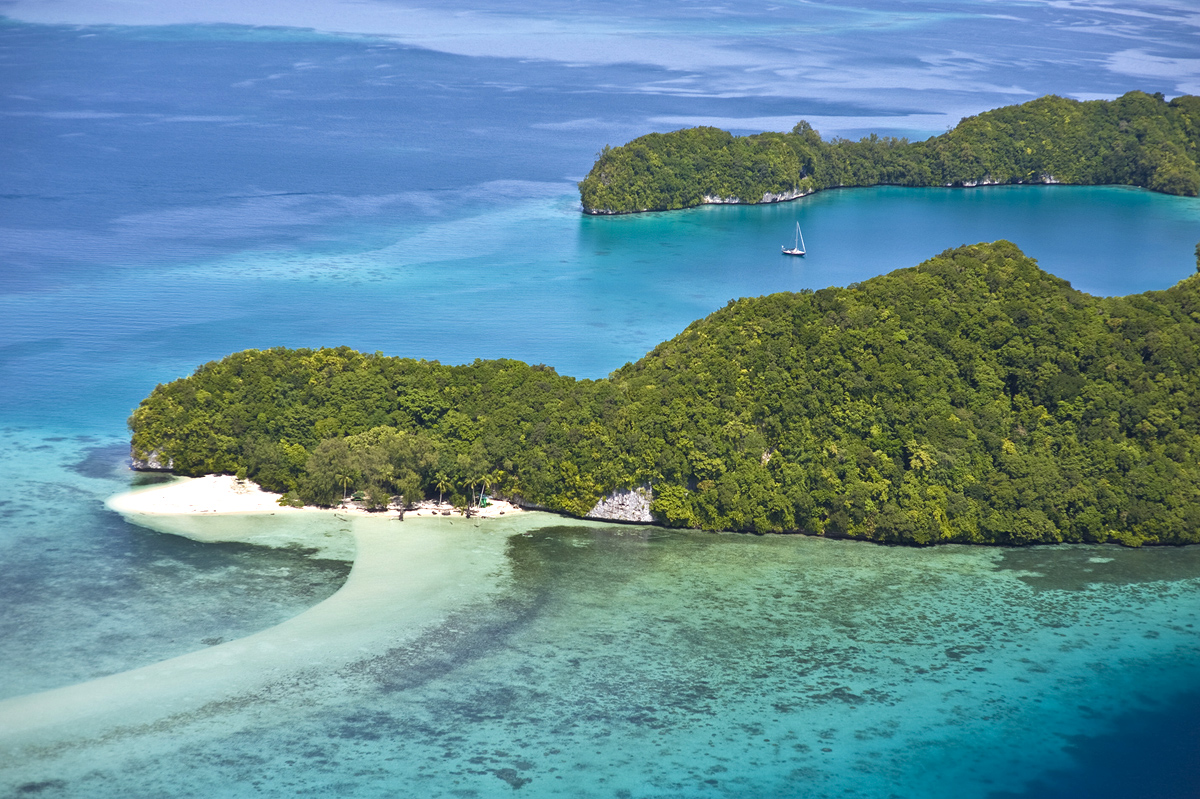
The 4 Federated States of Micronesia are like a living historical museum set in a lush botanical garden surrounded by clear ocean waters with coral reefs and rich marine life. Well preserved culture, traditions and dances of Yap State, fascinating wreck diving sites from WWII in Chuuk State, ancient ruins in Pohnpei and amazing natural beauties of mangrove forests and untouched areas of Kosrae. Still much undiscovered tropical paradise worth exploring...

Useful information

Land, geography

  • the Federated States of Micronesia are made up of 607 islands scattered in the Pacific Ocean just above the equator on an area of almost 1.000.000 square miles / 2.500.000 km2
  • the land area of the islands is only 270.8 square miles / 700 km2
  • the distance between the islands is almost 1.750 mi / 2.800 km from the furthest west (Yap) to the furthest east (Kosrae)
  • Micronesia covers the land of Caroline Islands archipelago - namely the Western and Eastern Caroline Islands - and spreads from Palau in the West to Kiribati in the East
  • the islands have high mountains and rich biodiversity being at the convergence of the major currents of Indian Ocean, Philippine Sea and the great Pacific Ocean
  • the 4 states of Micronesia are enique in geography, ecology, language and culture
  • the islands and atolls are of volcanic origin and all states except for Kosrae consist of one or more higher islands in the centre with smaller islands and atolls surrounding them
  • Yap State - 4 large islands, 7 small islands and 134 atolls; total land area of 45.6 square miles / 120 km2
  • Chuuk State - 7 major island groups with total land area of 49.2 square miles / 127 km2
  • Pohnpei State - the largest island of FSM being Pohnpei with 130 square miles / 336 km2 out of the State total 133.4 square miles / 345 km2
  • Kosrae State - single high island of 42.3 square miles / 110 km2
  • geographically the overall area called 'Micronesia' includes besides the Federated States of Micronesia also Guam (US), Northern Mariana Islands (US), Kiribati (its Gilbert Islands being in Micronesia and Phoenix Islands and Line Islands being in Polynesia), Marshall Islands, Palau ("sharing" Caroline Islands with FSM) and Nauru

Climate & Weather

  • Micronesia has tropical climate with relatively even, warm temperatures throughout the year
  • temperatures in FSM average 80°F / 26.5°C with some 88°C / 31°C max and some 78°C / 25°C min
  • Micronesian islands gain pretty much rainfall but individual islands vary in this parameter; Pohnpei has a reputation as one of the wettest places on Earth with the inland areas receiving some 330 inches / 838 cm of rain per year.
  • trade wind season is generally from December to March but can last until June

Travel season

  • diving is possible year-round in Micronesia
  • the best travel season for surfers is from October to March

Government

  • The Federated States of Micronesia (FSM) are made up of 4 island states with considerable authonomy, named from west to east: Yap, Chuuk, Pohnpei and Kosrae
  • the capital of FSM is Palikir on Pohnpei island

Time zone

  • FSM is spread over two time zones:
  • UTC/GMT +10 in Yap and Chuuk
  • UTC/GMT +11 in Pohnpei and Kosrae

Currency, payments

  • US Dollar (USD) is the currency in Micronesia
  • most major credit cards are accepted in visitor-oriented businesses
  • there are several US banks operating in FSM
  • business hours in Micronesia are normally from 8am to 12pm and 1pm to 5pm from Monday to Friday; banks and government offices are closed on weekend days

Fly to Micronesia, airlines

  • Flying to Micronesia is possible through Guam, Palau or Hawaii, operated by United Airlines
  • there is an 'Island hopper line' from Hawaii flying from Hawaii to Majuro (Marshall Islands) - Kwajalein (Marshalls) - Kosrae - Pohnpei - Chuuk - Guam - Yap
  • flight Guam - Yap takes about 1.35h; Palau - Yap about 1h
  • flight Guam - Chuuk takes about 1.40h; Pohnpei - Chuuk about 1.40h
  • flight Guam - Pohnpei with transit in Chuuk takes about 2.30h; Kosrae - Pohnpei about 1h
  • flight Guam - Kosrae with transit in Chuuk and Pohnpei takes about 3.30h; Kosrae can be also reached via Hawaii with transit in Marshalls

Transport

  • visiting the outer islands of Micronesia has to be planned well in advance as there are no daily connections between the islands
  • the major centers have taxis which can access most locations within the main islands
  • renting and hiring cars, boats and buses is possible

Entry requirements

  • United States citizens can enter any of the Federated States of Micronesia with a US passport or other proof of citizenship; non-US citizens must have a valid passport
  • each island has its own immigration offices and customs - so travellers planning to visit more of the islands on one trip will have to go through the immigration procedure repeatedly, filling the usual paperwork
  • departure taxes are charged in all of the states: $20 in Yap, $20 in Pohnpei, $20 in Chuuk and $15 in Kosrae
  • we will inform you about updated entry requirements for visitors from your country together with our offer
  • travelling with pets to FSM is not recommended - animals would have to go to quarantine

Travelling since 2020

  • Travel world changed in 2020 with the worldwide lockdown. Travel conditions are still being updated, airlines releasing new schedules, hotels and destinations applying new arrangements where necessary. As it is hardly possible to keep all relevant information on our websites up to date, we will inform you about current situation at the time of your request and of your journey.
  • If the destination you choose is not yet accessible for travellers from your country, we will recommend a similar available option.

Electricity

  • Micronesia has a US type of outlets / plugs with standard 110 volts

Internet, communications

  • Micronesia has a modern and reliable telecommunication network, tv and internet services are readily available throughout the 4 states through the services of FSM Telecommunications Corporation
  • US Postal rates apply in Micronesia
  • to say about media, there are several newspapers, AM and FM radio stations and even cable stations on Pohnpei and Chuuk where it is possible to catch live satellite broadcasts of CNN or ESPN. However we recommend switching home media off while on a holiday.

Population

  • the population of Micronesia was some 112.640 people in 2018

Language

  • the islands boost with 17 indigenous languages which are still used
  • English is generally well understood

Religion

  • there are many Christian churches around the islands

Health

  • there are no tropical diseases in Micronesia
  • health care is available and each of the FSM states has a major modern hospital
  • vaccination or certification is not required unless arriving from an infected area

Tipping

  • tipping is neither expected nor encouraged
  • it is natural for Micronesian culture to show hospitality, it is a matter of honor

Dress

  • visitors can travel light to Micronesia as it never gets cold here, summer clothing is suitable year-round
  • pack some light clothes suitable for rain
  • casual dress code, formal wear is considered unnecessary and impractical
  • covering ones head in the sun is recommended, sunglasses are useful too

Nature

  • Micronesia offers a wide range of natural ecosystems: the world's lowest elevation cloud forests, tropical rainforests, agro-forests, 'Redwood' wetlands with fresh water, giant taro swamps, large and varied mangrove tracts, sea-grass meadows, lagoons and coral reefs
  • the islands boast with rich flora and bird life
  • indigenous birds of the islands include nightingale reed-warbler, the Truk monarch, the blue-faced parrot finch, the Pohnpei Lori, the Kosrae greater white-eye and many more
  • all of the islands have a population of flying fox (fruit bats) that can be observed sleeping in collonies during the day
  • there are tropical shrubs, flowers and trees on the islands, more than 600 species of higher plants, Hibiscus, Hong Kong orchid, ironwood, eucalyptus, Honduras mahogany, papaya, banana, coconut or plumeria trees
  • thanks to almost constant sun and rain the vegetation of FSM is really lush and diverse

Ecology

  • Micronesia is an interesting eco-destination including UNESCO protected natural site, mangrove forests so important for environment and an amazing overview of ecosystems with rich fauna and flora

Culture & Traditions

  • local traditions are well preserved and kept alive on the islands of Micronesia, especially on Yep island, the westernmost part of the country
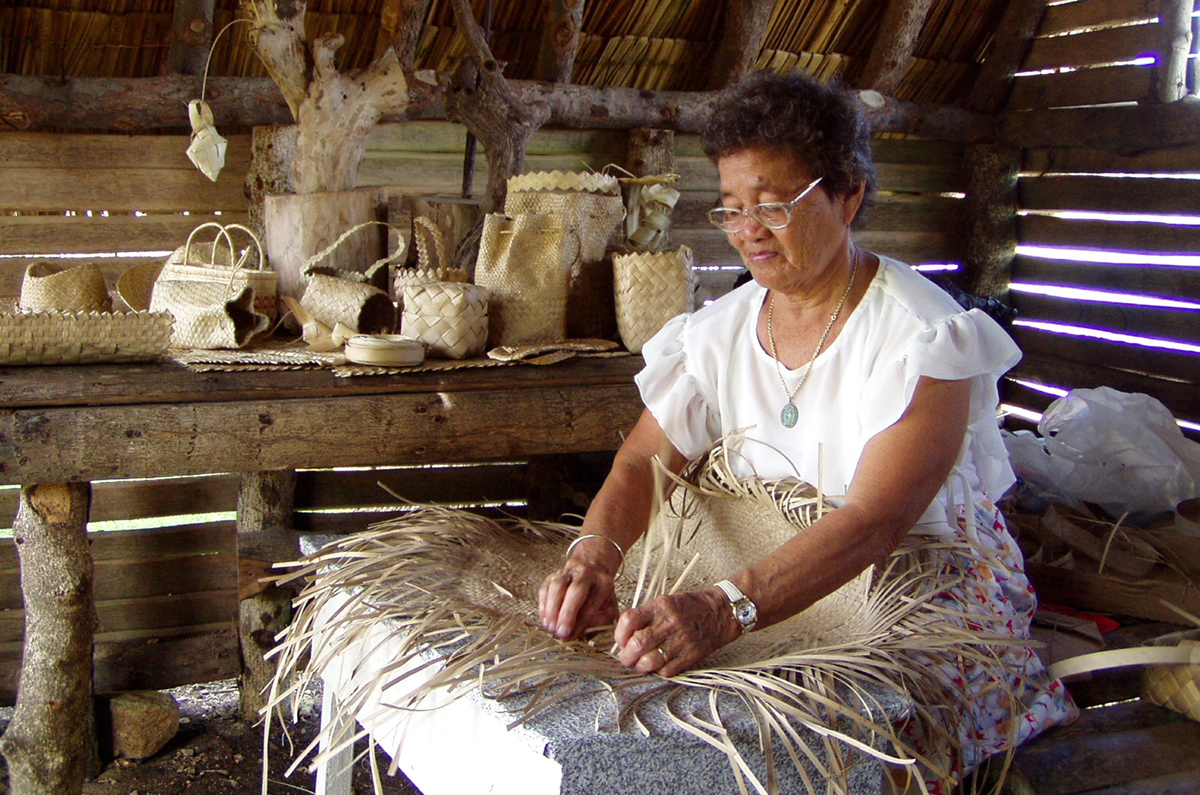
  • the people of Micronesia are skillful and good at handicrafts creating both practical and artistic pieces out of wood, shells or fibers of palm and banana trees. Traditional techniques use small axes, knives and needles.
  • Meeting Houses called Pe'bai and Faluw are found in each village in Yap, which is the place with best preserved indigenous culture in Micronesia. Pe'bai is the place where men, women and children come together for various community activities. Faluws, on the other hand, are built along the shorelines and serve as a port, workspace for men and learning space to cultivate traditional work skills. Women are not allowed to Faluws. All the meeting houses are hand-built using only local material.
  • Stone Money called Raay or Feaq in Yapese is a traditional currency still used in Yap, unique in the world. The value of each piece is derived by its oral history. Stone money are massive carved stones that were transported to Yap from a quarry site in Palau and remain a cornerstone of Yapese culture, represented on State flag and State Seal as well. The money can be seen all over Yap island, especially in the traditional village centers.
  • Traditional navigation - canoes are symbolic to Micronesian culture as ancestors arrived to the islands on canoes bringing their native foods with them as well. Canoes are crafted in traditional way, but what needs to be preserved for generations to come is the art of navigation. Micronesians, especially the people of Yap still keep their knowledge of navigation by the stars, ocean currents and its dephts. In recent years voyages to Japan, Hawaii and Tahiti were made to teach these related cultures the arts and skills of ancestors that have almost been forgotten. The Yap Traditional Navigation Society organizes the Annual Canoe Festival in November - December where Yapans' talent is demonstrated.
  • Love Stick are used in a traditional way to find partners in Chuuk. Young men own 2 wooden love-sticks which they design in the same personalized way. The shorter stick is used for his hair and the longer stick is used to poke into the hair or a hut of the woman he likes. If the design of received stick is of the man she likes, she will pull the stick as a signal for the man to come in. If she pushes the stick out, she is not interested in this man.
  • Devil Mask is also typical to Chuuk islands. The tradition is based on an ancient story of a ghost who lived on Tol island. This ghost kept stealing food from starving people, so they decided to carve a devil mask in order to scare the ghost. This resulted in all the village people comming together wearing devil masks which scared the ghost and he never came back...
  • Xavier High School in Chuuk is managed by the Society of Jesus and it is the firs four-year high school in FSM, built in 1953. The educational standard of the school is considered high and students come here to study from around the Micronesian islands. The building was originally a church which in 1940 was used by Japanese Army as a command center. All the important government and business people in Micronesia have graduated at Xavier's.

Traditional Dances

  • Churu' is a traditional Yapese dance. The people of Yap are famous for their dancing and they might be the best representants of traditional dancing in the Pacific. Dancing is part of their life and they accompany every possible occasion with dance. Everybody in the society is expected to adapt the art of dancing, men and women, children are taught to dance as soon as they can learn the instructions. Churu' dance passed down through generations includes songs of messages from history and teachings of the villages. Dancers are dressed with coconut leaves and flowers and their skin is given a golden shine using turmeric and coconut oil.
  • Yapese tradition includes many types of dances including standing and sitting dances. They are performed in groups of men or women separately. A 'war' dance includes dancing with a pole and came from an outer island. Dancing with music arrived to Micronesia from Japan.
  • dances typical for Pohnpei are Lehp, the marching dance where men and women sing along as they dance; dances accompanied by sticks Kepir for men and Tokia for women; other dances are Wen and Sapei. Pohnpeians dress in grass skirts and mwaramwar - headdresses made of flowers and yarn leaves. They also rub their skin with coconut oil to get the golden-look.

Traditional attire

  • Lava lava is a traditional dress of Yapese women, colorful striped, loin clothes and grass skirts made of banana fiber and hibiscus bark that are manually hand-woven. Men wear loin clothes called Du in a color representing their rank in the village and family - blue, white, red or a combination of these three.
  • Chuuk dress is a fashion dress among Micronesian women thanks to its colorful and intricate patterns. It is a one piece, loose-fitting skirt designed in various colors and styles. A great souvenir as well!
  • Pohnpeian skirt called urohs is a skirt worn on a daily basis by Micronesian women, colorful and decorated with different island flowers and other patterns.

Excursions / must see

Waterfalls and caves

  • PahnTakai Cave and Falls in Pohnpei - 30-minute hike through the rainforest to a huge overhanging cave 900 feet / 270 m deep and waterfall 150 feet / 4,5 m high. A large colony of bats lives in the cave with access behind the waterfall and the path leads to Kapwuriso cannons - relics from WWII. PahnTakai means 'underneath the rock'
  • Kepirohi Waterfall - most popular waterfall in Pohnpei with a large open lake at its base perfect for swimming, popular for both visitors and locals. The waterfall is 66 feet / 20 meters tall, 98 feet / 30 meters wide and is made up of large square basalt stones. A must see of Pohnpei and easily accessible by only an easy 5-minute walk from the main road
  • Liduduhniap Waterfall - another popular place to swim at Pohnpei, the large pool beneath twin waterfalls of Nanpil River and Liduduhniap is equipped with thatched huts and picnic area with panoramic view over the waterfall and jungle mountains.
  • Lehn Paipohn Waterfall is feeding the deepest and largest lake on Pohnpei. It is a bit further from main roads but the hike is worth discovering the plant and bird life of the island.
  • Sahwartik / Sahwarlap Waterfall - smaller and larger, other two waterfalls of Pohnpei which can be observed from a distance by a magnificent view of the rainforest
  • Sipyen Waterfall in Utwe, Kosrae is a photogenic 30 feet / 9 meters cascade of mountain waters. The waterfall with small bath pool is easily accessible with a 5-minute walk. Be polite to ask natives living nearby for permission when entering and beware of slippery rocks...
  • Saolung Waterfall about a mile past Sipyen with larger pool, again a permission should be asked from the locals to enter.
  • Wiya Bird Cave in Kosrae is an impressive natural cave with hundreds of endemic Resident Island swiftlet birds. Locals use the guano from the cave as a fertiliser in their gardens. The cave is well accessible from the main road. Legends say that it is home to a family of giants and connects with the other side of the island by a tunnel.

Beaches and Parks

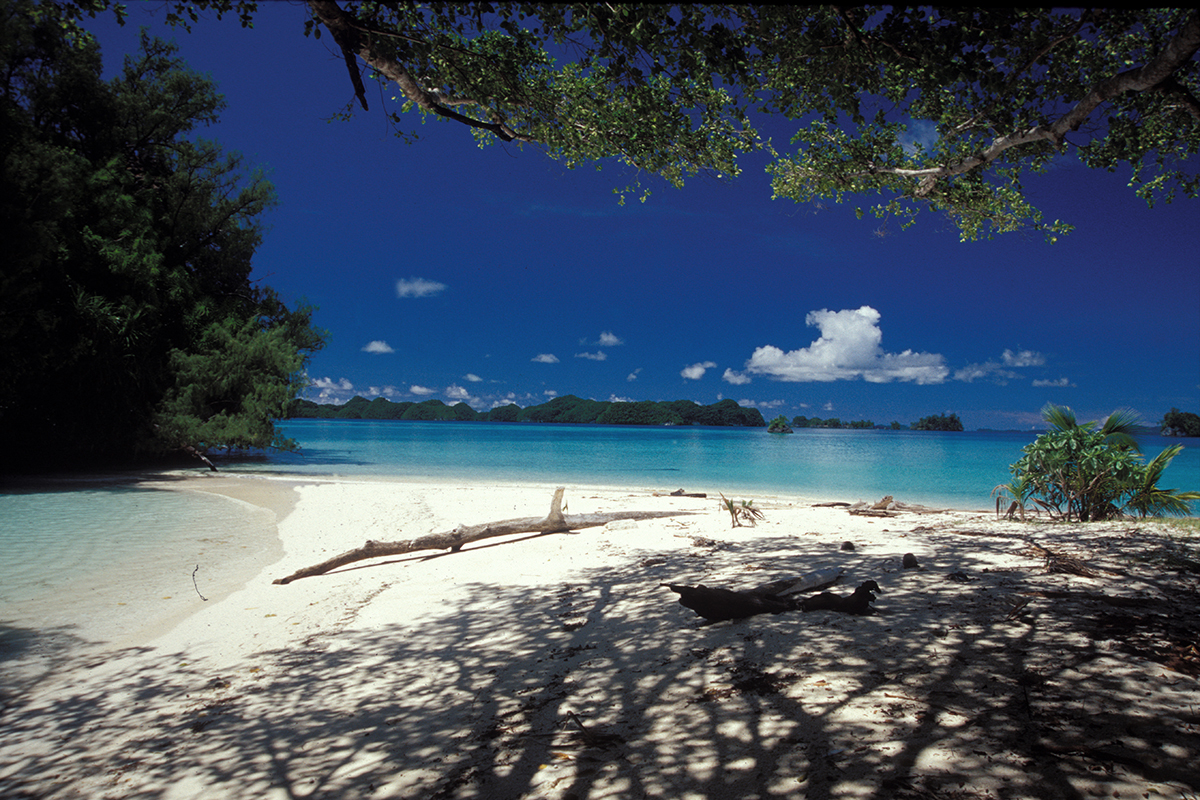
  • there are nice sandy beaches great for relaxation or walks around the islands and atolls and different types of coastal formations
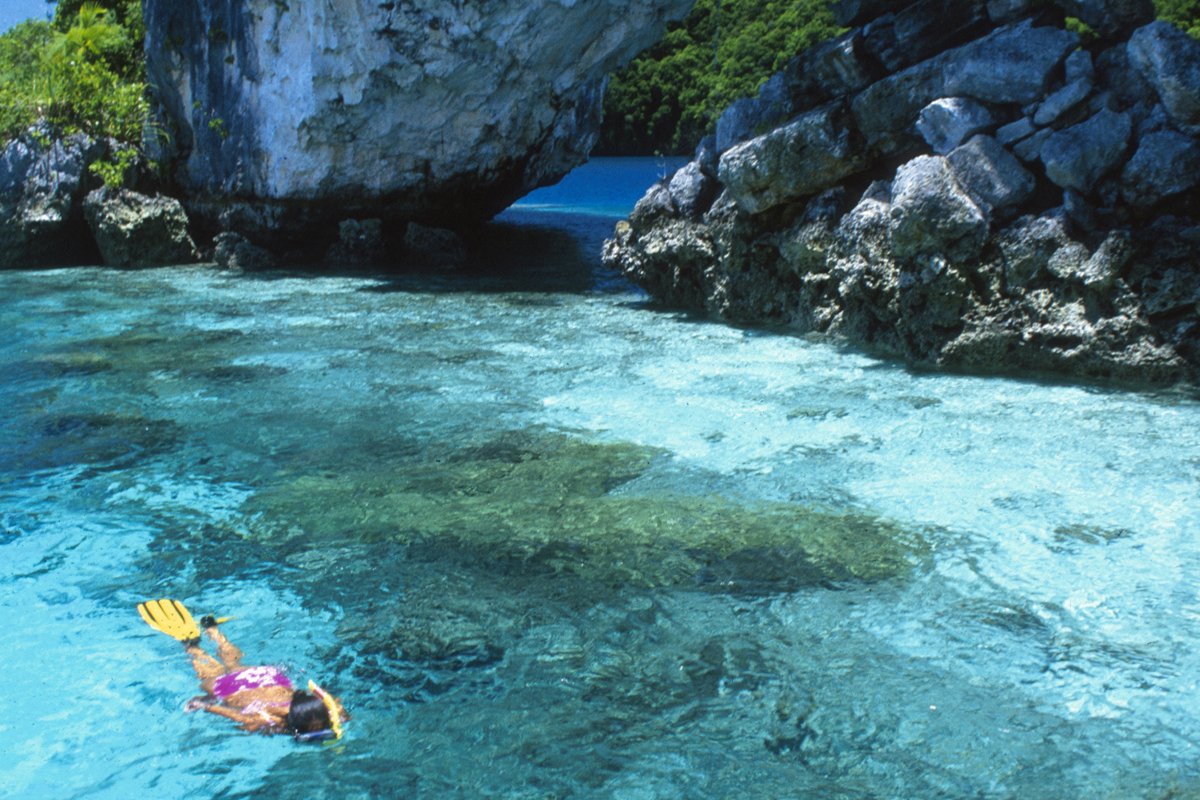
  • visitors are invited to see the James Palsis Marina Park in Kosrae to learn about the forests, mangrove, lagoon and sea-grass ecosystems. The park is located between Tafunsak and Walung villages and is a community-based conservation area recognized for its outstanding biodiversity. It is possible to snorkel in crystal clear waters over colorful reefs with a temperature of 83°F / 28°C, stroll along isolated beaches near Wallung Village which is only accessible by boat or through jungle trails forged by wild boar hunters. There are picnic huts and designated BBQ areas at the entrance of the park, toilets and water available.
  • Utwe-Walung Marine Park - one of the oldest and most diverse mangrove forests in Micronesia, deep marine lakes, small islets and back-water mangrove channels. In 2005 the area was designated as the first UNESCO Biosphere Reserve in the Pacific. It is possible to take a canoe tour through the channel connecting Utwe and Walung villages.

Ruins

  • Nan Madol in Pohnpei - Nan Madol was the capital during Saudeleur Dynasty and covered 92 separate islands and 222 acres / 90 hectares of land area. The centre of politics in the region was constructed between 500 and 1500 AD and included tombs of the royal family, servant quarters, guest house for visitors and separate islands for funerals and food storage. Much of the ruins remain in the form of enormous basalt "logs", some weighing more than 2 tons, assembled into walls and buildings. Much of the history is still a mistery of what is called as the 'Venice of the Pacific'.
  • Pohnpaip Petroglyphs in Pohnpei (named from the words Pohn = on top of and Paip = large rock) is a gently sloping rock with 30 square meters of surface and about 5 meters hight covered with symbols of the sun, moon, people, sword, fish and human footprints. It is believed to have been created by visitors from another land long years ago.
  • Lelu Ruins in Kosrae are considered one of the wonders of the Pacific, an ancient ruling empire complex similar to Nan Madol in Pohnpei which is believed to have copied Lelu later. Huge basaltic slabs were arranged in order to create 20-feet / 6 meters walls encircling the capital city of Kosrae in ancient times. The ruins are dated back to the 13th century and stories of Lois Becke (writer and trader famous for a legendary pirate Bully Hayes) mention it as a ruling metropolis through the later part of the 19th century.
  • Menke Ruins in Kosrae hold the temple of Sinlaku, the Goddess of Breadfruit, where she spent her last days before fleeing to Yap when the Missionaries arrived in 1852. The ruins are dated to be older than the Lelu Ruins, maybe the oldest in the entire Micronesian sub-region. The ruins are located in a beautiful valley with Menke River with one of the last two forests of Ka, wild almond trees Terminalia carolinensis. A must-do hike while on Kosrae.
  • Old Japanese Lighthouse built in 1930s by the Japanese Army on the top of a hill in Weno island with a view over the massive Chuuk lagoon
  • Nefo Cave and Old Japanese Gun - a series of caves in Chuuk used by the Japanese during World War II has a well preserved remains of a large artillery gun
  • Lenger Island in Pohnpei lagoon was used as a defence point and marine flying boat base in WWII. Although it was almost completely destroyed during the war it was rebuilt afterwards and used as Pohnpei Airport until 1970.
  • Dolopwuropwur Guns are remains of a battery and powdermagazine from the Japanese era on the top of Temwen island in Pohnpei lagoon. The site is well preserved and considered historically important.

Museums, farms

  • Kosrae State Museum - much of Kosrae's history and culture can be learned about at this museum which is located in Tofol, Kosrae. The museum is open free to the public and visitors can admire artifacts and excavations.
  • Giant Clam Farm - located on the Lelu Causeway in Kosrae used to be a national aquaculture station raising giant clams that reached up to 3 meters length and releasing them to various sanctuaries in the reefs off Walung, Okat and Utwe. The facility is now operated by a public-private partnership known as Micronesia Management Marketing Enterprises (MMME). It grows giant clams primarily for export to aquariums in the US and Europe and also corals and aquarium fish. 10% of all corals and clams produced are placed back into the wild to repopulate the reefs once abundant with clams, a vital filter in the ecosystem and a great food source.

Sports, activities

Hiking

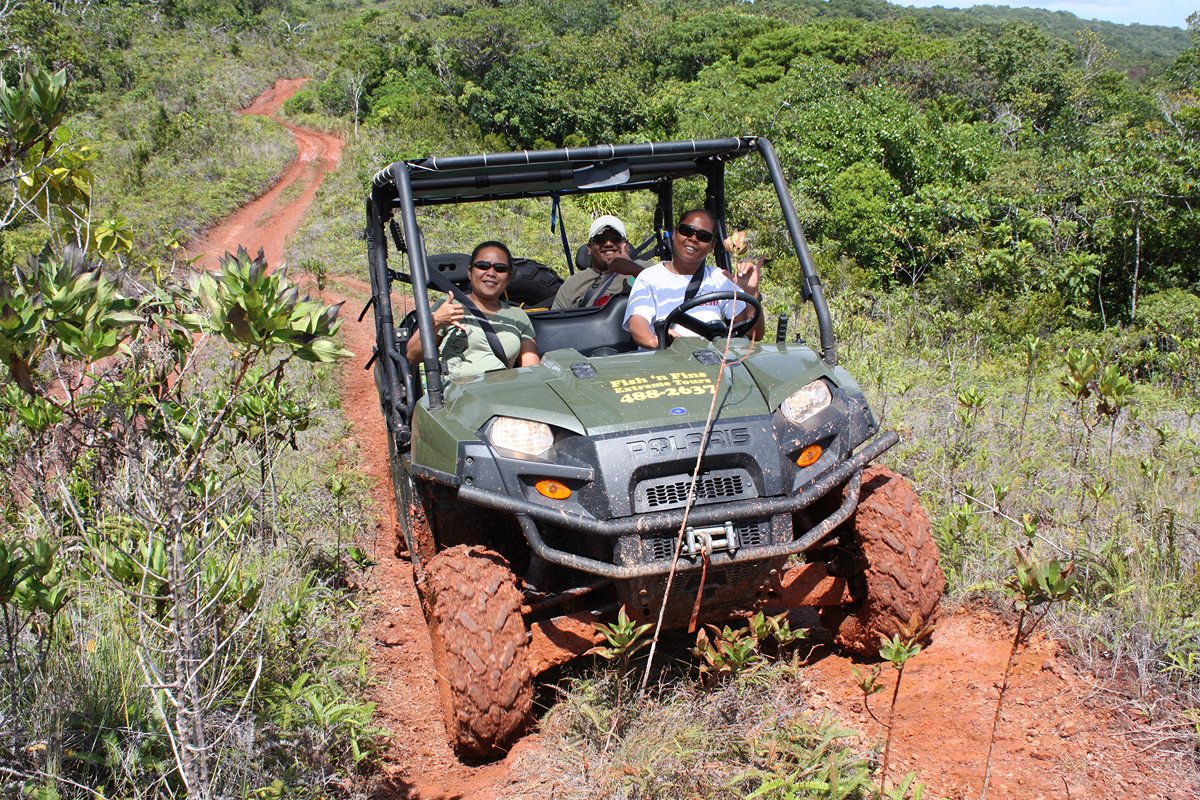
  • popular island treks or hikes with local guides which enable tourists to experience the diversity of Micornesian ecosystems, yet so compact and close that it is possible within a day trip
  • visitors enjoy amazing mountain views, ancient banyan trees, waterfalls and coastlines
  • the islands have well maintained tracks - there are even ancient stone walking paths in Yap - and the whole family can join a trip as there are no predating animals or dangerous snakes
  • treking is recommended with local guides as many of the areas are private
  • hiking can be joint with bird watching, especially the island of Chuuk is a paradise for bird watching enthusiasts
  • Mt. Tonaachaw in Chuuk on Weno island is 229 meters high, the legendary home of the God Souwoniras and his divine son stands by the Wichon River and Falls, the Wichon Men's Meeting House and it is the site where Weno chiefs are reported to have met Poomey, the eldest of the six brothers who were the first chiefs of Chuuk. A shallow pool at the base of the falls is still used for bathing as it was in the ancient times. Poomey's dwelling on a mountaintop and his gardens are visible from the waterfall and visitors can admire Petroglyphs on basalt above the falls.
  • Pohndollap or Sokehs Rock in front of Mt. Sokehs in Pohnpei is well accessible. The old Japanese Army built different facilities here which then melted with the jungle. A trip to the peak of the mountain takes about 2 hours and leads through wonderful rainforest and battlefields including giant cannons (Guns of Navarone), offering views over Palikir Pass. Mountain climbers are invited to conquer Sokehs Rock with sheer-face basalt routes.
  • YelaKa Forest in Kosrae is an undisturbed series of tropical island ecosystems. Yela is one of the last roadless areas in the Pacific and remains largely closed to public due to lack of access. YelaKa forest is in the centre of the area, it is a unique fresh water swamp with hundreds of high Ka trees which are referred to as the 'Redwoods of Micronesia'. Wonderful nature tour of the area is provided by Yela Environment Landowners Authority.
  • Mt. Finkol Hiking Trail in Kosrae is the highest peak in Kosrae with more than 2.064 feet / 629 meters and at the same time it hosts the lowest elevation cloud forest on the planet. The climb is moderately easy, but the hike requires good physical condition and the company of a local guide. Providing the weather is friendly we recommend joining this tour to reach one of the 3 wettest places on earth. Usually only 1 or 2 expeditions a year are able to conquer this summit - making it a really unique experience! The trail leads through a beautiful rainforest with gigantic banyan trees as in Tolkien's The Hobbit and the summit offers panoramic views of the island fringed with reef. The tour takes 7-8 hours.
  • Mt. Oma Hiking Trail combines some of the most beautiful natural and cultural sights of Kosrae, tropical fauna and flora, waterfalls and WWII caves. Being just a bit shorter than Mt. Finkol it also offers amazing views of the island. The tour might take 6-7 hours but also short hikes of 45 minutes are available.

Diving and Snorkeling

  • Micronesia presents itself as having one of the clearest and cleanest waters on the planet, suitable for diving and snorkeling all year round
  • there is a rich marine life in the waters around Micronesian islands including schools of tuna, barracuda, trevaly, dolphins, turtles, Grouper aggregations and colorful collections of many tropical fish
  • Yap and Pohnpei are famous with their reef-passes and giant manta rays can be encountered year round feeding on nutrients and plankton of the area
  • in Kosrae water visibility reaches up to 60, there are over 170 types of hard coral, 10 types of soft coral, sea anemones and more than 250 species of fish and other pelagic species; grey reef sharks are also present
  • Chuuk Lagoon is known as the wreck diving capital of the world - unique sunken armada of Japanese Fourth Imperial Fleet from World War II makes the lagoon an amazing underwater museum of history; by law all the artifacts are asked to be left in place as in a 'standard' museum

Fishing

  • Micronesia is a popular fishing destination, both for sport and game fishing
  • it is possible to enjoy bottom fishing, casting from shore, trolling, catching giant mangrove crabs or trying different fishing methods
  • fishing is a rising tourism segment in FSM and there are many tournaments organized in order to promote the destination

Surfing and Kite Surfing

  • surfing is a popular activity in Pohnpei and Kosrae, f.e. Palikir Pass in Pohnpei being a popular spot
  • the breaking pipe-waves are welcoming beginners and world-class surfers as well
  • the right-hand waves in Pohnpei are frequently used by professionals with teams of photographers and film makers
  • booking well in advance is recommended, the major surf points are reached by boat
  • the best season for surfing in Micronesia is from October to March

Canoing and kayaking

  • mangrove forests provide a unique setting for kayaking and canoing
  • experience the ecological wonder of Micronesia and meet giant monitor lizards, blue reef warblers, the Pacific reef heron, red breasted nectar eater and other representatives of the amazing fauna of the forests
  • calm waters of the forests show the richness and beauty of underwater life as well

Shopping, souvenirs

  • business hours in Micronesia are normally from 8am to 12pm and 1pm to 5pm from Monday to Friday
  • on weekends most shops are open from 8.30am to 1.30pm, banks and government offices are closed
  • handicrafts are great souvenirs to bring from Micronesia, among the popular are carved sharks and mantas from wood and accessories from sea shells or ivory nuts
  • local women dresses like Chuuk dress or Pohnpeian skirt are a great piece of local art to take home as a gift or a souvenir

Food, cuisine

  • restaurants and bars are usually open until 10pm all week round
  • there are plenty of local traditional dishes and foods worth tasting or bringing home from a stay in Micronesia
  • Sakau - popular drink of Micronesians originally from Pohnpei, a staple of the culture and economy. Sakau is made from the roots of a pepper schrub (Piper capsicum) and the inner bark of hibiscus tree. In Sakau bars visitors can see how the drink is made in a traditional way on the rock and then squeezed. The drink can be also purchased from roadside vendors who bottle it. Sakau has pleasurable and relaxing mystical effects and used to be reserved for high chiefs and nobility, accompanying special ceremonies.
  • Pohnpeian Pepper is renowned as the best in the world. This pepper is not only spicy but also fragrant and rich in flavor. Thanks to the high humidity of Pohnpei the volatile substances containing the flavor remain inside the grain. Pohnpeian pepper can be harvested several times a year as it blooms and bears fruit year round.
  • Kosrae is well known for its citrus fruits - oranges, limes, mandarins, tangerines and other citrus which can be bought in numerous fruit stands around the island. Especially popular are Kosrean seedless tangerines.
  • Betel-Nut is a form of local chewing tobacco. The betel nut is split open, powdered with lime and wrapped in pepper plant leaf. A piece of cigarette can be inserted to enhance its effect. This is popular around Micronesia but Pohnpei and Yap have higher amounts of betel nuts which are also exported and represent an important source for local economies.
  • fruits and crops grown on the islands of Micronesia include bananas, breadfruits, coconuts, mangoes, pineapples, wild apples, star fruits, papaya, guava and sour sop, the climate of the islands working as a natural greenhouse. Some fruits are not commercialized - namely breadfoods, sour sops or various kind of bananas including Karat which is mainly used for infants as baby food, has high nutrient and vitamin content.
  • the staple foods of the Federated States of Micronesia are taro, yam, breadfruit, banana and coconuts of various types; those from the ocean include reef and pelagic fish, crabs, shellfish; as of meat there are pigs and chicken. Pigs are raised by nearly all families especially in Pohnpei and Kosrae for special ceremonies and cultural events such as weddings, funerals and celebrations.
  • agro-forests can be seen everywhere on FSM islands and are a part of islanders' subsistence lifestyle

Special tourism

Accessible Tourism

  • for visitors facing any challenges or disabilities we are ready to provide the best available options of transport, accommodation and services following their individual requirements
  • let us know your special needs, we are happy to assist in creating a great holiday package fit for you

Events

  • Annual Canoe Festival is a 3-day event held by the Yap Traditional Navigation Society in November - December
  • traditional events and ceremonies are accompanied by famous dances of the islanders

Accommodation

  • there is a good choice of nice 3* standard accommodations available, hotels, resorts, lodges and private homes

RENY TRAVEL, s.r.o.
Bratislava, Slovakia, EU

Tel.: 00421 918 792 636
WhatsApp: 00421 918 792 636

Mail: reny@reny.sk

Time zome: UTC+1/2
About us: Personal Travel Agent

Partners: